Bearcat Express

Delivery

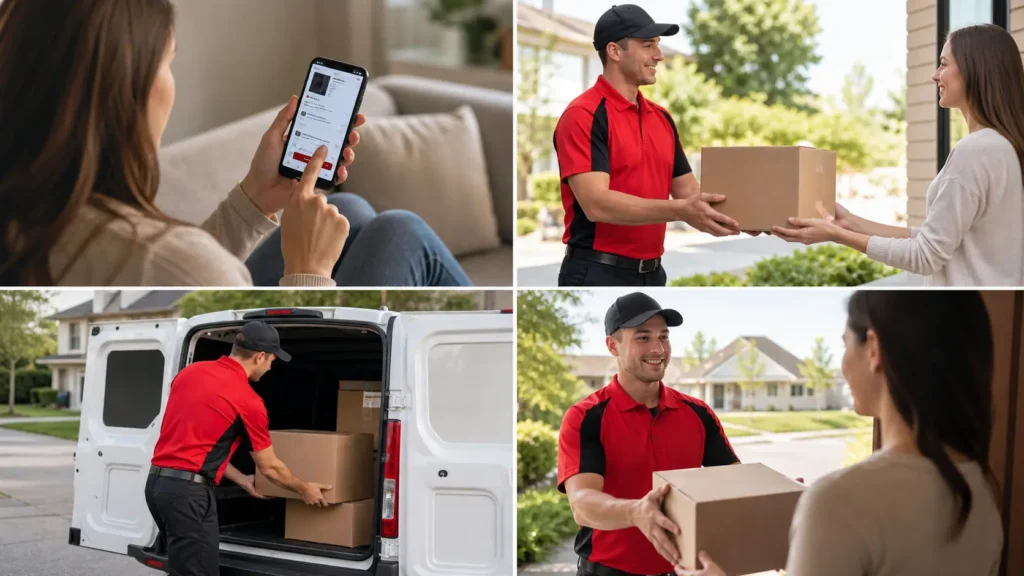
What Does Drop Off Mean in Delivery? courier driver delivering a package at a customer's doorstep
Delivery

What Does Drop Off Mean in Delivery? A Complete Guide

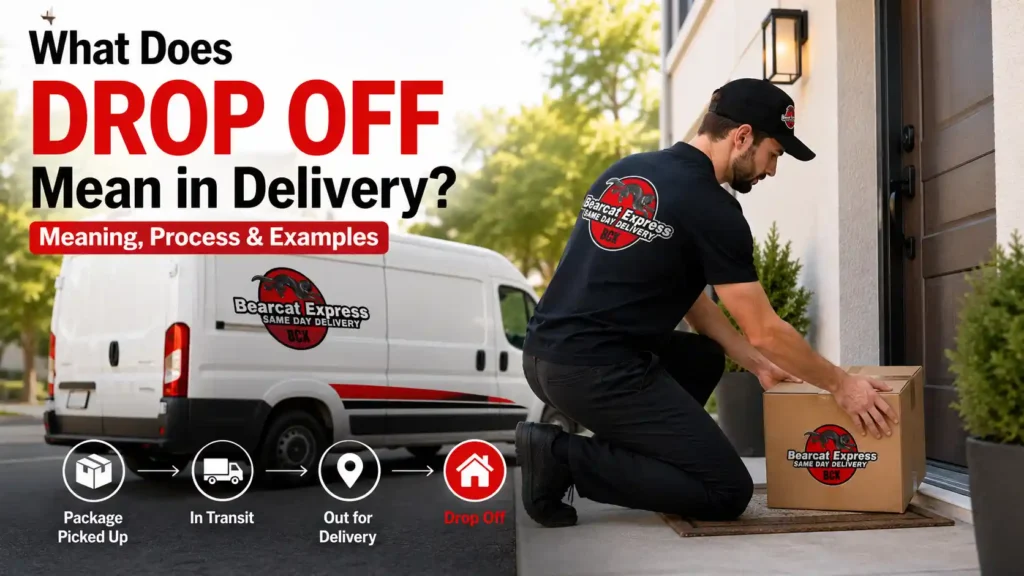
Quick Answer: In delivery, “drop off” has two everyday meanings. It can describe a sender handing a package to a carrier at a designated location, or it can describe a courier leaving a package at its final destination. On a tracking page, “dropped off” usually means the package has entered the carrier’s system, not that it has reached the recipient yet. You glance at your tracking page, see the words “dropped off,” and immediately wonder what that actually means for your package. Is it on its way? Has someone already left it at your door? At Bearcat Express, we get asked this question almost every week, and the honest answer is that drop-off means different things depending on where you are in the shipping process. This guide breaks down exactly what drop-off means in delivery, why the term shows up twice in most shipments, and how to read it correctly no matter which stage your package is in. What Does Drop Off Mean in Delivery? Understanding the drop-off meaning in delivery starts with recognizing that the term describes two separate moments in a shipment’s life, not one. The first meaning happens at the beginning of the journey. A sender packages an item and takes it to a designated location, such as a courier facility, a shipping counter, or a retail partner location, where a staff member accepts it and starts the delivery process. For example, a small business owner in Augusta might package an invoice packet and drop it off at a local courier counter before 2 p.m. so it can still go out same day. The second meaning happens at the end of the journey. A courier or driver reaches the recipient’s address and leaves the package there, whether that means handing it to a person, placing it on a porch, or leaving it with a front desk. A homeowner waiting on a same-day furniture part, for instance, might get a text that reads “your package has been dropped off at your front door” once the driver completes the delivery. Both uses are correct. The difference is simply whether the shipment is starting its journey or finishing it, and most people run into both meanings within the same order. What Is a Package Drop-Off? A simple drop-off definition, in the sender context, is the act of physically bringing a prepared shipment to a location where a carrier accepts responsibility for moving it forward. This drop-off definition is the one most people mean when they ask how to send a package without scheduling a pickup. Before dropping off a package, a sender typically needs a few things ready: A shipping label or clear address information attached to the package. Secure packaging appropriate for the item’s size and weight Any required documentation, such as a signed release form for business shipments or a value declaration for high-value items Payment, if the drop-off location handles billing at the counter rather than online Common drop-off point types include courier branch counters, retail shipping partners, parcel lockers, and dedicated regional facilities. Each type has its own hours and acceptance rules, so it is worth confirming a location’s cutoff time before assuming a same-day drop-off will actually leave the same day. This is one of the most common mix-ups senders run into, expecting a 4 p.m. drop-off to move as fast as one made at 10 a.m. “Dropped Off” on Your Tracking Page: What It Actually Means This is where most of the confusion actually happens, and it is worth slowing down here. When a tracking page shows “dropped off,” it typically means the package has been physically handed to the carrier and logged into their system. It does not mean the package has arrived at its destination. Think of it as the starting gun for the shipment rather than the finish line. Here is roughly how tracking language usually progresses: Label created: the shipment exists in the system but has not been handed to anyone yet Dropped off: the sender has handed the package to the carrier, or the carrier has picked it up Accepted: the carrier’s facility has scanned and logged the package into its network In transit: the package is actively moving toward its destination Out for delivery: a driver has the package on their route for final drop-off Delivered: the package has reached the recipient A “dropped off” scan can appear before the package has physically started moving, especially if it was handed off at the end of a business day and won’t be scanned into the next stage until the following morning. That gap is normal and does not necessarily mean anything has gone wrong. If a package sits at “dropped off” for more than a full business day without updating, that is usually the point where it is worth checking in with the carrier directly. Drop-Off vs Pickup: Which One Are You Actually Using? Drop-off and pickup solve the same basic problem, getting a package from a sender to a carrier, but they place the effort on different sides of the transaction. Drop-Off Pickup Who transports the package to the carrier The sender The carrier Best for Single or occasional shipments near a drop-off point Multiple shipments, bulky items, or a tight schedule Time commitment Sender travels to a location Sender waits for a scheduled arrival window Typical cost Often lower, no collection service involved May include a collection or scheduling fee Neither option is universally better. A sender shipping one envelope near a courier counter usually finds drop-off faster and simpler. A business shipping a dozen packages a day generally saves more time scheduling a pickup than making repeated trips. The right choice depends on shipment volume, location, and how much flexibility the sender has in their day. Drop-Off vs Delivery: Are They the Same Thing? Not quite, and mixing these two up is one of the most common sources of tracking confusion. Drop-off usually refers to a handoff, either the sender giving a package to a
courier delivery attempt failed
Delivery

Courier Delivery Attempt Failed? What Happens

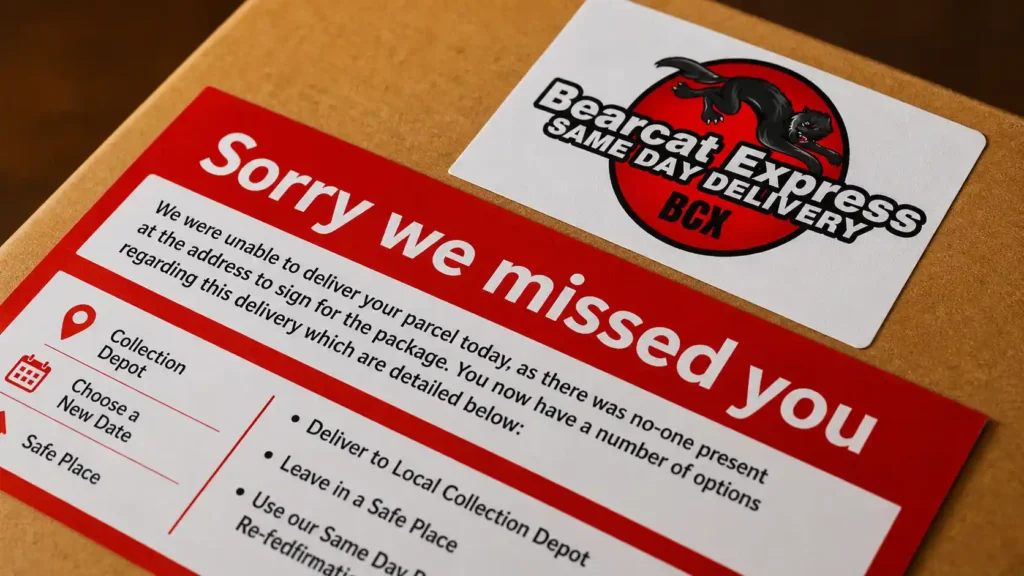
Quick Answer: When a courier delivery attempt fails, the driver logs a reason (no one home, wrong address, or restricted access), the package returns to the dispatch hub, and a second attempt is scheduled, usually the same day for same-day couriers or the next business day for standard carriers. After a set number of failed attempts, the package is held for pickup or returned to the sender. If you have ever refreshed a tracking page and seen “delivery attempt failed,” you know the jolt of panic that follows. At Bearcat Express, we handle same-day deliveries across Georgia weekly, and this is one of the most common questions our dispatch team fields. This guide covers what a courier delivery attempt failed status means, why it happens, and what happens next. What Does Delivery Attempt Failed Actually Mean A failed delivery attempt simply means the driver physically reached your delivery address within the scheduled window but was unable to hand off the package. This is different from a delayed delivery, where the package simply has not arrived yet, or a lost package, where the shipment cannot be located at all. When tracking shows delivery failed, three things have already happened behind the scenes. The driver arrived at the location, tried to complete the handoff, and logged a specific reason code before moving to the next stop on the route. That reason code is what determines what happens next, which is why understanding delivery failure matters more than just knowing it occurred. The Most Common Reasons Attempts Fail Not every failed attempt has the same root cause, and the fix depends entirely on which one applies to your shipment. The most frequent reasons we see include: No one available to receive the package, especially for shipments that require a signature or ID verification Incorrect or incomplete address, such as a missing suite number or a typo in the street name Restricted access, including locked gates, security desks that will not release visitors without prior notice, or apartment buildings with no buzzer listed for the recipient Unsafe drop conditions, where the driver judges that leaving the package unattended (porch, loading dock, mailroom) is not secure Payment or documentation issues, mainly relevant for cash-on-delivery or freight shipments needing signed paperwork Weather or road closures that make the delivery location temporarily unreachable Each of these leads to a different type of delivery failure, and the driver’s notes on the route sheet decide how quickly it gets resolved. Inside a Same-Day Dispatch Desk: What Happens the Moment an Attempt Fails This is the part most delivery guides skip, probably because they are written from the perspective of a national carrier, not a local courier working tight, same-day windows. Here is what actually happens on our end. The moment a driver marks a stop as unsuccessful, that update hits our dispatch board in real time. Our dispatcher reviews the reason code immediately and decides fast: a wrong suite number gets a quick call or text to confirm the location, then the package slots back into that driver’s route if time allows. If no one was available, the dispatcher checks for backup instructions, such as a neighbor’s unit or a front desk, before deciding on a same-afternoon or next-morning reattempt. That is the real difference between a courier that treats a failed attempt as paperwork and one that treats it as a live problem to solve. A same-day delivery that fails at 11 a.m. still has hours left in the day, and a good dispatch desk uses every one of them. Comparison Table: First Attempt vs. Second Attempt vs. Final Attempt Outcomes Attempt Typical Timing Most Likely Outcome Recipient Action Needed First attempt Original scheduled window Package held on truck or returned to hub; reattempt scheduled Confirm address and availability Second attempt Same day (same-day couriers) or next business day (standard carriers) Delivered if issue resolved, or held at local facility if not Provide access instructions or alternate pickup Final attempt Final scheduled window per carrier policy Delivered, held for pickup, or returned to sender Arrange pickup or contact dispatch directly Most standard carriers allow one to three attempts before a package is returned. Same-day couriers work on a compressed version of this same cycle within a single business day, which is exactly why fast communication between the recipient and dispatch matters so much more when time is the whole point of the service. Same-Day Delivery vs. Standard Delivery: Why a Failed Attempt Hits Differently With a standard carrier, a failed delivery attempt is frustrating but rarely urgent. The package simply tries again tomorrow, and a day’s delay does not usually change the outcome for the recipient. With same-day delivery, a failed attempt changes the entire equation. A business shipping time-critical documents, medical samples, or event materials through a Same Day Delivery Service Augusta GA is often working against a hard deadline, not just a general delivery window. A failed attempt at 2 p.m. might mean there is still time for a second run before close of business, but it also means every minute spent figuring out the reason code is a minute taken directly out of that shrinking window. This is why same-day couriers generally staff live dispatch coordination instead of relying purely on automated notifications: the reattempt decision has to happen in minutes, not hours. What You Should Do Right Now If you just saw a delivery failed status on your tracking page, here is the order of operations that resolves it fastest: Check the reason code first. Tracking updates usually specify why the attempt failed, and that detail tells you exactly what to fix. Confirm your address details, including apartment or suite numbers, gate codes, and any buzzer information the driver might not have had. Call the courier directly rather than waiting for an automated reattempt, especially for same-day shipments where hours matter. Provide access instructions if the issue was a locked entrance or security desk, so the next attempt does not repeat the same

How Does Same Day Delivery Work
Delivery

How Does Same Day Delivery Work? A Complete Step-by-Step Guide

Speed is now the standard in logistics, and customers expect deliveries within hours, not days. This raises a common question: how does same day delivery work? It involves a coordinated system of local inventory, efficient logistics, and real-time tracking to move packages quickly.  Companies like Bearcat Express focus on precision and reliability to meet these expectations. Understanding what does same day delivery mean is important for both customers and businesses. Simply put, same day delivery means an order is processed, shipped, and delivered within the same day, often in just a few hours. This guide explains how the process works step by step. What Is Same Day Delivery? Simple Definition Same-day delivery is a shipping method where an order is delivered to the customer on the same day it is placed. Unlike standard shipping, which may take several days, this process is designed for speed and efficiency. To put it simply: Order placed / processed / shipped / delivered (all within hours) This is why same day delivery means speed without compromising accuracy. How It Differs from Standard and Next-Day Delivery The key difference lies in timing and logistics: Standard Delivery: 2–5 days, centralized warehouses Next-Day Delivery: Delivered the following day Same-Day Delivery: Delivered within hours using local resources Same-day delivery relies heavily on proximity, which is why local fulfillment and same day tracking systems play a critical role. How Does Same Day Delivery Work Step by Step Order Placement and Cut-Off Time Everything starts when a customer places an order. However, timing is critical. Most businesses set a cut-off time (for example, 12 PM or 2 PM). Orders placed before this time are eligible for same-day processing. At this stage: The system confirms availability Delivery location is validated Order enters the fulfillment queue This is the first moment where the order status may appear as delivery in process. Inventory Selection and Local Warehousing Same-day delivery only works if the product is stored close to the customer. Instead of shipping from distant warehouses, companies use: Local storage hubs Micro-fulfillment centers Retail store inventory This proximity ensures faster dispatch and supports accurate same day tracking updates. Order Processing and Packaging Once inventory is confirmed, the order moves to processing. This includes: Picking the item from the inventory Quality checks Secure packaging Speed matters here, but accuracy is equally important. Mistakes at this stage can delay the entire process. Dispatch and Route Optimization After packaging, the order is assigned to a driver or courier. Modern logistics systems use: Route optimization algorithms Traffic data Delivery clustering This ensures drivers take the fastest and most efficient routes. At this point, customers often receive notifications indicating their order is delivery in process, along with estimated arrival times. Real-Time Tracking and Notifications One of the most important features today is same day tracking. Customers can: Track the driver in real-time Receive delivery updates Get alerts for delays or changes This transparency builds trust and improves the overall delivery experience. Final Delivery to Customer The final step, the last-mile delivery the most critical phase. The driver: Confirms the address Delivers the package May collect a signature or photo proof Once completed, the system updates the delivery status instantly. Real-Life Example of Same Day Delivery Process Timeline Breakdown (Morning to Evening) Here’s a typical scenario:   9:00 AM   Customer places order   9:15 AM   Order confirmed and processed 10:00 AM   Item picked and packed 11:00 AM   Driver assigned   1:00 PM   Package out for delivery   4:00 PM   Delivered to customer Throughout the day, same day tracking keeps the customer informed. What Happens Behind the Scenes While it may look simple, multiple systems work together: Inventory management systems Dispatch software Driver communication tools This coordination ensures the order moves smoothly from the warehouse to the doorstep. Key Components Behind Same Day Delivery Local Fulfillment Centers These are small warehouses located near customers. They reduce travel time and make faster delivery possible. Courier Network and Drivers A reliable network of trained drivers ensures packages are delivered safely and on time. Companies like Bearcat Express focus heavily on driver efficiency and route planning to maintain consistent performance. Delivery Technology and Tracking Systems Technology powers everything: Automated dispatch systems GPS tracking Real-time updates Without these tools, same-day delivery would not be scalable. Types of Same Day Delivery Services On-Demand Delivery Immediate pickup and delivery, often within a few hours. Scheduled Same Day Delivery Customers choose a specific time slot for delivery. Retail and E-commerce Delivery Online orders fulfilled through local stores or warehouses. Benefits of Same Day Delivery Faster Customer Satisfaction Customers receive products quickly, improving their overall experience. Increased Sales and Conversions Fast delivery encourages impulse purchases and reduces cart abandonment. Competitive Advantage for Businesses Offering same-day delivery helps businesses stand out in a crowded market. Challenges of Same Day Delivery High Operational Costs Faster delivery requires more resources, including drivers and local inventory. Limited Delivery Radius Service is usually restricted to specific geographic areas. Traffic and Last-Mile Issues Urban congestion can delay deliveries, even with optimized routes. How to Offer Same Day Delivery in Your Business Set Delivery Zones and Cut-Off Times Define where and when deliveries can be made efficiently. Optimize Inventory Placement Store products closer to customers to reduce delivery time. Use Route Optimization and Delivery Software Invest in tools that improve efficiency and reduce delays. Partner with a Reliable Courier Service Working with experts can simplify operations. For example, businesses looking for a dependable Same Day Delivery Service Augusta GA can benefit from experienced providers who already have the infrastructure in place. Same Day Delivery vs Next Day Delivery Speed Comparison Same Day: Within hours Next Day: 24 hours Cost Differences Same-day delivery is usually more expensive due to urgency and logistics. Best Use Cases Same Day: Urgent or time-sensitive items Next Day: Non-urgent deliveries You may also read: What Is Proof of Delivery? Industries That Use Same Day Delivery E-commerce and Retail Fast delivery improves customer satisfaction and repeat purchases. Healthcare and

What is a Delivery Service Provider
Delivery

What Is Threshold Delivery? A Complete Guide to How It Works, Costs, and Benefits

Online shopping and large-item shipping have changed how deliveries work. Many customers expect packages to arrive safely and conveniently, but not every shipment requires installation or premium service. This is where the question What is Threshold Delivery becomes important for both businesses and customers. Threshold delivery is a shipping method where the driver places the package at the customer’s doorway or entry point instead of leaving it at the curb or bringing it fully inside. Companies like Bearcat Express often use this service for oversized items or retail pickups that need careful handling. Understanding the threshold delivery meaning helps customers choose practical delivery options while keeping costs reasonable. What Is Threshold Delivery?   The simplest threshold delivery meaning is this: a delivery service where the driver brings the package to the first accessible point inside a property, usually the doorway, porch entry, or building lobby. Companies like Bearcat Express often provide this type of service when handling large or oversized shipments that require safe placement but not full in-home delivery. Unlike basic drop-off services, where a package might be left on the curb, threshold home delivery ensures the item is placed just inside the entry point or directly at the door. However, the delivery team does not move the item into specific rooms or provide installation. Doorstep Delivery Concept The concept behind threshold delivery is convenience without complexity. Instead of leaving a large item at the curb, the driver brings it directly to the doorway so the customer can move it inside when ready. This approach works particularly well for oversized shipments that require more care than standard parcels but do not require a full in-home setup. Purpose of Threshold Service in Logistics A threshold service helps courier companies and retailers provide a practical middle-tier delivery option. It offers more support than curbside delivery but avoids the cost and scheduling complexity of premium services. Many logistics companies also include threshold delivery tracking, allowing both the customer and the business to monitor the shipment and confirm successful delivery. How Threshold Delivery Works Threshold delivery follows a structured process designed to keep shipments organized and safe. Step-by-Step Delivery Process Order placement The process begins when a customer purchases an item and selects threshold delivery as the shipping method. Shipment dispatch The retailer or warehouse prepares the package and schedules transportation with a courier service. Arrival at the delivery location The driver arrives at the customer’s address and assesses the entry point for safe access. Package placed at the threshold The item is carefully moved to the front door, porch entry, or building threshold. Delivery confirmation Using digital systems or signatures, the courier records the completed delivery through threshold delivery tracking. What Drivers Typically Do Drivers performing threshold home delivery usually handle several responsibilities during the process: Transport the package safely from the vehicle to the doorway Notify the customer upon arrival Record proof of delivery through photos or signatures These steps ensure transparency and accountability in the threshold service process. Threshold Delivery vs Other Delivery Types Understanding the difference between threshold delivery and other shipping methods helps customers choose the right option. Threshold Delivery vs Curbside Delivery The curbside delivery definition is simple: the driver leaves the package at the curb or driveway edge. The customer is responsible for moving the item from the curb into the home. In contrast, threshold home delivery involves bringing the item directly to the doorway or entry point. This reduces the effort required from the customer and provides better protection for large items. Threshold Delivery vs White Glove Delivery White-glove delivery is a premium service that includes unpacking, installation, and sometimes removal of packaging materials. A threshold service stops at the doorway and does not include setup or assembly. Because it involves less labor and time, threshold delivery is usually much more affordable. Threshold Delivery vs Room of Choice Delivery Room of choice delivery means the delivery team places the item in a specific room inside the home. With threshold home delivery, the item remains at the entry point. Customers who need help moving the item further inside may need to request additional services. Products Best Suited for Threshold Delivery Certain products are particularly well-suited for threshold delivery due to their size and handling requirements. Furniture and Home Goods Furniture such as chairs, small tables, and boxed shelving units is often delivered using a threshold service. The delivery team places the item at the door, allowing the customer to move it inside. Appliances and Large Electronics Appliances like microwaves, small refrigerators, and large televisions frequently use threshold home delivery. This ensures safe handling while keeping delivery costs manageable. Fitness Equipment Exercise equipment such as treadmills or stationary bikes can also benefit from threshold delivery. The equipment is delivered to the doorway without requiring complex installation services. Oversized E-commerce Packages Large online purchases, especially from big retailers, often require more space and careful handling. Many courier companies provide services such as Big Box Store Pick Up in Augusta, GA, to transport oversized items and deliver them using threshold delivery methods. Benefits of Threshold Delivery Threshold delivery offers several advantages for both businesses and customers. Convenience for Customers Bringing packages directly to the door eliminates the need for customers to carry heavy items from the curb. This makes threshold home delivery a convenient middle-ground solution. Faster Delivery Process Because threshold delivery does not require installation or assembly, drivers can complete deliveries faster while still ensuring safe placement. Lower Delivery Costs Compared to white-glove delivery, a threshold service requires fewer resources and less labor. This results in lower overall shipping costs. Reduced Handling Risks Handling items fewer times reduces the risk of damage. Proper threshold delivery tracking also provides documentation in case any issues arise. Limitations of Threshold Delivery Although threshold delivery is convenient, it does have some limitations. One key limitation is that no installation or setup is included. Customers must handle assembly or placement themselves. Heavy items may also require additional assistance from the customer. Because

Fragile Package Delivery
Delivery

Fragile Package Delivery: Handle With Care

Shipping delicate items isn’t as simple as putting them in a box. Glassware, electronics, artwork, and other fragile goods can break easily without proper packing, handling, and transport. Fragile package delivery requires careful planning, secure packaging, and experienced handling from start to finish. Damage during shipping can lead to lost products, unhappy customers, and extra costs.  Whether sending a single fragile package or frequent delicate shipments, understanding safe shipping practices is crucial. At Bearcat Express, reliable delivery and careful handling ensure that businesses relying on fragile goods transport can trust that their packages will always be protected. Understanding Fragile Items A fragile item is any product that can easily break, crack, or become damaged if it is dropped, shaken, or placed under pressure during transportation. These items require special packaging and extra care during shipping to ensure they arrive safely. In the courier and logistics industry, fragile shipments are often clearly marked so that handlers understand that extra attention is required. A package fragile label alerts drivers, warehouse staff, and delivery teams that the shipment must be handled carefully. Fragile shipments are not limited to glass products. Many modern products require careful shipping procedures, especially when they contain sensitive components or delicate materials. That is why professional fragile delivery service providers, including Bearcat Express, follow structured processes designed to protect these items from the moment they are packed until they reach their destination. Common Fragile Items That Need Special Handling Many everyday items fall into the fragile category. Some of the most common examples include: Glassware and decorative glass items Electronics such as monitors, laptops, and televisions Framed artwork or mirrors Ceramics and decorative pieces Medical or laboratory equipment Each of these products requires careful packaging and specialized fragile goods transport practices to reduce the risk of breakage during delivery. Why Fragile Packages Get Damaged During Shipping Even well-made products can break if they are not shipped properly. Damage usually occurs because of avoidable mistakes in packaging or handling. One of the most common causes is poor packaging. When a fragile package is placed inside a weak or oversized box without proper cushioning, the item can move freely inside the box. This movement increases the chances of damage when the package is handled or transported. Another major issue is excessive handling. The more times a shipment is moved between trucks, sorting areas, and storage spaces, the greater the risk of drops or impacts. A package fragile shipment that travels through multiple handling points is far more likely to experience damage than one delivered through a direct courier route. Long transit times also increase risk. The longer a package stays in the delivery network, the more opportunities there are for vibration, stacking pressure, or accidental drops. This is why efficient fragile delivery service options are often recommended for delicate shipments. Improper labeling can also contribute to damage. Without clear labels indicating taking care of the package, handlers may treat the shipment like any other standard parcel. Packing Techniques for Shipping Fragile Items Proper packaging is the most important step in protecting delicate items during shipping. Even the best fragile goods transport services rely on secure packaging to keep items safe during delivery. Start by selecting a strong box that is slightly larger than the item you are shipping. Double-wall boxes are often recommended because they provide additional strength and protection. Each item should be wrapped individually. Wrapping helps protect surfaces and reduces the risk of direct impact if the box is moved or dropped. Cushioning materials should be used to surround the item. The goal is to prevent movement inside the box. If the item shifts during transportation, it becomes much more vulnerable to damage. Empty spaces inside the box should always be filled. Even a small gap can allow the contents of a fragile package to move around during shipping. Finally, seal the box securely using strong packing tape. The box should be able to withstand normal shipping conditions without opening or collapsing. Best Packaging Materials for Fragile Shipments Choosing the right packaging materials plays a major role in protecting delicate shipments. Common materials include: Bubble wrap: ideal for protecting glass, ceramics, and electronics Foam inserts: commonly used for sensitive equipment and electronics Packing peanuts: useful for filling empty spaces inside boxes Double-wall boxes: provide extra structural strength for fragile items These materials help stabilize the package fragile contents and absorb shocks that may occur during delivery. The Importance of “Handle With Care” Labels Labels are one of the simplest but most important tools used in fragile package delivery. A clearly visible “Handle With Care” or “Fragile” label informs everyone in the shipping process that the package requires special handling. These labels help warehouse teams, drivers, and delivery staff identify delicate shipments quickly. When employees see a clearly marked fragile package, they know that taking care of the package should be a priority during loading, unloading, and transport. Labels also encourage better placement inside delivery vehicles. Fragile items are usually placed in areas where they will not be crushed by heavier boxes or exposed to unnecessary movement. While labels alone cannot prevent all damage, they play an important role in improving awareness and encouraging safer handling practices. Best Courier Practices for Fragile Package Delivery Professional courier companies follow specific procedures to reduce the risk of damage when transporting fragile shipments. The first step is careful loading and unloading. Packages should never be thrown or stacked carelessly. Drivers and warehouse staff must move each fragile package with controlled handling. Another important practice is proper placement inside delivery vehicles. Fragile shipments should be positioned so they cannot shift during transit. Secure placement prevents impacts that could damage the contents. Reducing the number of handling points also improves safety. The fewer times a package fragile shipment changes hands, the lower the risk of accidents. Finally, trained staff members are essential. Experienced drivers and handlers understand how delicate shipments should be transported and how taking care of the package affects the final delivery

what is click and collect
Delivery

What Is Click and Collect and How Does It Work?

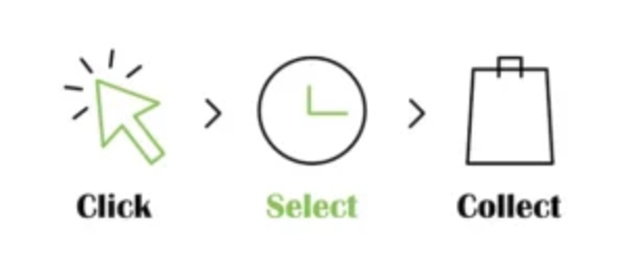
The modern retail landscape moves fast. Consumers no longer want to wait days for a package to arrive, nor do they want to spend their limited free time wandering down crowded store aisles looking for a single item. This shift in consumer behavior has driven the massive rise of hybrid shopping models. If you are wondering what is click and collect and how it reshapes the modern shopping experience, you are in the right place. At Bearcat Express, we see firsthand how smart logistics power seamless retail operations every day. This human-first guide breaks down how this fulfillment method works, its diverse operational models, its core benefits, and how to avoid the logistical bottlenecks that can break the customer experience. What Is Click and Collect?   At its simplest, click and collect is a hybrid retail model that allows consumers to purchase items online and pick them up in person at a designated physical location. Instead of waiting for a traditional courier to drop a package off at their doorstep, the shopper acts as the final link in the delivery chain. In many retail circles, this strategy is also known as BOPIS, which stands for Buy Online, Pick Up In Store. A Real-World Scenario: Imagine sitting on your couch on a Friday evening, realizing you need a specific tool for a weekend home project. Instead of driving to the store, searching the aisles, and hoping it is in stock, you buy it on your smartphone. An hour later, you drive over, grab your ready-to-go parcel from a dedicated desk, and head home. While variations of this service have existed for years, the model experienced a permanent post-2020 retail shift. What began as a safety-first necessity evolved into a permanent consumer expectation focused entirely on speed, certainty, and convenience. How Does Click and Collect Work? (Step-by-Step Process)   A successful click and collect system relies on an interconnected workflow behind the scenes. When a consumer clicks “buy,” a highly synchronized operational sequence begins. Step 1: Online Order Placement The customer visits a retailer’s website or mobile app, adds items to their digital cart, and selects the pickup option at checkout instead of home delivery. They choose their preferred physical location based on real-time local stock availability. Step 2: Order Routing and Preparation The store’s inventory management system instantly routes the order to the selected location. A retail associate receives the digital picking list on a handheld device, gathers the items from the sales floor or backroom, and packs them securely. Step 3: Inventory Replenishment and Transit If an item is out of stock locally but available at a nearby distribution hub, the retailer initiates a rapid stock transfer. This is where dedicated local logistics providers enter the pipeline, moving goods quickly from central warehouses to store shelves to ensure order readiness. Step 4: Ready-for-Pickup Notification Once the order is verified and securely staged, the retailer sends an automated SMS or email alert to the buyer. This notification contains crucial details, including a unique pickup barcode, a confirmation code, and clear instructions on where to go. Step 5: Secure Collection The customer arrives at the designated location, presents their confirmation code or barcode, and receives their items. The associate scans the order as “complete,” updating the retailer’s central database in real time. Types of Click and Collect Services Not all retail environments are suited for a single pickup style. To maximize convenience, businesses utilize several variations of the click and collect solution to fit diverse real-world customer needs. 1. In-Store Pickup Counter The most traditional format involves a dedicated desk or customer service counter inside the physical retail store. It encourages foot traffic, bringing buyers through the doors where they might remember additional items they need to purchase. 2. Curbside Pickup Highly popularized by supermarkets and big-box retailers, curbside delivery removes the need for the customer to leave their vehicle. Shoppers park in designated, numbered spaces and use an app or text message to alert staff, who then bring the items directly to the car’s trunk. 3. Smart Locker Pickup Smart lockers offer an automated, contactless alternative. Retailers place electronic lockers outside their stores or in high-traffic community hubs. The customer receives a digital PIN or QR code, scans it at the locker terminal, and a secure door automatically pops open. 4. Third-Party Pickup Points For retailers without a local brick-and-mortar presence, partnering with alternative locations such as neighborhood convenience stores, gas stations, or local business hubs allows them to offer proximity-based pickup without paying for expensive real estate. Operational Comparison Matrix Pickup Type Operational Speed Customer Convenience Best Suited For In-Store Counter Fast Medium Everyday retail, apparel, and specialty goods Curbside Very Fast High Grocery, heavy items, and busy parents Smart Locker 24/7 Access Very High After-hours pickup and small electronics Third-Party Point Varies Medium Remote shoppers and e-commerce brands Benefits of Click and Collect for Customers Modern shoppers prioritize control over their schedules. A well-executed click & collect order pick-up option satisfies this need by solving several historical pain points of online commerce. Zero Shipping Fees: Shoppers bypass standard delivery charges completely, making it an incredibly cost-effective way to shop online without hitting minimum order thresholds. Elimination of “Porch Piracy”: Packages are held securely within a monitored facility rather than being left unattended on a front doorstep, eliminating the risk of theft or weather damage. Predictable Scheduling: Buyers no longer have to endure broad, vague home delivery windows. They choose exactly when to pick up their items based on their daily routine. Instant Returns and Exchanges: If an apparel item doesn’t fit or a product isn’t what the buyer expected, they can handle the return or exchange on the spot with store associates, saving a return trip to the post office. Benefits of Click and Collect for Retailers Implementing a robust click and collect retail strategy is equally advantageous for the business balance sheet, acting as a powerful tool to streamline operations and boost margins. Drastic Reductions in Last-Mile

what is hub and spoke model
Delivery

What Is the Hub and Spoke Model? (Complete Guide)

As a delivery network grows, managing direct routes between every location can become expensive and difficult. More connections require additional vehicles, schedules, coordination, and operational planning. What Is the Hub and Spoke Model? It is a network structure that connects multiple locations through a central facility called a hub. Shipments move from local locations, known as spokes, to the hub before being sorted and sent toward their destinations.  This approach simplifies network management and supports consolidation, making it useful in transportation, logistics, retail, and distribution. For Bearcat Express, understanding the model helps explain how larger delivery networks organize efficient transportation and regional distribution.  Key Takeaways The hub and spoke model routes shipments through one central facility before sending them to their final destination, instead of moving them directly from origin to recipient. It reduces cost and simplifies scaling for high-volume, long-distance shipping, but it adds handling time that can work against time-sensitive local deliveries. Local same-day couriers often bypass the hub entirely and route packages straight from pickup to drop-off. The right distribution strategy depends on three factors: urgency, distance, and shipment volume. What Is the Hub and Spoke Model?   The hub and spoke model is a logistics network design where a central facility, the hub, receives shipments from multiple origin points, sorts them, and then sends them outward to their final destinations, the spokes. Instead of every location shipping directly to every other location, everything funnels through one central point first. This is the standard answer to what is hub and spoke model in a transportation or supply chain context, and the structure applies well beyond parcel delivery. The hub and spoke model meaning is easiest to picture as a bicycle wheel. The hub sits at the center, and each spoke extends outward to a separate location. Shipments never move directly between two spokes. They pass through the hub first, get sorted, and are then dispatched onward. Because the visual layout is nearly identical, the term spoke-and-wheel model is often used as a direct substitute for hub and spoke. A Simple Real-World Example Picture a regional distributor serving five cities without a hub. Every city would need its own direct route to every other city, which multiplies quickly as the network grows. Add a hub, and all five cities instead send their shipments to one central sorting point, where loads get consolidated by destination before trucks are dispatched. Fewer trips, fuller loads, and a network that stays manageable even as new cities are added. Where the Term Comes From The spoke-and-wheel model is not a new idea borrowed from ecommerce. Airlines built the modern version of it in the mid-1950s, when carriers realized that routing passengers through a handful of major airports was far more efficient than flying every city pair directly. The freight and telecom industries later adopted the same structure under different names, including “star network” topology, which is why you will sometimes see the hub and spoke business model referenced across fields that have nothing to do with trucks or airplanes. How the Hub and Spoke System Works   The hub and spoke system breaks down into three operational phases, each with a distinct job. Collection Phase Packages are picked up from multiple origin points, whether that is a warehouse, retail counter, or an individual sender, and transported to the nearest hub rather than straight to their destination. Carriers typically batch several pickups into one trip to make the run to the hub worthwhile. Central Sorting Once shipments reach the hub, they are sorted by final destination using conveyor systems, barcode scanning, and automated routing technology capable of processing thousands of packages an hour. This is the operational core of the hub and spoke system, since a sorting error here ripples outward and delays shipments that had nothing to do with the original mistake. Redistribution to Final Destination Sorted packages headed to the same region are grouped and loaded onto outbound trucks, planes, or trains, which then travel to secondary hubs or straight into the delivery area for the final leg. That last stretch, commonly called the last mile, tends to be the slowest and most expensive part of the entire trip. Types of Hub and Spoke Networks Not every hub and spoke system looks the same, and the version a business uses affects both cost and speed. Single-Hub Networks A single-hub network routes every shipment through one central facility regardless of where it starts or ends. This keeps the operation simple to manage, but it means a shipment traveling between two nearby cities might still pass through a hub located hundreds of miles away, adding unnecessary distance and time. Multi-Hub (Hierarchical) Networks Larger carriers often run a multi-hub, or hierarchical, structure instead, with regional hubs feeding into a smaller number of major national hubs. A shipment moves through its nearest regional hub first, and only escalates to a national hub if it is traveling a long distance. This cuts down on unnecessary mileage compared to a single-hub design, though it adds another layer of coordination to manage. Where the Hub and Spoke Model Is Commonly Used National Parcel Carriers Large parcel networks depend on regional and national hubs to move high volumes efficiently. A shipment crossing several states will often pass through two or three hubs before arriving, even when the direct distance is relatively short. Airline Networks Airlines route passengers and cargo through major hub airports instead of flying every city pair directly, which is why a flight from a smaller airport often connects through a larger one before reaching its final stop. Retail Distribution Retailers use a central distribution center to receive bulk shipments from suppliers, then redistribute smaller quantities to individual stores based on demand, so no single store has to manage relationships with every supplier. E-Commerce Fulfillment and 3PL Warehousing Ecommerce brands and third-party fulfillment providers increasingly build their own hub and spoke business model by placing inventory in regional fulfillment centers that feed off a central receiving hub.

Is Tissue Paper Good for Shipping Clothes
Delivery

Is Tissue Paper Good for Shipping Clothes? An Expert Courier Verdict

Shipping clothes may seem simple, but small packaging mistakes can have big consequences. A customer might receive deeply wrinkled fabric, or a boutique could get damp inventory after a rainy delivery. Even a carefully folded dress can shift and lose its presentation. So, Is Tissue Paper Good for Shipping Clothes? Sometimes, but rarely enough on its own.  At Bearcat Express, we handle boutique transfers, same-day retail shipments, and local clothing deliveries daily. With real-world logistics experience, we know what protects garments in transit. This guide offers practical, hands-on advice for boutique owners, online sellers, or anyone shipping apparel. The Core Benefits: Why Clothes Sellers Use Tissue Paper   Scratch & Friction Barrier When clothes are in transit, they shift constantly inside their mailing bags or boxes. This movement causes continuous friction against the rough internal surfaces of corrugated boxes or plastic mailers. Utilizing fine tissue paper for wrapping clothes provides a smooth, soft barrier that absorbs this friction. This is especially crucial for delicate fabrics like silk, satin, fine linen, or garments with intricate lace and embroidery. Without this protective layer, rough handling can cause pilling, loose threads, or surface abrasions on luxury garments before the customer even opens the package. Static and Wrinkle Prevention Long-distance transit shifts and temperature changes create static electricity, especially inside synthetic plastic mailers. This static pulls at fabrics, causing deep wrinkles and making garments look messy upon arrival. Knowing how to wrap clothes with tissue paper properly allows you to create a snug, structured envelope around the item. This minimizes the fabric’s ability to shift or unfold during bumpy transit routes, ensuring that when the customer slides the garment out, it retains its neatly folded shape. Moisture & Breathability Balance Unlike plastic bags, high-quality packing paper for clothes offers a natural breathability factor. Ambient humidity inside delivery vans can cause condensation to trap within a sealed plastic layer, creating musty odors or mildew risks on natural fibers like cotton and wool. Tissue paper naturally absorbs tiny amounts of ambient moisture, acting as a buffer that keeps the internal environment of the parcel dry and fresh during short-term storage and local shipping routes. Cost and Weight Efficiency In modern logistics, shipping costs are heavily dictated by dimensional weight. Heavy, bulky bubble wrap or thick cardboard dividers add unnecessary weight and volume to your packages, driving up your fulfillment expenses. Tissue paper is incredibly lightweight and thin, allowing you to add a layer of interior elegance and basic protection without altering the package’s physical dimensions or adding measurable weight to your final shipping metrics. The Hidden Risks: When Tissue Paper Fails The Dye Bleeding Nightmare One of the most frequent errors online apparel startups make is using cheap, brightly colored tissue paper without testing its chemical stability. When packages encounter sudden humidity changes or a delivery vehicle gets caught in heavy rain, moisture can seep through outer packaging layers. If your tissue paper isn’t premium or acid-free, the dyes will quickly dissolve and bleed directly onto your clothing items, permanently staining light fabrics like whites, creams, or pastel pastels. Zero Structural Integrity While tissue paper is excellent for preventing minor surface friction, it possesses absolutely zero impact resistance or structural strength. If a heavy 40-pound industrial box falls directly onto a clothing parcel wrapped only in tissue paper inside a flimsy poly mailer, the tissue paper will compressed completely. It offers no cushioning against crushing forces, drop impacts, or heavy compression from stacked parcels inside sorting facilities. The Tear Factor If the outer layer of your package such as a lightweight poly mailer is punctured, torn, or sliced by automated machinery at a sorting center, the inner tissue paper will instantly rip along with it. Because tissue paper has low tensile strength, it cannot act as a secondary backup shield to keep the clothing safe from dust, grease, or dirt once the outer barrier has been compromised. Tissue Paper vs. Other Inner Packaging Materials Packaging Material Protection Level Aesthetic Appeal Weather Resistance Weight Impact Tissue Paper Low (Friction Only) High / Premium Low (Absorbent) Extremely Low Clear Poly Bags Medium (Scratch/Dirt) Low / Industrial High (Waterproof) Low Kraft Packing Paper Medium (Stiff/Thick) Minimal / Rustic Medium (Absorbent) Low to Medium Plastic Garment Bags High (Full Cover) Medium High (Waterproof) Low Evaluating these options shows that while tissue paper wins on aesthetics and presentation, it lags behind plastic alternatives in terms of raw durability and water resistance. Thick kraft packing paper for clothes provides superior stiffness and protection against heavy impacts, but it lacks the soft touch required for delicate luxury apparel. The Logistics Blueprint: When to Use vs. Avoid Tissue Paper Ideal Scenarios (Green Signal) Tissue paper shines best when utilized for low-risk, fast-moving fulfillment routes. If you are using a professional Same Day Delivery Service Augusta GA to move inventory locally from a boutique storefront directly to a customer’s home, tissue paper inside a clean mailer is an outstanding choice. The parcel spends very little time handling heavy distribution conveyor belts or being stacked underneath massive industrial cargo, making the risk of damage incredibly low. It is also perfect for lightweight casual wear such as standard T-shirts, denims, and summer dresses. Risk Scenarios (Red Signal) You should completely avoid relying solely on tissue paper when your items are heading into cross-country, long-distance freight networks where packages undergo heavy stacking and frequent transfers. Furthermore, luxury items like heavy leather jackets, heavily embellished wedding gowns, or clothing with sharp metallic studs can quickly tear through thin tissue paper, rendering its protective qualities completely useless. Step-by-Step: How to Pack Clothes Safely Using Tissue Paper Step 1: Fabric Selection & Inspection Before wrapping, verify that you are using acid-free, bleed-resistant tissue paper. Standard cheap retail wrap contains residual chemicals that degrade over time and react poorly with moisture. Lay down two clean sheets of tissue paper on a completely dry, clean packing table. Step 2: The Wrapping Technique Knowing how to wrap clothes in tissue paper effectively requires

how long will dry ice keep meat frozen
Delivery

How Long Will Dry Ice Keep Meat Frozen?

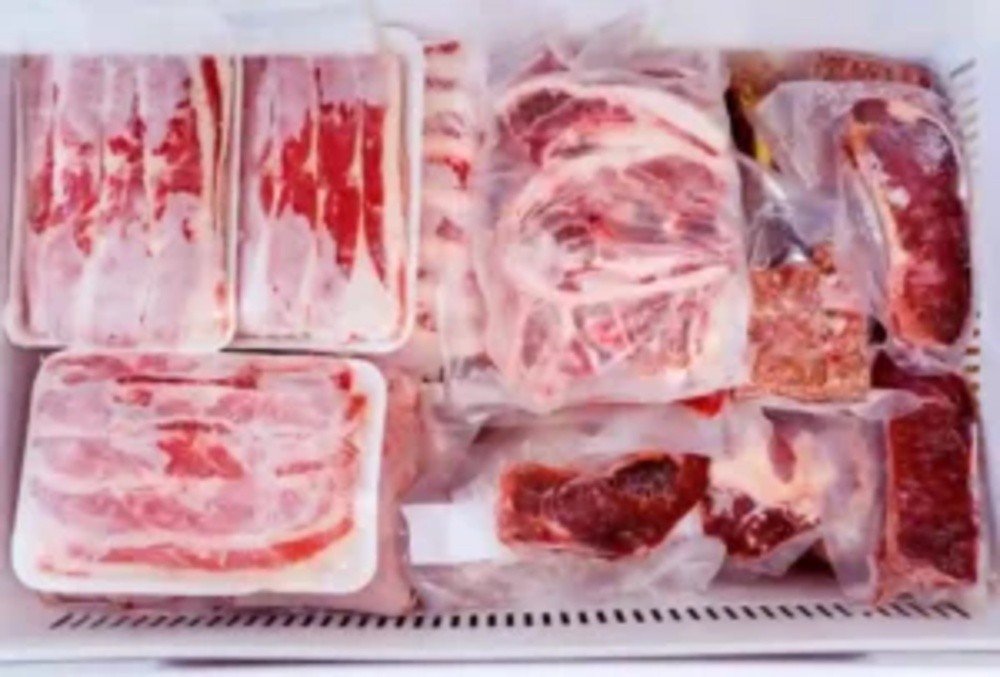
Picture a box of steaks leaving the freezer at 8 a.m. Will it reach the porch rock hard or soft and sad? That comes down to the dry ice and the box. At Bearcat Express, we move cold shipments often enough to know most thawed-meat complaints trace back to one question: how long does dry ice last when shipping?  In a well-insulated foam cooler with a lid that isn’t airtight, it lasts 24 to 48 hours, burning off 5 to 10 pounds a day. Pack at least 5 pounds for overnight, 10 to 20 for two days, plus a spare day’s worth. Quick Answer: How Long Dry Ice Keeps Meat Frozen Properly packed, dry ice keeps meat frozen for about 24 to 48 hours. That assumes a thick foam cooler, a loose-fitting lid, and enough dry ice to cover the entire trip. Dry ice doesn’t melt. It sublimates, meaning it turns straight from a solid into carbon dioxide gas, and a typical shipping box loses 5 to 10 pounds of it every 24 hours. So how long does dry ice keep meat solid? Until the last chunk is gone. After that, the meat starts warming up. That’s why shippers think in pounds per day instead of hours per pound. A sensible starting point is 5 pounds for overnight and 10 to 20 pounds for two days, with one extra day of dry ice added as a cushion for delays. What Decides How Long Dry Ice Lasts Anyone asking how long dry ice lasts when shipping is really asking about six variables. You control most of them. Insulation. Foam walls 2 to 3 inches thick slow sublimation far better than a thin box. Thickness is the single biggest lever. Quantity. More dry ice buys more time. There’s no clever trick around this one. Outside temperature. A hot loading dock or a delivery van with no air conditioning burns through dry ice much faster than a cool morning does. Empty space. Air inside the box warms up and speeds the loss. A snug fit lasts longer than a half-empty cooler. Opening the lid. Every peek lets cold gas escape and warm air in. Starting temperature. Meat frozen solid acts like a cold battery. Meat that’s only partly frozen forces the dry ice to do extra work before it can hold steady. Shipping Box Requirements: Styrofoam vs. Insulated Liners The container is your first defense against outside heat, and not every option is built for the same job. Whatever you choose, put it inside a sturdy outer carton so the foam doesn’t crack in handling. Container Wall Thickness Best For Limit Molded EPS foam cooler 2 to 3 inches Trips of 24 to 48 hours Bulky and needs an outer carton Thin foam cooler Under 1 inch Short local hops only Loses dry ice quickly Foil-faced liner in a cardboard box Very thin Same-day runs of a few hours Not made for multi-day transit If you’ve been wondering how long does dry ice last shipping in a flimsy cooler, the honest answer is not long enough to trust with meat. Thick EPS foam is the right call for anything beyond a short drive. Exactly How Much Dry Ice Do You Need per Pound of Meat? Here’s the part most guides get wrong. The weight of the meat matters less than the length of the trip and the quality of the cooler. Meat weight mostly decides the size of the cooler you need. Transit time decides how many pounds of dry ice go in. The numbers below come straight from the 5 to 10 pounds per day burn rate. Transit Time Base Amount With One-Day Buffer Overnight (24 hours) 5 to 10 lbs 10 to 20 lbs 2 days (48 hours) 10 to 20 lbs 15 to 30 lbs 3 days (72 hours) 15 to 30 lbs 20 to 40 lbs In summer, or on any route with a hot truck, load the top of each range. A quick check before you buy: how long will dry ice last for shipping a 10-pound order over two days? Only as long as the pounds you load, which is why the 2-day row exists. Dry ice commonly sells for $1 to $3 per pound, and bulk pricing is usually cheaper, so a two-day box with 15 pounds could cost $15 to $45 in dry ice alone. Use blocks for the bulk of the load because they sublimate more slowly. Save pellets for filling small gaps around the meat. Dry Ice vs. Gel Packs vs. Regular Ice: Which Should You Use? Cooling Agent Temperature Works For Watch Out For Dry ice About -109°F (-78.5°C) Meat that must stay frozen on a long trip Frostbite risk and gas buildup Gel packs Around freezing Refrigerated items and short trips Can’t hold meat frozen for days Regular ice 32°F Local, same-day cold runs Melts into water that soaks the box For frozen meat on anything longer than a short drive, dry ice wins. Gel packs are fine when the meat only needs to stay cold. Regular ice is the weakest choice for frozen shipments because meltwater softens cardboard and can refreeze into an uneven block around the product. Don’t mix dry ice and regular ice in the same cooler. Step-by-Step Packaging for Couriers (Leak-Proof Method) Start the night before. Freeze the meat solid, and pre-chill the cooler for a few hours with ice packs, then dump them out. A cold cooler doesn’t steal cold from your dry ice in the first hour. Wrapping the Meat to Prevent Sublimation Damage Vacuum seal each piece, then add a layer of butcher paper or a thin cardboard sleeve. Direct contact with dry ice can cause freezer burn and make the surface brittle, so don’t skip the barrier. Placing Dry Ice Safely Without Blocking Gas Release Cold air sinks, so lay the dry ice on top of and around the meat, not underneath it. Fill every gap with crumpled paper. Close the lid,

Which Type of Transport is Suitable for Fragile Goods
Delivery

Which Type of Transport is Suitable for Fragile Goods?

Every year, millions of dollars’ worth of goods are damaged in transit not from bad luck, but from the wrong transport choice. A cracked glass piece, a shattered electronic, or damaged medical equipment costs far more than the item itself. It costs time, reputation, and customer trust. Figuring out which type of transport is suitable for fragile goods isn’t straightforward.  The right answer depends entirely on what you’re shipping and where. Whether it’s a local delivery or a long-distance shipment, every decision matters. At Bearcat Express, we’ve seen firsthand what goes wrong when fragile goods meet the wrong courier and we’ve made it our mission to ensure it never happens to you. Why Fragile Goods Demand Special Transportation   Most people don’t think about what happens to a package between the moment it leaves their hands and the moment it arrives at its destination. The reality is that a standard shipment can pass through four to six handling points, each one a potential moment of damage. Fragile goods transport is not simply about being careful. It’s about designing a delivery process where carefulness is built into every step. A poorly chosen transport method exposes your item to vibration, sudden impact, pressure from stacking, moisture, and temperature changes. The result? Fragile items breaking before they ever reach the customer. According to industry data, roughly 11% of all packages experience some form of damage during shipping. For fragile goods, that number is significantly higher when improper methods are used. The financial impact aside, damaged shipments damage relationships, and in business, that’s often the harder loss to recover from. What Makes Fragile Goods Different? Definition & Examples Not everything that breaks is classified as fragile in a logistics sense. In the transport industry, fragile goods refer to items that require special handling, cushioning, or environmental controls because they are at high risk of damage from normal shipping conditions. Common types of fragile goods include: Electronics such as laptops, monitors, and smartphones are among the most commonly shipped fragile items. They’re sensitive to static, impact, and moisture. Glassware and ceramics, from fine dining sets to decorative pieces, can shatter from a single drop or even sustained vibration. Medical equipment requires not only physical protection but also often strict temperature and humidity controls. Artwork and antiques carry both monetary and sentimental value that can never truly be replaced. Even bottled food products, wines, and specialty beverages fall into the fragile category because of their breakable containers. Item Type Primary Risk Special Need Electronics Impact, static Anti-static padding Glassware Shattering Foam inserts, double boxing Medical Equipment Impact, temperature Climate control, secure mounting Artwork/Antiques Pressure, moisture Custom crating Food & Beverages Breakage, leakage Upright positioning, sealed packaging Understanding your item type is the first step toward selecting the right fragile delivery service. Key Factors to Consider Before Choosing Transport Choosing a transport method without considering your shipment’s specific requirements is one of the most common and costly mistakes shippers make. Before you book anything, run through this checklist: Distance Local vs. Long Distance: For short-distance deliveries within a city or region, a dedicated road courier is almost always the best option. For cross-country or international shipments, air freight may be worth the added cost. The longer the distance, the more transfer points are involved, and each transfer is a risk. Weight and Size: Heavier items may be better suited to specialized road freight vehicles with proper mounting systems. Lightweight but delicate items are ideal for courier services that offer individual package care. Urgency Same-Day vs. Standard Delivery: If timing is critical, standard postal or freight services introduce too many unknowns. A same-day dedicated courier gives you control over timing and handling. Climate and Temperature Sensitivity: Conveying fragile materials that are also temperature-sensitive, like certain medical supplies or specialty food items, requires a transport method with climate-controlled vehicles. Handling Frequency and Transfer Points: Every time a package is handed from one carrier to another, the risk of damage increases. Dedicated courier services minimize this by maintaining a single chain of custody from pickup to delivery. Value and Insurance: High-value items should always travel with comprehensive insurance. Verify before booking that your chosen service offers adequate coverage. Complete Breakdown | Best Types of Transport for Fragile Goods Road Transport Best for Local and Short-Distance Delivery Road transport remains the most widely used method for fragile goods, and for good reason. It offers door-to-door service, flexible scheduling, and the ability to closely monitor shipments. For local deliveries, a dedicated road courier means your item is loaded once, handled by one driver, and delivered directly without the repeated loading and unloading that damages so many shipments. Air Transport For Urgent Long-Distance Shipments When distance is the challenge and time is short, air freight is the go-to solution for high-value fragile goods. The transit time is significantly reduced, which lowers the window of risk. However, air freight involves multiple handling stages, check-in, loading, unloading, and transfer, which means packaging must be exceptionally robust. Dedicated Courier Service Same-Day Local Delivery This is the gold standard for fragile goods transport within a city or region. A dedicated courier picks up your item and delivers it without any intermediate stops. There are no sorting facilities, no shared trucks, and no unknown handlers. For businesses that regularly ship delicate items locally, this is the most reliable option. White Glove Delivery Service For High-Value Items White-glove delivery goes beyond standard courier service. Trained professionals handle packing, transport, and even installation at the point of delivery. It’s ideal for antiques, medical devices, custom furniture, and high-value electronics. Sea Transport For Bulk International Cargo Sea transport is suited for large volumes of fragile goods being shipped internationally when time is not a constraint. The long transit duration, humidity exposure, and extensive handling make it unsuitable for individually delicate or time-sensitive items unless they are heavily crated and insured. Rail Transport For Large Domestic Freight Rail offers a stable and cost-effective option for large domestic fragile shipments, with less

Scroll to Top