

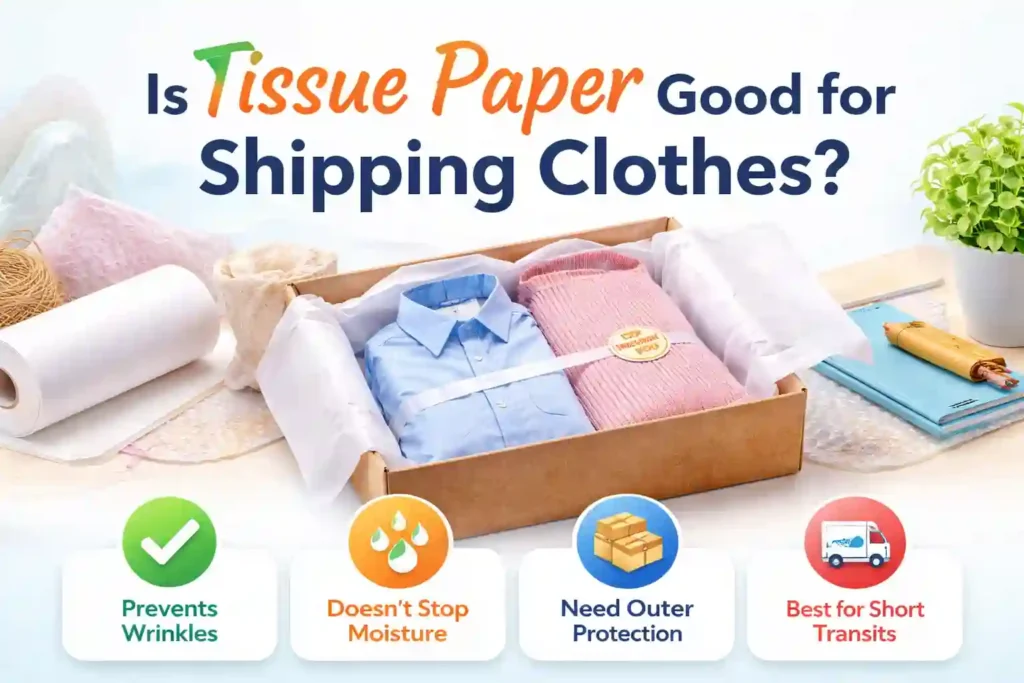
Shipping clothes may seem simple, but small packaging mistakes can have big consequences. A customer might receive deeply wrinkled fabric, or a boutique could get damp inventory after a rainy delivery. Even a carefully folded dress can shift and lose its presentation. So, Is Tissue Paper Good for Shipping Clothes? Sometimes, but rarely enough on its own.
At Bearcat Express, we handle boutique transfers, same-day retail shipments, and local clothing deliveries daily. With real-world logistics experience, we know what protects garments in transit. This guide offers practical, hands-on advice for boutique owners, online sellers, or anyone shipping apparel.
The Core Benefits: Why Clothes Sellers Use Tissue Paper
Scratch & Friction Barrier
When clothes are in transit, they shift constantly inside their mailing bags or boxes. This movement causes continuous friction against the rough internal surfaces of corrugated boxes or plastic mailers. Utilizing fine tissue paper for wrapping clothes provides a smooth, soft barrier that absorbs this friction. This is especially crucial for delicate fabrics like silk, satin, fine linen, or garments with intricate lace and embroidery. Without this protective layer, rough handling can cause pilling, loose threads, or surface abrasions on luxury garments before the customer even opens the package.
Static and Wrinkle Prevention
Long-distance transit shifts and temperature changes create static electricity, especially inside synthetic plastic mailers. This static pulls at fabrics, causing deep wrinkles and making garments look messy upon arrival. Knowing how to wrap clothes with tissue paper properly allows you to create a snug, structured envelope around the item. This minimizes the fabric’s ability to shift or unfold during bumpy transit routes, ensuring that when the customer slides the garment out, it retains its neatly folded shape.
Moisture & Breathability Balance
Unlike plastic bags, high-quality packing paper for clothes offers a natural breathability factor. Ambient humidity inside delivery vans can cause condensation to trap within a sealed plastic layer, creating musty odors or mildew risks on natural fibers like cotton and wool. Tissue paper naturally absorbs tiny amounts of ambient moisture, acting as a buffer that keeps the internal environment of the parcel dry and fresh during short-term storage and local shipping routes.
Cost and Weight Efficiency
In modern logistics, shipping costs are heavily dictated by dimensional weight. Heavy, bulky bubble wrap or thick cardboard dividers add unnecessary weight and volume to your packages, driving up your fulfillment expenses. Tissue paper is incredibly lightweight and thin, allowing you to add a layer of interior elegance and basic protection without altering the package’s physical dimensions or adding measurable weight to your final shipping metrics.
The Hidden Risks: When Tissue Paper Fails
The Dye Bleeding Nightmare
One of the most frequent errors online apparel startups make is using cheap, brightly colored tissue paper without testing its chemical stability. When packages encounter sudden humidity changes or a delivery vehicle gets caught in heavy rain, moisture can seep through outer packaging layers. If your tissue paper isn’t premium or acid-free, the dyes will quickly dissolve and bleed directly onto your clothing items, permanently staining light fabrics like whites, creams, or pastel pastels.
Zero Structural Integrity
While tissue paper is excellent for preventing minor surface friction, it possesses absolutely zero impact resistance or structural strength. If a heavy 40-pound industrial box falls directly onto a clothing parcel wrapped only in tissue paper inside a flimsy poly mailer, the tissue paper will compressed completely. It offers no cushioning against crushing forces, drop impacts, or heavy compression from stacked parcels inside sorting facilities.
The Tear Factor
If the outer layer of your package such as a lightweight poly mailer is punctured, torn, or sliced by automated machinery at a sorting center, the inner tissue paper will instantly rip along with it. Because tissue paper has low tensile strength, it cannot act as a secondary backup shield to keep the clothing safe from dust, grease, or dirt once the outer barrier has been compromised.
Tissue Paper vs. Other Inner Packaging Materials
| Packaging Material | Protection Level | Aesthetic Appeal | Weather Resistance | Weight Impact |
| Tissue Paper | Low (Friction Only) | High / Premium | Low (Absorbent) | Extremely Low |
| Clear Poly Bags | Medium (Scratch/Dirt) | Low / Industrial | High (Waterproof) | Low |
| Kraft Packing Paper | Medium (Stiff/Thick) | Minimal / Rustic | Medium (Absorbent) | Low to Medium |
| Plastic Garment Bags | High (Full Cover) | Medium | High (Waterproof) | Low |
Evaluating these options shows that while tissue paper wins on aesthetics and presentation, it lags behind plastic alternatives in terms of raw durability and water resistance. Thick kraft packing paper for clothes provides superior stiffness and protection against heavy impacts, but it lacks the soft touch required for delicate luxury apparel.
The Logistics Blueprint: When to Use vs. Avoid Tissue Paper
Ideal Scenarios (Green Signal)
Tissue paper shines best when utilized for low-risk, fast-moving fulfillment routes. If you are using a professional Same Day Delivery Service Augusta GA to move inventory locally from a boutique storefront directly to a customer’s home, tissue paper inside a clean mailer is an outstanding choice. The parcel spends very little time handling heavy distribution conveyor belts or being stacked underneath massive industrial cargo, making the risk of damage incredibly low. It is also perfect for lightweight casual wear such as standard T-shirts, denims, and summer dresses.
Risk Scenarios (Red Signal)
You should completely avoid relying solely on tissue paper when your items are heading into cross-country, long-distance freight networks where packages undergo heavy stacking and frequent transfers. Furthermore, luxury items like heavy leather jackets, heavily embellished wedding gowns, or clothing with sharp metallic studs can quickly tear through thin tissue paper, rendering its protective qualities completely useless.
Step-by-Step: How to Pack Clothes Safely Using Tissue Paper
Step 1: Fabric Selection & Inspection
Before wrapping, verify that you are using acid-free, bleed-resistant tissue paper. Standard cheap retail wrap contains residual chemicals that degrade over time and react poorly with moisture. Lay down two clean sheets of tissue paper on a completely dry, clean packing table.
Step 2: The Wrapping Technique
Knowing how to wrap clothes in tissue paper effectively requires a strategic folding approach. Lay the garment flat in the center of your paper sheets. Fold the sleeves and sides inward neatly. Take the bottom edge of the tissue paper and fold it up over the lower half of the apparel, then fold the top down, creating a tight, smooth envelope package.
Step 1: Lay garment flat on two sheets of acid-free tissue paper.
Step 2: Fold sleeves and outer edges cleanly inward.
Step 3: Fold the paper up from the bottom and down from the top to form an envelope.
Step 4: Seal the tissue seams with a gentle paper sticker.
Step 3: The Moisture Barrier Rule
Never let tissue paper be the final exterior layer of your shipment. Once you know how to wrap clothes with tissue paper safely, slide the entire wrapped package into a weather-resistant outer layer. This outer layer should be a heavy-duty poly mailer or a sturdy corrugated box to guard against environmental hazards.
Step 4: Sealing Without Damage
Secure the tissue paper envelope seams using a branded paper sticker or a light piece of paper tape. Avoid using strong, aggressive industrial plastic tapes on the inner tissue wrap, as the customer will likely tear the underlying clothing while trying to cut through heavy tape during unboxing.
You may also read: How Long Will Dry Ice Keep Meat Frozen When Shipping?
Insider Courier Secrets for Damage-Free Apparel Delivery
From our operational perspective at Bearcat Express, we see thousands of packages move through high-speed automated sorting facility environments daily. Parcels do not travel alone; they travel alongside heavy machinery parts, tools, and large bulk boxes. If an inner clothing item can move freely or slide around within its final outer box, the tissue paper will gradually disintegrate from the constant internal friction.
To prevent this, always perform the “Shake Test.” Once your clothing is fully wrapped and placed inside the final box, give it a firm shake. If you feel the item sliding from side to side, you need to add extra void fill or use a smaller outer container size. Ensuring a snug fit preserves the integrity of your inner packaging and ensures a flawless presentation.
Sustainability Check: Is Tissue Paper Eco-Friendly?
Standard, unprinted matte tissue paper is highly sustainable, completely biodegradable, and easily recyclable by the end consumer. However, if your brand switches to gloss-coated, foil-stamped, or heavily glittered tissue papers to enhance aesthetics, you compromise its eco-friendly benefits. These chemical coatings prevent the paper from breaking down naturally during the recycling process, forcing it into landfills instead. For a truly green brand image, stick to water-based inks on raw, unbleached recyclable materials.
Conclusion
Balancing a gorgeous, memorable unboxing experience with practical shipping security is a challenge every e-commerce clothing business must solve. Tissue paper is an excellent, cost-effective tool for preventing fabric friction, static, and minor wrinkles, but it must be paired with durable, weather-resistant outer layers to withstand the realities of modern shipping networks. For businesses focusing on regional sales, combining high-quality inner wrap with a trusted local courier service ensures your products arrive looking immaculate. If you want to elevate your business fulfillment strategy and ensure flawless delivery every time, feel free to contact Bearcat Express today to learn more about our tailored logistics solutions.
Frequently Asked Questions
Can I ship clothes using only tissue paper inside a cardboard box?
No, shipping garments with only tissue paper inside a standard box leaves your inventory highly vulnerable to water damage if the box gets wet. You should always use a secondary moisture barrier like a clear plastic bag or a waterproof mailer over the tissue layer to guarantee full environmental protection.
How do I stop colored tissue paper from staining clothes if it gets wet?
To completely prevent staining issues, always purchase high-quality, certified, bleed-resistant, and acid-free tissue paper for your business fulfillment. Additionally, you can run a simple spot test by dampening a sheet of the paper and pressing it onto a scrap piece of white cloth to ensure no dye transfers.
How many sheets of tissue paper should be used per clothing item?
For standard, lightweight items like t-shirts or blouses, two sheets of high-quality tissue paper are generally sufficient to provide scratch protection. For heavier garments like thick knit sweaters or structured blazers, you should use three to four sheets to ensure the wrap remains intact throughout transit.
Is acid-free tissue paper mandatory for shipping clothes?
Yes, using acid-free tissue paper is highly recommended if your garments are going to spend more than a few days in transit or storage. Standard papers contain acids that can break down over time, causing delicate white or light-colored fabrics to yellow or discolor around the edges.