
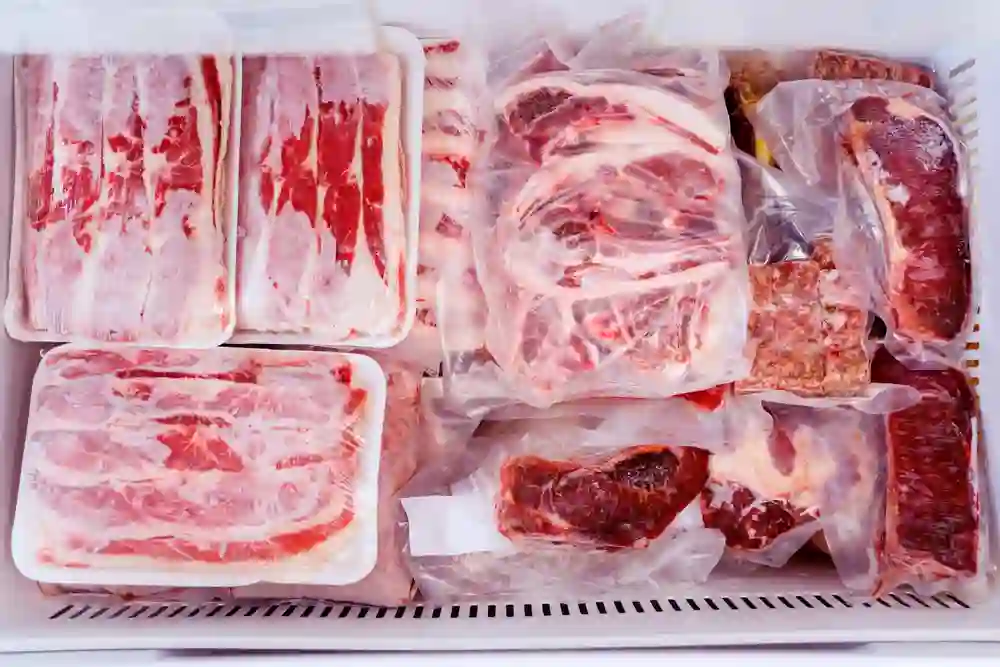
When you are shipping frozen meat across town or across three states, the question that decides whether the order survives the trip is simple: how long will dry ice keep meat frozen? At Bearcat Express, we move temperature-sensitive freight every week, and the honest answer is that in a properly packed container, dry ice holds meat rock solid for 24 to 72 hours.
Unlike regular ice, dry ice sublimates directly into gas at -109.3°F, so it never leaves behind a puddle that soaks through your box or drowns your labels. That window depends on three things you control: insulation, dry ice quantity, and how much empty air sits inside the cooler.
Quick Answer: How Long Dry Ice Keeps Meat Frozen
5 to 10 pounds of dry ice packed around 5 to 10 pounds of meat tightly inside a 1.5- to 2-inch-thick Styrofoam cooler typically keeps meat frozen for 24 to 48 hours, up to 72 hours under ideal, tightly sealed conditions. Thin, dollar-store coolers cut that window to under 12 hours because heat moves through the walls too easily.
Shipping Box Requirements: Styrofoam vs. Insulated Liners
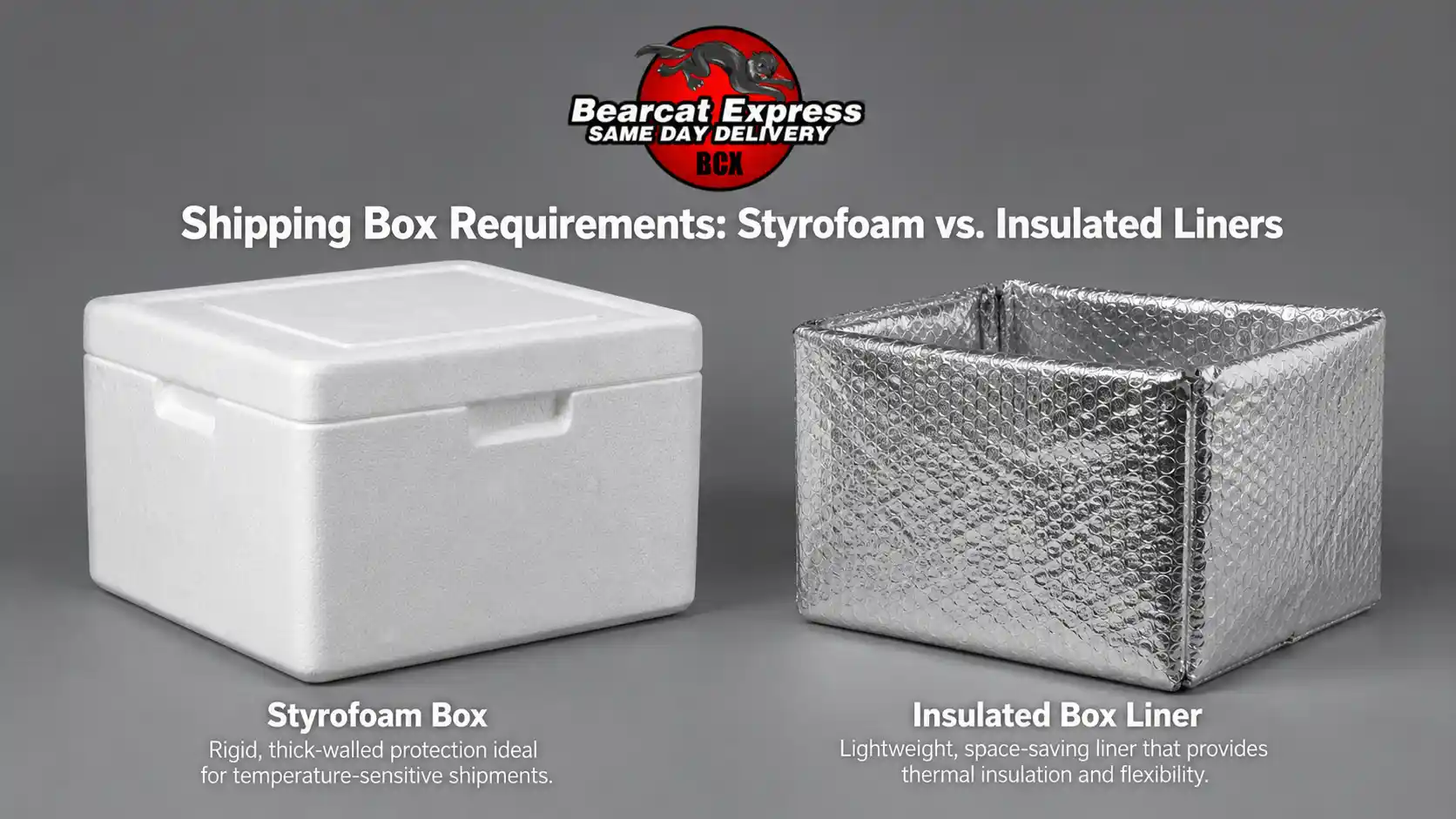
The container is your first line of defense against outside heat. Weak insulation means your dry ice sublimates fast, and a fast sublimation rate is exactly what pushes meat toward thawing before it arrives.
Molded Styrofoam Coolers
Styrofoam remains the industry standard because its dense structure is full of tiny air pockets that slow heat transfer. If you are wondering how long does dry ice last in a Styrofoam cooler, a wall thickness of 1.5 to 2 inches is the benchmark, and a heavy-duty box at that thickness can preserve frozen meat for 24 to 48 hours on its own.
Insulated Box Liners
Foil-faced bubble liners and recycled fiber pads fit inside standard cardboard boxes and are useful for compact storage before packing day. Reflective liners bounce radiant heat away from the contents, but they generally offer less thermal resistance than a thick Styrofoam wall, so they work best for short transit windows or same-day courier runs rather than multi-day shipments.
Exactly How Much Dry Ice Do You Need per Pound of Meat?
Guessing at quantity is the fastest way to end up with a ruined shipment. Anyone shipping frozen food with dry ice should calculate the amount based on both the weight of the meat and the length of the journey, not just eyeball it.
As a baseline, plan on 5 to 10 pounds of dry ice for every 24 hours inside a standard insulated container.
Dry Ice Calculation Table
| Meat Weight | Dry Ice for 24 Hours | Dry Ice for 48 Hours | Recommended Container |
| 1 to 5 lbs | 5 lbs | 10 lbs | Heavy-duty Styrofoam box |
| 6 to 10 lbs | 7 to 10 lbs | 12 to 15 lbs | Thick-walled insulated cooler |
| 11 to 20 lbs | 12 to 15 lbs | 20 to 25 lbs | Commercial-grade shipping unit |
| 21 to 50 lbs | 20 to 25 lbs | 40 to 50 lbs | Palletized insulated shipper |
Blocks of dry ice sublimate slower than pellets because pellets expose more surface area to the air. Reserve blocks for the bulk of the cooler and use pellets only to fill small gaps around the product.
Dry Ice vs. Gel Packs vs. Regular Ice: Which Should You Use?
Not every shipment calls for dry ice, and picking the wrong cooling agent is one of the quickest ways to undermine an otherwise solid packing job.
| Cooling Agent | Temperature | Typical Duration | Handling Risk | Best For |
| Dry ice | -109.3°F | 24 to 72 hours | Frostbite risk; needs gloves and ventilation | Meat that must stay fully frozen for long transit |
| Gel packs | 32°F and below | Up to 48 hours | Low, safe for direct handling | Refrigerated or short-transit frozen items |
| Regular ice | 32°F | 12 to 24 hours | Low, but melts into water | Local, same-day runs only |
For the best way to ship frozen meat over long distances, dry ice is almost always the right call because it stays colder, longer, and never turns into a soggy mess inside your box. Regular ice should be avoided entirely for frozen meat, since the meltwater can soften cardboard and refreeze into an uneven block around the product. Never combine dry ice with regular ice in the same cooler for this same reason.
Step-by-Step Packaging for Couriers (Leak-Proof Method)
A structured packing sequence keeps texture intact and keeps your courier from rejecting the shipment at pickup.
Wrapping the Meat to Prevent Sublimation Damage
Vacuum seal the meat first, then wrap each sealed piece in butcher paper or heavy brown paper. Direct contact between dry ice and meat causes extreme freezer burn, so this layer is not optional.
Placing Dry Ice Safely Without Blocking Gas Release
Cold air sinks, so place dry ice on top of or around the meat rather than underneath it. Because dry ice expands into gas as it sublimates, never seal the inner container completely airtight. Trapped gas builds pressure and can rupture the box.
Labeling the Package Safely and Correctly
Dry ice is classified as a hazardous material for both air and ground transport because it displaces oxygen with carbon dioxide gas. Mark the outside of the box clearly with “Dry Ice” or “Carbon Dioxide, Solid,” the UN 1845 designation, and the net weight of the dry ice in kilograms. Most carriers also require you to declare the exact weight on the shipping label itself, so weigh the dry ice separately before sealing the box.
Inside a Same-Day Dispatch Desk: How We Handle Dry Ice Shipments
At Bearcat Express, our dispatch team treats every dry ice shipment as a race against a clock that starts the moment the cooler leaves the freezer. Drivers are briefed on which pickups involve dry ice before they arrive, and routes are sequenced so those stops load last and deliver first. That single sequencing decision shaves real hours off the exposure window compared to a shipment that sits at the bottom of a standard delivery queue, and it is often the difference between meat that arrives rock solid and meat that arrives merely cold.
Common Shipping Mistakes That Melt Your Meat Prematurely
Even good materials cannot save a shipment from poor timing or lazy packing.
Shipping Right Before Weekends
Dropping off a perishable package on a Thursday or Friday without a guaranteed Saturday delivery option is one of the most common errors. If the package sits in a facility over the weekend, a weekend delay all but guarantees thawed meat by Monday. Schedule perishable shipments for Monday through Wednesday whenever possible.
Leaving Empty Spaces in the Box
Air accelerates sublimation. If your cooler is bigger than it needs to be, fill every gap with crumpled paper or foam peanuts, because dead air space is what determines how long will dry ice keep things frozen more than almost any other packing decision.
Skipping Temperature Tracking
For higher-value or long-distance shipments, a small temperature data logger placed inside the box gives you proof of the cold chain if a customer ever questions whether the product thawed in transit. It costs little and removes the guesswork entirely.
Dry Ice Safety: Handling, Storage, and Disposal
Always handle dry ice with insulated gloves or tongs, since direct skin contact causes frostbite within seconds. Store it in a well-ventilated area, never inside an airtight container or a sealed vehicle cabin, because the gas can build up to unsafe levels in an enclosed space. Let any leftover dry ice sublimate outdoors, away from children and pets, rather than disposing of it in a sink or trash chute.
Conclusion
Managing frozen freight comes down to three things: the right insulation, an accurate dry ice ratio, and a transport plan that respects the clock. Understanding how long will dry ice keep meat frozen, and packing to that timeline rather than hoping for the best, is what keeps deliveries safe and customers satisfied.
For businesses and individuals who need dependable cold-chain logistics, Bearcat Express offers specialized Same Day Delivery Service Augusta GA built around exactly this kind of time-sensitive shipment. Contact us today to talk through your next temperature-sensitive delivery.
FAQs
How long does dry ice last in a Styrofoam cooler?
In a standard 1.5-inch-thick Styrofoam cooler, 10 pounds of dry ice typically lasts 18 to 24 hours, extending to around 36 hours if the cooler stays packed tightly and unopened. Keeping the cooler out of direct sunlight helps stretch that window further.
What is the best way to ship frozen meat safely?
Vacuum seal the meat, wrap it in protective paper, and place it inside a thick insulated box with dry ice positioned on top so cold air sinks through the contents. Fill any remaining space with packing paper to slow sublimation and prevent the meat from shifting in transit.
Can I use gel packs instead of dry ice blocks for shipping meat?
Gel packs work for refrigerated or short-transit shipments, but they cannot match the sub-zero temperature or multi-day duration of dry ice for meat that must stay fully frozen. For anything longer than a same-day run, dry ice is the more reliable choice.
How long will dry ice keep things frozen if my package gets delayed?
Delays eat directly into your buffer, so a shipment packed for a 24-hour window can thaw if it sits an extra day at a sorting facility. Always pack for the worst-case timeline rather than the best-case delivery estimate, especially around weekends.
How much does shipping meat with dry ice typically cost or take?
Cost depends on distance, weight, and how much dry ice the shipment requires, while same-day and next-day courier options are generally the safest choice for anything shipped with dry ice, since they minimize the total time the package spends in transit.