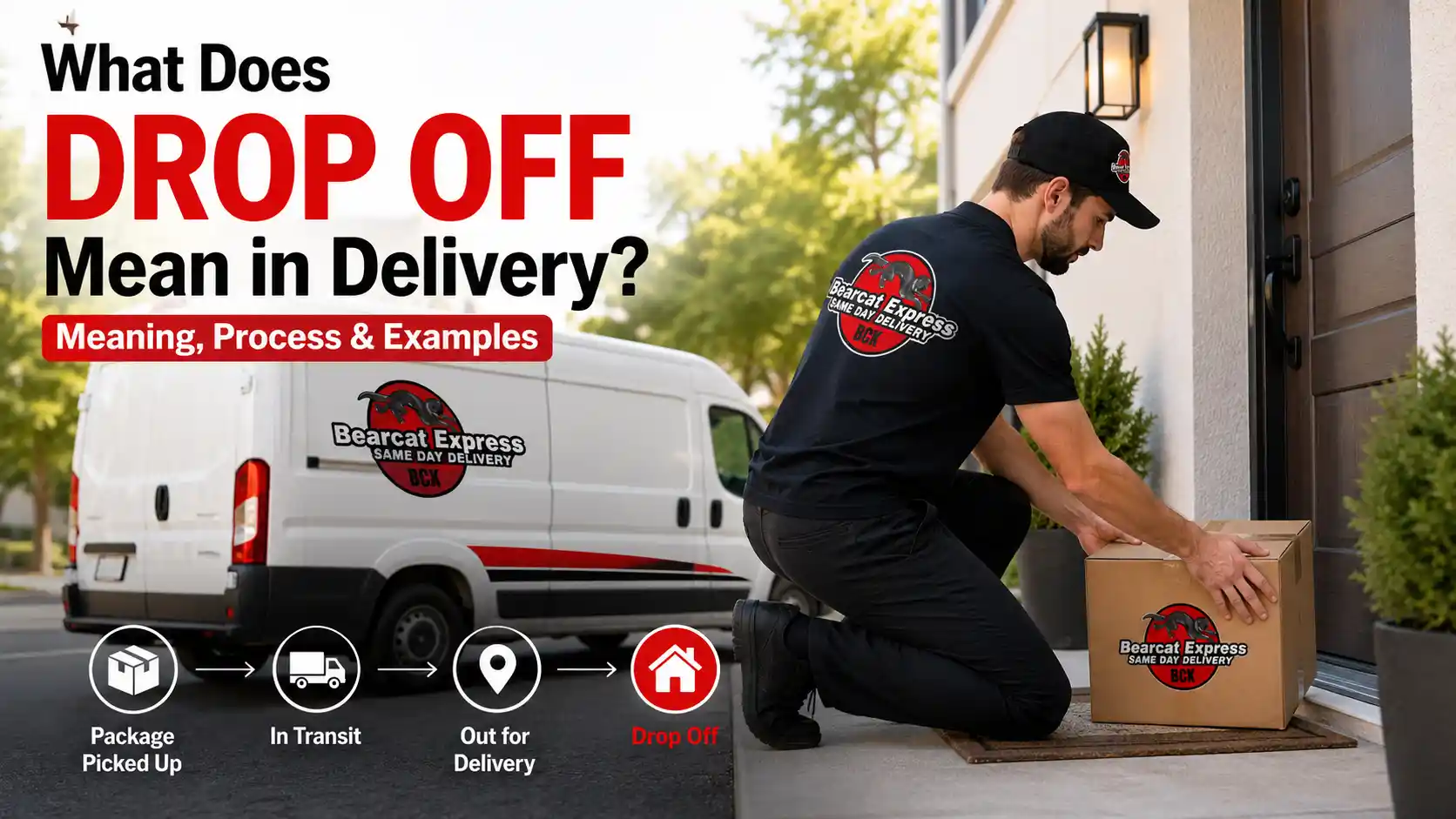
A pharmacy in Evans, GA runs out of a critical prescription at 2 PM on a Tuesday. The nearest supply is sitting at a distribution point twenty minutes away, but the pharmacy has no standing delivery contract and no driver on staff.
Calling a traditional freight carrier means a booking window measured in days, not hours. This is the exact gap that on-demand trucking was built to close, and it is a problem Bearcat Express deals with for local businesses every week.
Quick Answer | What Is On Demand Trucking?
On-demand trucking is a delivery model where a business requests a truck or driver as needed, rather than booking through a fixed schedule or long-term contract. A shipment request goes in through a digital platform, a driver is matched and dispatched within minutes, and the load moves the same day. For businesses in Augusta and the surrounding region, on-demand trucking means shipping happens on the business’s timeline, not a carrier’s fixed route calendar.
Why Traditional Courier Booking Is No Longer Enough
The Problem With Fixed Pickup Windows
Traditional courier and freight booking works on a set schedule. A driver is assigned to a route days in advance, and if a shipment is not ready during that window, it waits for the next one. This works fine for predictable, recurring shipments. It falls apart the moment a business has an urgent, one-off need. A retailer with a last-minute customer order or a clinic with a same-day lab specimen cannot afford to wait for tomorrow’s route.
How Local Business Needs Have Changed
Businesses across Georgia and Alabama are dealing with tighter customer expectations than they were even two years ago. Same-day fulfillment used to be a premium add-on. Now it is closer to a baseline requirement, especially for retail, medical, and legal document deliveries. This shift is exactly why on-demand delivery logistics has moved from a niche offering to something small and mid-sized businesses actively look for when choosing a courier partner. Companies that cannot flex their delivery capacity on short notice end up losing customers to ones that can.
How On Demand Trucking Works
Step-by-Step Process
The mechanics behind on-demand trucking are straightforward, and the simplicity is the point.
- A shipment request is submitted online or by phone, with pickup location, drop-off address, and load details.
- A dispatcher or automated system matches the request to the nearest available driver.
- The driver is dispatched immediately, often within minutes of confirmation.
- Both sender and recipient get live status updates as the shipment moves.
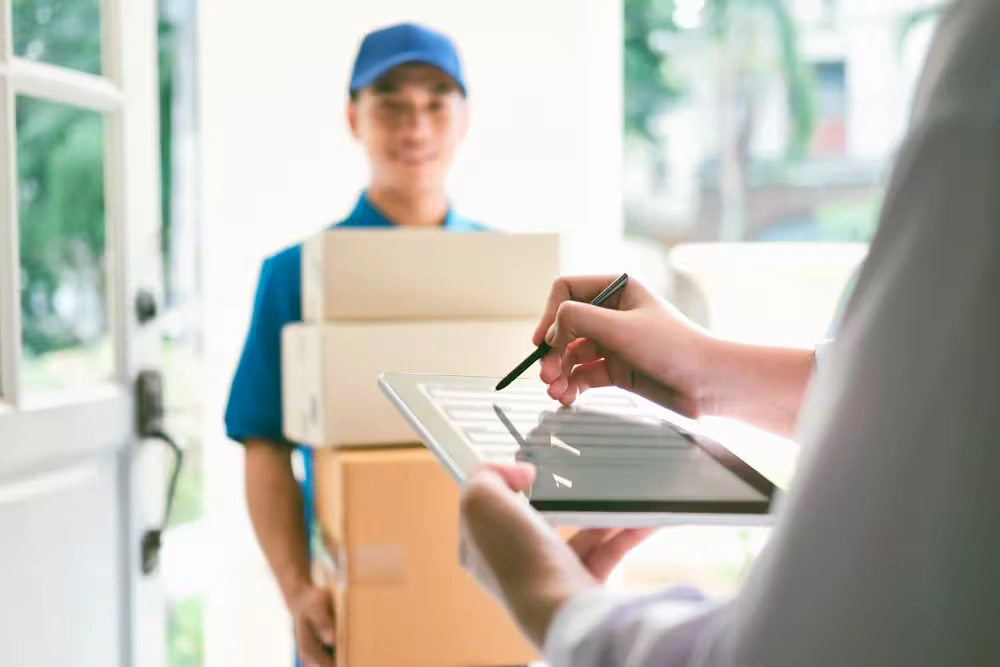
- Delivery is completed and confirmed with proof of delivery sent back to the shipper.
There is no waiting on hold, no multi-day quote process, and no negotiating a rate before the truck can move.
The Technology Behind It
What makes on-demand transport reliable rather than chaotic is the technology running underneath it. GPS tracking gives dispatchers a live view of every vehicle on the road, so a driver already near a pickup location can be assigned instead of one across town. Digital booking tools let a business submit a request from a phone or desktop at any hour, without needing to call and wait for a callback. Automated dispatch logic is what actually powers on-demand dispatch logistics at scale, matching the closest qualified driver to a load in seconds instead of leaving it to manual phone coordination.
Key Features of On-Demand Trucking
Real-Time Booking
A request can be submitted and confirmed in minutes rather than requiring advance scheduling. This matters most when a shipping need shows up without warning, which in practice is most of the time for businesses that deal in urgent goods.
Instant Dispatching
Once a request is confirmed, a driver is already moving. There is no batching of requests or holding shipments until a route fills up.
Live Tracking
Both the sender and the recipient can watch the shipment move in real time. This single feature eliminates most of the “where is my package” phone calls that eat up staff time at busy front desks and warehouses.
Flexible Scheduling
A business might need a pickup at 6 AM before a job site opens, or at 9 PM after a retail location closes for the night. On-demand trucking is not locked to standard business hours, which matters for companies running non-traditional shifts.
On Demand Trucking vs. Traditional Delivery Booking
| Factor | On Demand Trucking | Traditional Booking |
| Booking Time | Minutes | Days |
| Pickup Window | Flexible, on request | Fixed route schedule |
| Cost Model | Per trip | Often contract based |
| Real-Time Tracking | Standard | Limited or none |
| Best For | Urgent, one-off, or unpredictable shipments | High-volume, recurring routes |
The clearest difference shows up in how each model handles a surprise. Traditional booking assumes you know your shipping needs in advance. On-demand logistics assumes you might not, and builds the process around responding fast when that happens.
On-Demand Trucking vs. On-Demand Courier Service
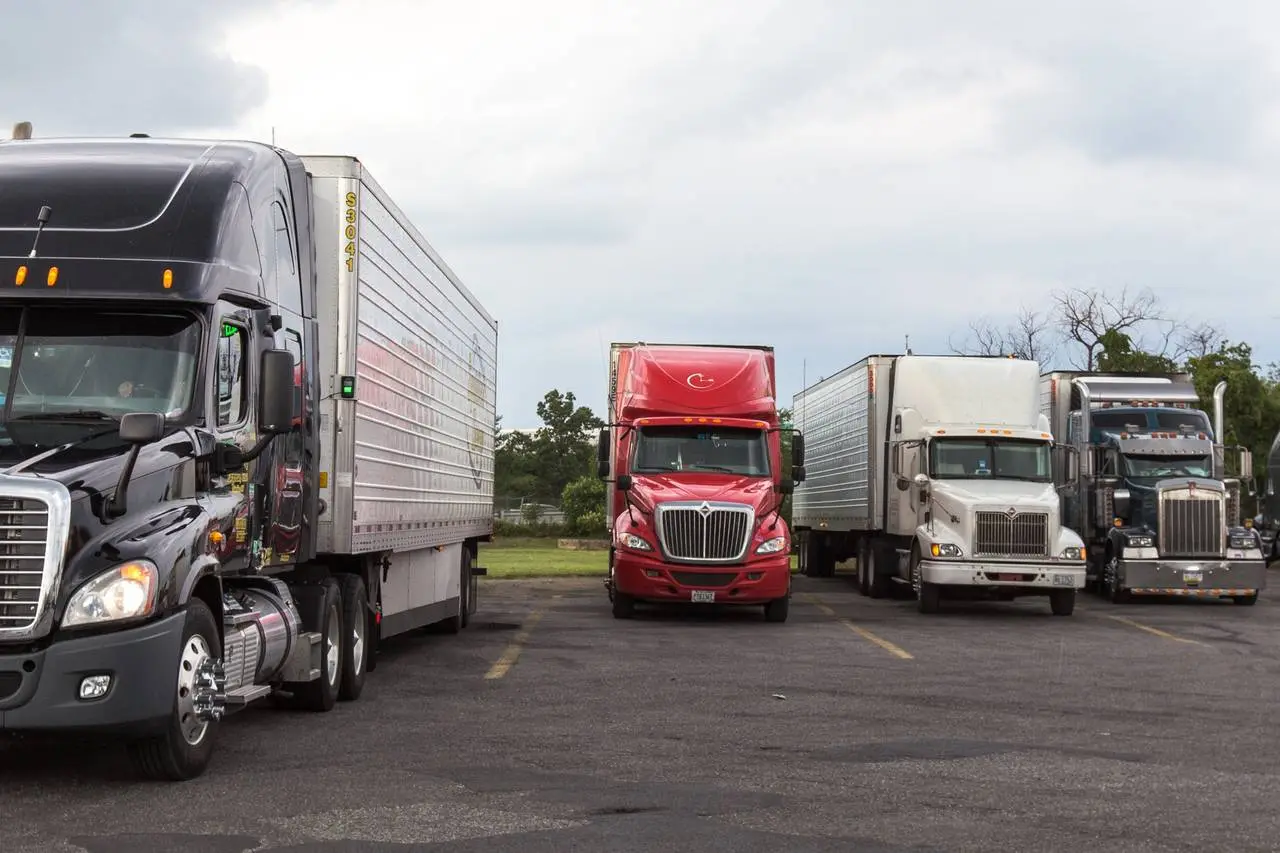
These two terms get used interchangeably online, but they are not quite the same thing, and understanding the difference helps a business pick the right service. On-demand trucking, in its broadest sense, covers everything from a single document pickup to a full or partial truckload of freight, and the vehicle used can range from a car to a box truck depending on the load. An on-demand courier service is a specific slice of that model, focused on smaller, lighter shipments such as documents, parts, or retail packages moved point to point, usually within a single metro or regional area.
In practice, this is what Bearcat Express operates as. When a business in Augusta needs a same-day courier for medical specimens, legal filings, or retail restocking, that request fits squarely into the on-demand courier side of the broader on-demand trucking category. Larger businesses moving palletized freight on short notice are still using on-demand trucking, just at a different scale. Knowing which category your shipment falls into helps set the right expectation for vehicle type, pricing, and turnaround time.
Types of On-Demand Trucking Services
Same-Day Delivery
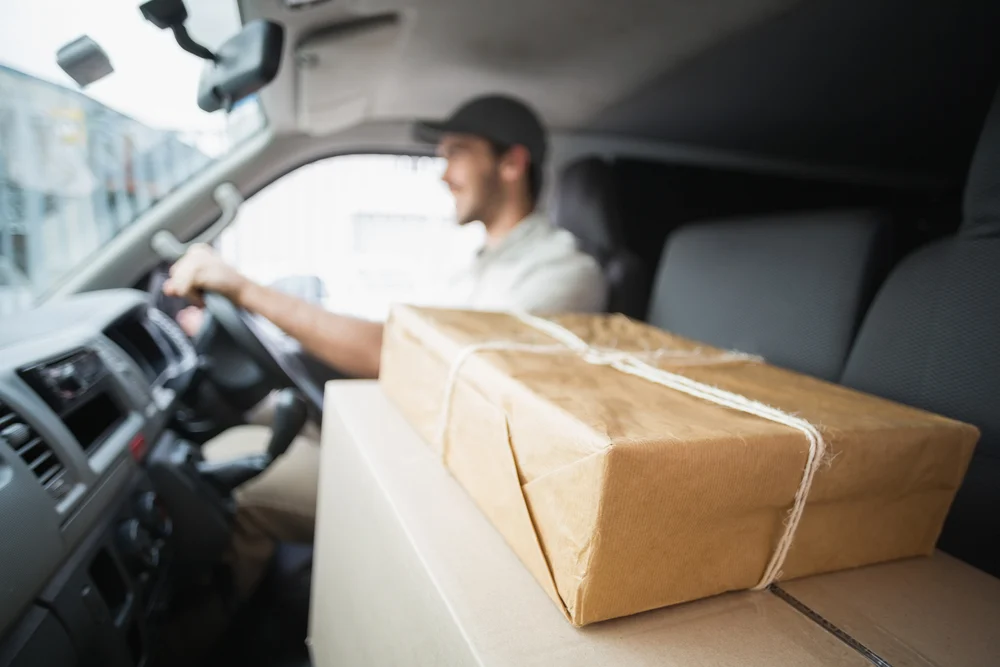
This is the most common request local businesses make. A shipment needs to be picked up and delivered within hours, whether that is a package for a customer, inventory for a store shelf, or a document that has to be signed by the end of the day. Our Same Day Delivery Service Augusta GA is built specifically around this kind of turnaround for businesses across the region.
Last-Mile Delivery
The final leg of a shipment’s journey, from a local hub to a customer’s door, tends to be the most time-sensitive and error-prone part of the process. On-demand trucking handles this well because local drivers already know the streets, buildings, and delivery quirks of the area they are covering, which cuts down on missed or delayed drop-offs.
Industries That Use On-Demand Trucking Locally
Retail & eCommerce
Local retailers use on-demand delivery logistics to cover last-minute customer orders and restock shelves between scheduled deliveries, especially during busy seasons when regular routes cannot absorb the extra volume.
Medical & Pharmaceutical
Clinics, labs, and pharmacies deal with shipments that cannot wait for a routine schedule. Specimens, prescriptions, and time-sensitive supplies need a courier that can move within the hour, not the next business day.
Construction & Industrial
A job site missing a part or tool can stall an entire crew for hours. On-demand transport lets contractors pull materials from a supplier or warehouse as soon as the need shows up, instead of losing a day of labor waiting on a scheduled run.
Small Businesses & Startups
Smaller companies rarely ship enough volume to justify a dedicated freight contract. On-demand trucking gives them access to reliable delivery capacity per shipment, with no minimum volume and no long-term commitment.
You may also read: A Guide To Better Delivery Scheduling
Benefits of On-Demand Trucking
For Businesses
The biggest advantage is not carrying the cost of a private fleet while still having delivery capacity available exactly when it is needed. This also means a business can absorb sudden demand spikes, such as a seasonal rush, without scrambling to find extra drivers or vehicles.
For Customers
End customers get faster deliveries and clear visibility into when their order will arrive. That combination builds trust in a way that a vague delivery window never does, and it is often the difference between a one-time customer and a repeat one.
How to Choose the Right On-Demand Trucking Provider
Not every provider offering on-demand truckload solutions or courier service delivers the same experience. Before committing, it is worth checking a few specific things: whether the provider has strong driver coverage in your actual service area, whether their booking process is genuinely fast rather than just marketed that way, whether tracking is available from pickup through final delivery, and whether pricing is transparent with no surprise fees added after the fact. A provider that can answer all of this clearly, backed by a real local track record, is one worth building a long-term relationship with rather than treating as a one-off vendor.
Conclusion
On-demand trucking has moved from a convenience to an operational necessity for businesses that cannot predict every shipping need in advance. Whether it is a retailer covering a last-minute order, a clinic moving a time-sensitive specimen, or a contractor keeping a job site running, the ability to book a truck, track it live, and get the shipment delivered the same day is a real advantage rather than a luxury.
Bearcat Express built its entire same-day model around exactly this kind of responsiveness for businesses across Georgia, Alabama, and the surrounding region. If your business needs a courier partner that moves on your schedule, contact us today to book your next same-day delivery.
FAQs
How fast can a driver be dispatched with on-demand trucking?
In most cases, dispatch begins within minutes of a confirmed booking. Actual pickup time depends on driver availability and location, though urban and suburban areas typically see the fastest response.
Is on-demand trucking more expensive than a standing delivery contract?
It can run slightly higher per shipment, but that cost reflects the speed and flexibility involved. For businesses without enough volume to justify a contract, on-demand logistics is often the more practical and cost-effective choice overall.
What is the difference between on-demand trucking and a courier service?
On-demand trucking is the broader category, covering everything from single-document pickups to larger truckload freight. A courier service is typically the smaller-scale, local side of that model, focused on documents and parcels rather than heavy freight.
Can a small business use on-demand trucking without signing a long-term contract?
Yes, this is one of its core advantages. Most on-demand transport providers operate on a per-shipment basis, so a business only pays for what it actually ships.
What kinds of shipments work best with on-demand dispatch logistics?
Anything time-sensitive or unpredictable is a strong fit, including documents, retail restocks, medical specimens, and small industrial parts. Heavier or palletized loads may need on-demand truckload solutions rather than a standard courier vehicle.