In logistics, timing is everything it directly impacts whether a customer stays satisfied or switches to another provider. Businesses increasingly depend on Better Delivery Scheduling to stay competitive, control costs, and meet growing expectations for fast, accurate deliveries. A well-structured delivery schedule ensures every package moves through a predictable and efficient system.
When scheduling deliveries fails, delays and operational issues quickly follow. At Bearcat Express, we see how even small improvements in planning can significantly boost performance, trust, and efficiency. This guide explains how scheduled delivery systems work, why they matter, and how modern logistics builds scalable operations in 2026.
What is Delivery Scheduling?
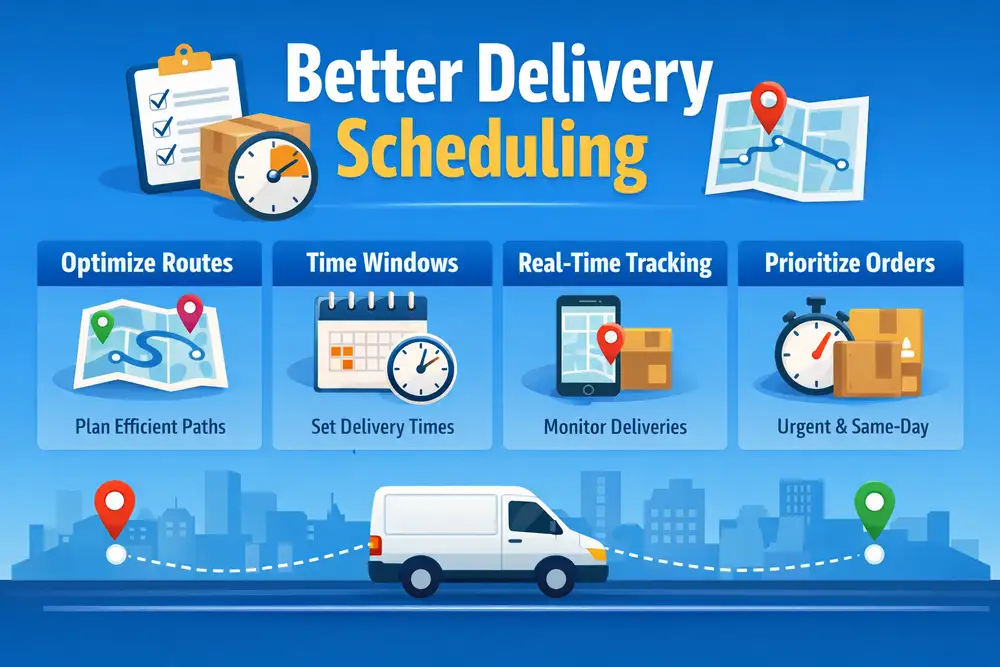
Delivery scheduling is the process of planning when, how, and by whom deliveries will be completed. It connects orders, routes, vehicles, and time windows into a structured system.
A simple explanation of a delivery schedule is:
It is a planned timeline that ensures packages are delivered at the right time, using the most efficient route and available resources.
In logistics and courier operations, a scheduled delivery service helps businesses:
- Avoid delays and missed deliveries
- Improve route efficiency
- Match demand with driver availability
- Maintain consistent service quality
A common question businesses ask is what is a scheduling order it refers to assigning delivery time slots and resources to specific orders before dispatch.
Without proper scheduling deliveries, even a strong logistics network becomes unpredictable.
How Does Delivery Scheduling Work?
A modern delivery schedule is built using three core layers:
Order & Inventory Visibility
Real-time order tracking ensures that businesses know:
- What needs to be delivered
- Where the package is
- When it is ready for dispatch
This visibility is essential for building an accurate delivery schedule and avoiding overbooking or delays.
Route Planning and Optimization
Route planning focuses on:
- Reducing travel distance
- Avoiding traffic congestion
- Improving fuel efficiency
This step ensures that every scheduled delivery service operates at maximum efficiency.
Scheduling and Assignment
This is where logistics teams assign:
- Drivers
- Vehicles
- Time slots
Proper scheduling ensures balanced workloads and prevents delays caused by poor planning.
Why Good Delivery Scheduling Matters
Stronger Better Delivery Scheduling directly impacts business performance.
Key benefits include:
- Higher on-time delivery rates
- Lower operational costs
- Better customer satisfaction
- Improved driver productivity
When delivery schedule systems are weak, businesses experience missed deadlines and customer complaints. A structured, scheduled delivery system eliminates guesswork and improves reliability.
Common Challenges in Delivery Scheduling
Even advanced logistics systems face challenges:
Lack of Flexibility
Rigid systems struggle when last-minute changes occur.
Tight Delivery Timeframes
Short time windows make scheduling deliveries more complex.
Unexpected Delays
Traffic, weather, and breakdowns disrupt the delivery schedule.
Lack of Proper Systems & Processes
Manual tracking leads to inefficiency in scheduled delivery service operations.
Poor Route Planning
Inefficient routing increases cost and delays.
Key Factors That Affect Delivery Scheduling
Several elements influence a successful delivery schedule:
- Delivery time windows
- Traffic & route conditions
- Vehicle capacity
- Driver availability
- Order priority & urgency
Understanding these helps businesses build more realistic scheduled delivery systems.
How to Build an Effective Delivery Schedule
Optimize Your Routes
Reducing distance improves speed and lowers fuel cost in scheduling deliveries.
Offer Scheduled Delivery Options
Customers prefer choosing their own delivery schedule time slots.
Use Delivery Scheduling Software
Modern tools automate what is a scheduling order process using AI and data.
Communicate Proactively
Clear updates reduce confusion in scheduled delivery service operations.
Batch Deliveries Smartly
Grouping nearby orders improves efficiency and reduces delays.
Proven Strategies to Improve Delivery Scheduling
To achieve Better Delivery Scheduling, businesses should:
- Use real-time tracking systems
- Automate dispatching
- Optimize delivery zones
- Implement dynamic routing
- Use predictive analytics for scheduling deliveries
At Bearcat Express, applying these methods has improved consistency and reduced failed deliveries in real operations.
Manual vs Automated Delivery Scheduling
Manual Scheduling
Pros:
- Low cost
- Simple setup
Cons:
- Prone to human error
- Slow and inefficient for scaling delivery schedule operations
Automated Scheduling
Pros:
- Fast and scalable
- Accurate route optimization
- Better handling of scheduled delivery service demand
Cons:
- Initial setup cost
- System dependency
Best Delivery Scheduling Tools (2026)
Modern logistics relies on:
- Route optimization tools
- Fleet management systems
- AI-based scheduling platforms
These tools improve delivery schedule accuracy and reduce delays in scheduling deliveries.
How Same-Day Delivery Impacts Scheduling
Same-day operations add pressure to Better Delivery Scheduling systems.
Key Challenges
- High time pressure
- Route congestion
- Sudden order spikes
Smart Solutions
- Dynamic routing
- Priority dispatching
- Local delivery zones
At Bearcat Express, we use structured delivery planning to handle urgent shipments efficiently, ensuring fast and reliable turnaround times, especially for time-sensitive requests supported by our Same Day Delivery Service in Augusta, GA.
Step-by-Step Process for Efficient Delivery Scheduling
- Order intake & confirmation
- Route planning
- Driver assignment
- Dispatch execution
- Live tracking & updates
This workflow ensures a stable and predictable delivery schedule.
You may also read: Fleet Management Cost
KPIs to Measure Delivery Scheduling Performance
Key metrics include:
- On-time delivery rate
- Cost per delivery
- Route efficiency
- Customer satisfaction score
Tracking these helps improve scheduling deliveries over time.
Mistakes to Avoid in Delivery Scheduling
- Overloading routes beyond capacity
- Ignoring real-time traffic data
- Poor communication with drivers
- No contingency planning for delays
These mistakes often break even a strong scheduled delivery service system.
Future Trends in Delivery Scheduling
The future of Better Delivery Scheduling includes:
- AI-powered logistics systems
- Predictive delivery planning
- Smart routing automation
- Real-time adaptive scheduling
These technologies are making delivery schedule systems more intelligent and efficient.
Conclusion
Building Better Delivery Scheduling is not about working harder it is about working smarter with the right systems, tools, and planning strategies. From real-time tracking to automation and route optimization, every improvement in your delivery schedule directly impacts cost, speed, and customer satisfaction.
At Bearcat Express, we have seen how structured scheduling deliveries transforms operations from reactive to predictable and scalable. If your business struggles with delays or inefficiencies, now is the time to upgrade your scheduled delivery service approach. For reliable and fast logistics solutions, feel free to contact us and explore how we can support your delivery operations.
Frequently Asked Questions
What is delivery scheduling in logistics?
It is the process of planning and organizing deliveries based on time, route, and resources. A structured delivery schedule ensures efficiency and accuracy.
How can I improve delivery efficiency?
You can improve efficiency by using route optimization, automation, and better scheduling deliveries systems.
What tools are best for scheduling deliveries?
AI-based logistics platforms and fleet management tools are widely used for modern scheduled delivery service operations.
Why do delivery schedules fail?
They fail due to poor planning, lack of visibility, and unpredictable delays in the delivery schedule process.