Every year, millions of dollars’ worth of goods are damaged in transit not from bad luck, but from the wrong transport choice. A cracked glass piece, a shattered electronic, or damaged medical equipment costs far more than the item itself. It costs time, reputation, and customer trust. Figuring out which type of transport is suitable for fragile goods isn’t straightforward.
The right answer depends entirely on what you’re shipping and where. Whether it’s a local delivery or a long-distance shipment, every decision matters. At Bearcat Express, we’ve seen firsthand what goes wrong when fragile goods meet the wrong courier and we’ve made it our mission to ensure it never happens to you.
Why Fragile Goods Demand Special Transportation
Most people don’t think about what happens to a package between the moment it leaves their hands and the moment it arrives at its destination. The reality is that a standard shipment can pass through four to six handling points, each one a potential moment of damage.
Fragile goods transport is not simply about being careful. It’s about designing a delivery process where carefulness is built into every step. A poorly chosen transport method exposes your item to vibration, sudden impact, pressure from stacking, moisture, and temperature changes. The result? Fragile items breaking before they ever reach the customer.
According to industry data, roughly 11% of all packages experience some form of damage during shipping. For fragile goods, that number is significantly higher when improper methods are used. The financial impact aside, damaged shipments damage relationships, and in business, that’s often the harder loss to recover from.
What Makes Fragile Goods Different? Definition & Examples
Not everything that breaks is classified as fragile in a logistics sense. In the transport industry, fragile goods refer to items that require special handling, cushioning, or environmental controls because they are at high risk of damage from normal shipping conditions.
Common types of fragile goods include:
Electronics such as laptops, monitors, and smartphones are among the most commonly shipped fragile items. They’re sensitive to static, impact, and moisture. Glassware and ceramics, from fine dining sets to decorative pieces, can shatter from a single drop or even sustained vibration. Medical equipment requires not only physical protection but also often strict temperature and humidity controls. Artwork and antiques carry both monetary and sentimental value that can never truly be replaced. Even bottled food products, wines, and specialty beverages fall into the fragile category because of their breakable containers.
| Item Type | Primary Risk | Special Need |
| Electronics | Impact, static | Anti-static padding |
| Glassware | Shattering | Foam inserts, double boxing |
| Medical Equipment | Impact, temperature | Climate control, secure mounting |
| Artwork/Antiques | Pressure, moisture | Custom crating |
| Food & Beverages | Breakage, leakage | Upright positioning, sealed packaging |
Understanding your item type is the first step toward selecting the right fragile delivery service.
Key Factors to Consider Before Choosing Transport
Choosing a transport method without considering your shipment’s specific requirements is one of the most common and costly mistakes shippers make. Before you book anything, run through this checklist:
Distance Local vs. Long Distance: For short-distance deliveries within a city or region, a dedicated road courier is almost always the best option. For cross-country or international shipments, air freight may be worth the added cost. The longer the distance, the more transfer points are involved, and each transfer is a risk.
Weight and Size: Heavier items may be better suited to specialized road freight vehicles with proper mounting systems. Lightweight but delicate items are ideal for courier services that offer individual package care.
Urgency Same-Day vs. Standard Delivery: If timing is critical, standard postal or freight services introduce too many unknowns. A same-day dedicated courier gives you control over timing and handling.
Climate and Temperature Sensitivity: Conveying fragile materials that are also temperature-sensitive, like certain medical supplies or specialty food items, requires a transport method with climate-controlled vehicles.
Handling Frequency and Transfer Points: Every time a package is handed from one carrier to another, the risk of damage increases. Dedicated courier services minimize this by maintaining a single chain of custody from pickup to delivery.
Value and Insurance: High-value items should always travel with comprehensive insurance. Verify before booking that your chosen service offers adequate coverage.
Complete Breakdown | Best Types of Transport for Fragile Goods
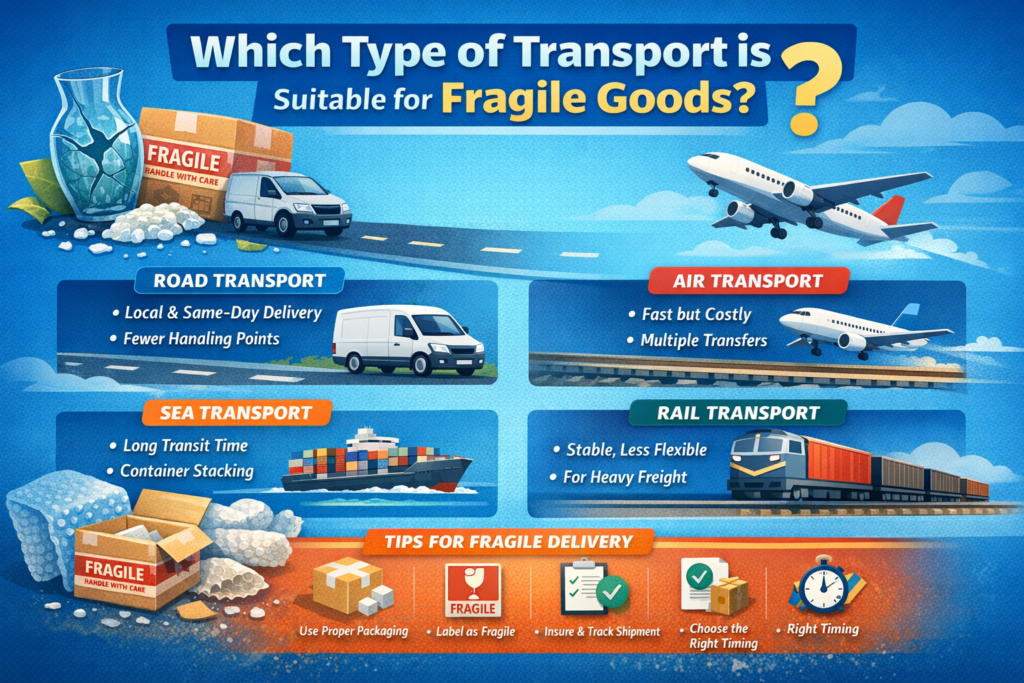
Road Transport Best for Local and Short-Distance Delivery
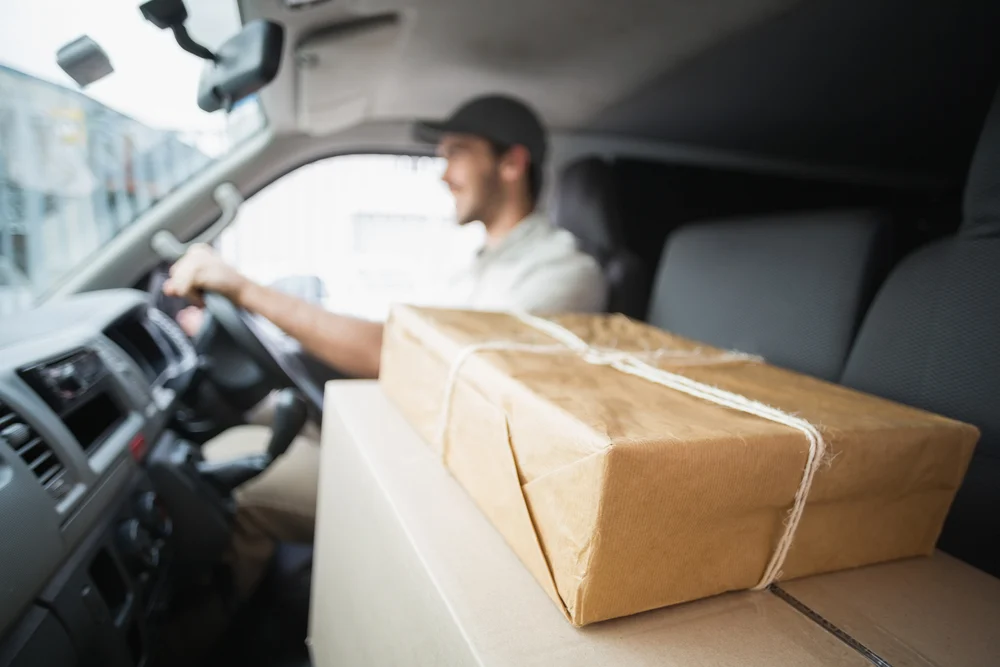
Road transport remains the most widely used method for fragile goods, and for good reason. It offers door-to-door service, flexible scheduling, and the ability to closely monitor shipments. For local deliveries, a dedicated road courier means your item is loaded once, handled by one driver, and delivered directly without the repeated loading and unloading that damages so many shipments.
Air Transport For Urgent Long-Distance Shipments
When distance is the challenge and time is short, air freight is the go-to solution for high-value fragile goods. The transit time is significantly reduced, which lowers the window of risk. However, air freight involves multiple handling stages, check-in, loading, unloading, and transfer, which means packaging must be exceptionally robust.
Dedicated Courier Service Same-Day Local Delivery
This is the gold standard for fragile goods transport within a city or region. A dedicated courier picks up your item and delivers it without any intermediate stops. There are no sorting facilities, no shared trucks, and no unknown handlers. For businesses that regularly ship delicate items locally, this is the most reliable option.
White Glove Delivery Service For High-Value Items
White-glove delivery goes beyond standard courier service. Trained professionals handle packing, transport, and even installation at the point of delivery. It’s ideal for antiques, medical devices, custom furniture, and high-value electronics.
Sea Transport For Bulk International Cargo
Sea transport is suited for large volumes of fragile goods being shipped internationally when time is not a constraint. The long transit duration, humidity exposure, and extensive handling make it unsuitable for individually delicate or time-sensitive items unless they are heavily crated and insured.
Rail Transport For Large Domestic Freight
Rail offers a stable and cost-effective option for large domestic fragile shipments, with less vibration than road freight over long distances. However, it requires transfer to road transport at both ends, increasing handling risk.
Regular Postal Services: Why to Avoid
Standard postal services sort thousands of packages through automated systems. Packages are stacked, conveyed on belts, and handled dozens of times. This environment is genuinely hostile to fragile items. The cost savings are rarely worth the risk.
Pros and Cons of Each Transport Method
| Transport Method | Pros | Cons |
| Dedicated Road Courier | Door-to-door, minimal handling, fast | Limited to a regional range |
| Air Freight | Fast, long-distance | Expensive, multiple handling points |
| Sea Freight | Affordable for bulk | Slow, moisture risk |
| Rail Freight | Stable, cost-effective | Requires road transfer at each end |
| White Glove Service | Maximum care | Higher cost |
| Regular Postal | Cheap | High damage risk |
Why Dedicated Road Courier Is the Safest Option for Most Fragile Shipments
When you reduce the number of hands that touch a package, you reduce the risk of damage. It’s that simple. A dedicated road courier service operates on a direct pickup-to-delivery model. Your item doesn’t pass through a sorting facility or share a truck with hundreds of other packages competing for space.
For businesses in Georgia and Alabama, this means a fragile item shipped through a local courier service in Augusta, GA, travels with a single professional from your door to the recipient’s door. Add real-time GPS tracking to that, and you have full visibility over your shipment throughout the journey, something no postal service can match.
Same-day delivery is also uniquely possible with dedicated couriers. The shorter the time in transit, the fewer opportunities for things to go wrong.
Best Practices and Packaging Tips for Fragile Goods
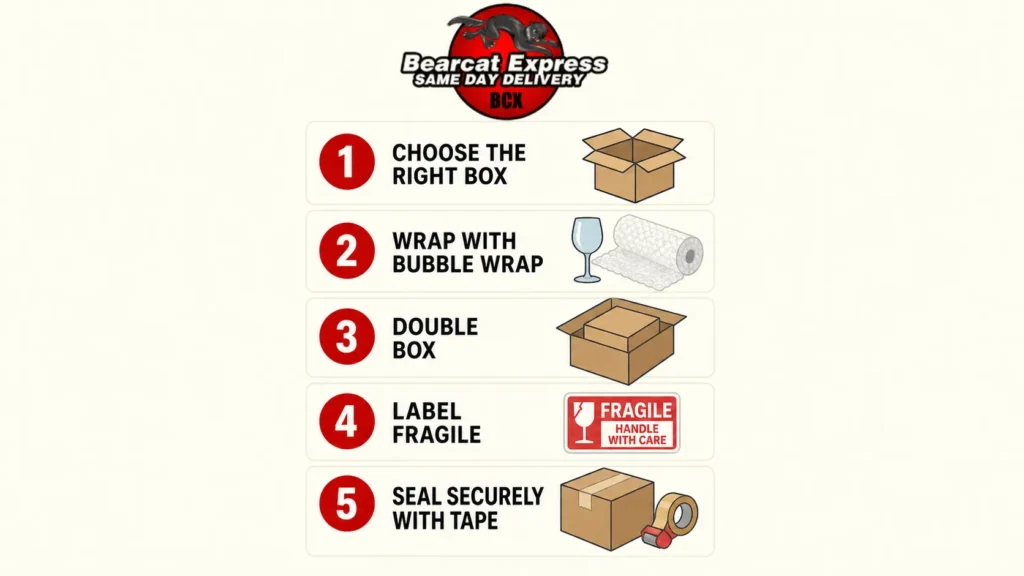
Even the best transport method can’t save a poorly packed item. Packaging is your first line of defense, and it deserves serious attention.
Step 1: Choose the Right Box: Select a box that is slightly larger than your item, allowing room for padding on all sides. Avoid reusing old boxes that have already absorbed impact.
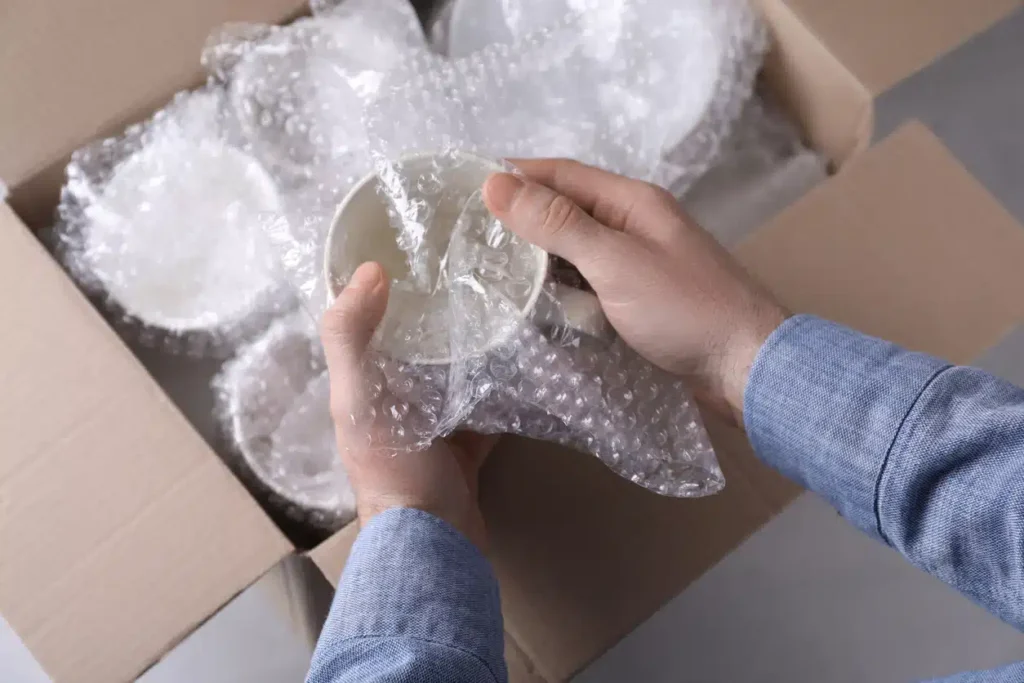
Step 2: Use Bubble Wrap and Foam Padding: Wrap each item individually with at least two layers of bubble wrap. For particularly delicate surfaces, foam sheets provide an extra layer of protection against abrasion and minor impact.
Step 3: Apply the Double Boxing Method: For extremely fragile or high-value items, place the wrapped item in a smaller box, then place that box inside a larger one with additional cushioning between the two. This absorbs impact from multiple directions.
Step 4: Label Clearly: Mark the package prominently with “FRAGILE” and “THIS SIDE UP” on at least three sides. While this doesn’t guarantee careful handling everywhere, it does signal to professional couriers that extra care is needed.
Step 5: Seal Properly: Use strong packing tape applied in an H-pattern on both the top and bottom of the box. Never rely on a single strip down the middle.
When it comes to packing fragile items for moving or shipping, these steps aren’t optional extras; they’re the baseline. Skipping even one of them significantly raises your risk.
You may also read: How Much Does It Cost to Ship a Couch?
Same-Day Delivery for Fragile Items: Is It Safe?
Same-day delivery sounds fast, which some people assume means rushed, and rushed means careless. In reality, same-day dedicated courier delivery is often safer than standard multi-day shipping for fragile items precisely because it eliminates the overnight storage, repeated sorting, and multi-carrier handoffs that cause so much damage.
The keyword here is “dedicated.” A same-day delivery that routes your package through a shared fleet with ten other stops is very different from a true dedicated courier that goes directly from you to your recipient.
For anyone wondering how to transport fragile furniture, medical equipment, or valuable electronics within a metropolitan area, a same-day dedicated courier service is the answer, provided the courier has the right vehicle, trained staff, and a direct route.
How Bearcat Express Delivers Your Fragile Items Safely
Bearcat Express was built around one core promise: getting your shipment there safely and on time. For fragile goods, that promise means trained handlers who understand how to load and secure delicate items, real-time GPS tracking so you’re never left wondering where your package is, same-day delivery across Georgia and Alabama, and fully insured shipments that give you financial protection alongside physical care.
We don’t run your fragile item through an automated sorting system. We pick it up, secure it properly, and deliver it directly.
Common Mistakes to Avoid When Shipping Fragile Goods
Many damaged shipments are entirely preventable. The most common errors include under-packing, relying on a single layer of bubble wrap for an item that needs double boxing. Choosing the cheapest available option without evaluating its suitability for fragile goods transport is another frequent mistake that leads to fragile items breaking in transit. Shipping without insurance on high-value items, selecting a carrier with no real-time tracking, and allowing multiple carrier transfers on local shipments all significantly increase your risk of damage.
Final Thought
Choosing the right transport for fragile goods isn’t complicated once you understand the variables. Distance, urgency, item type, and handling requirements all point toward the same conclusion for most local and regional shipments: a dedicated courier service is the safest, most reliable choice. It eliminates unnecessary handling, gives you visibility through real-time tracking, and keeps your fragile items in professional hands from start to finish.
If you’re in Georgia, Alabama, or the surrounding region and need a fragile delivery service you can genuinely trust, Bearcat Express is ready to help. Whether it’s a single delicate item or a regular business shipment, we bring the same level of care and professionalism to every delivery. Contact us today to discuss your fragile goods shipping needs and get a free, no-obligation quote. Because when the item matters, the courier matters too.
Frequently Asked Questions
Which type of transport is most suitable for fragile goods?
For local and regional shipments, a dedicated road courier service is the safest option because it involves the fewest handling points and offers direct pickup-to-delivery service. For urgent long-distance needs, air freight with proper crating is the next best choice.
What is the safest way to pack fragile items for moving or shipping?
Wrap each item individually in at least two layers of bubble wrap, place it in a snug inner box with foam padding, then use a double-box method with additional cushioning between the two boxes. Always label the outer packaging clearly with “FRAGILE” on multiple sides.
How does conveying fragile materials differ from standard freight?
Conveying fragile materials requires controlled handling at every stage, specialized packaging, limited transfer points, appropriate vehicle type, and, in many cases, real-time tracking. Standard freight is optimized for volume and speed, not individual item care.
Is the same-day fragile delivery service actually safe?
Yes, when provided by a dedicated courier. The direct route and single-handler model of same-day dedicated service actually reduces risk compared to multi-day shipping that involves sorting facilities and multiple carriers.
How do I know if my fragile delivery service provides adequate insurance?
Before booking, ask specifically about declared value coverage and what the claims process looks like. A reputable fragile delivery service will have clear policies and won’t hesitate to explain them in plain language.