
Opening a box to find shattered glass, cracked electronics, or scratched furniture is frustrating and costly. The wrong shipping choice can quickly turn a valuable item into a financial loss. That’s why many people ask, Which Type of Transport is Suitable for Fragile Goods? The right answer depends on distance, urgency, handling frequency, and overall shipment management.
At Bearcat Express, experience has shown that fragile goods transport is not just about speed; it’s about reducing handling and maintaining control. In this guide, you’ll discover practical ways to prevent fragile items breaking and safely manage conveying fragile materials.
What Makes Fragile Goods Different in Transportation?
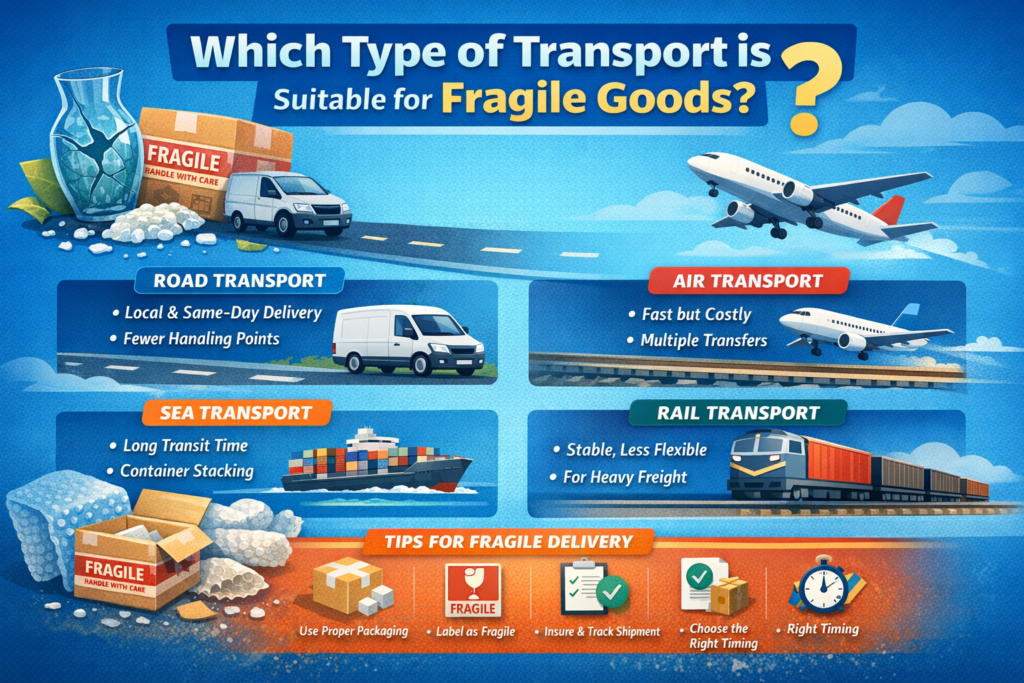
Before selecting a transport method, it’s important to understand what qualifies as fragile and why these items require extra care.
Definition of Fragile Goods
Fragile goods include items that are easily damaged by:
- Shock or sudden impact
- Continuous vibration
- Compression or stacking pressure
- Temperature fluctuations
Common examples include:
- Glass products
- Electronics
- Medical devices
- Artwork
- Ceramics
- Decorative furniture
Even sturdy-looking items can be vulnerable if improperly handled.
Why Handling Risk Matters
Most damage doesn’t happen because a truck moves. It happens because a package is:
- Loaded and unloaded multiple times
- Sorted through distribution hubs
- Stacked under heavier freight
- Exposed to uncontrolled environments
Every transfer point increases risk. The more times an item is handled, the higher the chance of fragile items breaking.
Common Causes of Damage
In real-world logistics, damage usually results from:
- Poor packaging fragile materials
- Excess space inside the box
- Excessive stacking in freight environments
- Long transit times with vibration exposure
Understanding these risks helps you evaluate which transport type offers the lowest exposure.
Main Types of Transport for Fragile Goods
Different transport methods serve different purposes. The right choice depends on how sensitive your shipment is and how far it needs to travel.
Road Transport (Best for Local and Short-Distance Delivery)
For most short-distance fragile goods transport, road transport is the safest option.
Why it works:
- Direct point-to-point delivery
- Fewer transfer points
- Minimal reloading
- Better scheduling flexibility
When using a dedicated road-based fragile delivery service, the shipment often stays in the same vehicle from pickup to drop-off. That reduces vibration changes and eliminates sorting hubs.
This is particularly useful when transporting:
- Glass displays
- Retail electronics
- Medical equipment
- Office devices
For businesses in Georgia, using a Local Courier Service in Augusta, GA, significantly reduces handling frequency compared to national freight systems.
Air Transport (For Urgent Long-Distance Shipments)
Air transport is ideal when speed across long distances is critical.
Advantages:
- Fast transit time
- Ideal for urgent high-value items
Risks:
- Multiple handling stages (pickup, airport loading, unloading, final delivery)
- Cargo container compression
- Higher cost
Air freight can be appropriate for conveying fragile materials across states or countries, but packaging must be exceptionally strong to withstand airport logistics environments.
Sea Transport (For Bulk International Cargo)
Sea freight is rarely the best option for highly delicate individual items. It’s more suitable for bulk shipments.
Considerations:
- Long transit time
- Container stacking pressure
- Climate and humidity exposure
Sea transport works better for large volumes of carefully packaged goods rather than single delicate pieces.
Rail Transport (For Large Domestic Freight)
Rail is stable and cost-effective for heavy cargo, but it lacks flexibility.
Pros:
- Smooth movement compared to road vibration
- Efficient for bulk domestic freight
Cons:
- Limited route flexibility
- Not suitable for small urgent shipments
Rail transport is rarely chosen for small-scale, fragile delivery service needs.
Pros and Cons of Each Transport Method
Here’s a practical comparison to help you evaluate your options.
| Transport Type | Speed | Risk Level | Cost | Handling Frequency | Best For |
| Road | Moderate to Fast | Low (local dedicated) | Moderate | Low | Short-distance fragile goods transport |
| Air | Very Fast | Medium | High | Medium to High | Urgent long-distance shipments |
| Sea | Slow | Medium to High | Low (bulk) | Low to Medium | Large international bulk cargo |
| Rail | Moderate | Medium | Moderate | Medium | Heavy domestic freight |
For most businesses, asking Which Type of Transport is Suitable for Fragile Goods, road transport consistently offers the best balance between control and safety.
Why Dedicated Road Courier Transport Is Often the Safest Option
When minimizing fragile items breaking is your priority, control matters more than distance.
Dedicated road courier services reduce risk because:
- There are no sorting hubs
- The shipment remains in one vehicle
- Loading is controlled and supervised
- Same-day transit reduces vibration exposure time
At Bearcat Express, same-day fragile goods transport eliminates the need for warehouse storage and unnecessary stacking. This significantly lowers impact-related damage.
Key benefits include:
- Scheduled delivery to ensure recipient availability
- On-call service for urgent needs
- Real-time tracking for transparency
- Signature confirmation for accountability
For businesses moving electronics, fragile retail goods, or delicate displays locally, road-based fragile delivery service is often the safest approach.
Key Factors to Consider When Transporting Fragile Goods
Choosing the right transport type requires evaluating specific variables.
Packaging and Internal Cushioning
Strong packaging fragile materials is essential regardless of transport type.
Best practices:
- Use double-walled boxes
- Add foam inserts or molded padding
- Fill empty spaces with cushioning
- Wrap items individually
Poor packing fragile items for moving is one of the leading causes of breakage.
Distance and Transit Time
Longer distance equals longer vibration exposure.
If you are moving fragile furniture across town, road transport is ideal. For cross-country shipping, air may be necessary, but only with reinforced packaging.
Climate and Temperature Sensitivity
Temperature fluctuations can weaken adhesives, crack finishes, and affect sensitive electronics.
Climate-controlled transport may be necessary for:
- Antique furniture
- Medical supplies
- Electronics
Handling Frequency and Transfer Points
Ask this simple question:
How many times will this package be touched?
Each transfer increases risk. Dedicated fragile goods transport with fewer stops reduces damage probability.
Insurance and Tracking Options
Insurance protects financial value, but tracking protects operational confidence.
Real-time tracking ensures:
- Transparency
- Immediate updates
- Controlled delivery windows
Best Practices for Shipping Fragile Goods Safely
No matter which transport method you choose, these principles reduce risk:
- Use shock-absorbing materials
- Avoid empty box space
- Label clearly with handling instructions
- Avoid stacking heavy items on top
- Confirm recipient availability before delivery
These steps significantly reduce fragile items breaking during transit.
You may also read: How Much Does It Cost to Ship a Couch?
When Should You Use Same-Day Courier Service for Fragile Items?
Same-day service is especially effective when fragile goods cannot tolerate long logistics chains.
Examples include:
- Glass display units
- Event materials
- Medical equipment
- Electronics
- Retail restock shipments
If you are wondering Which Type of Transport is Suitable for Fragile Goods within your city, a dedicated road-based fragile delivery service is usually the safest choice.
This is particularly true for businesses that need secure, predictable, and accountable conveying fragile materials without warehouse transfers.
Final Verdict
Here’s a simple summary:
- Short distance \ Road courier
- Urgent long-distance \ Air
- Bulk international \ Sea
- Heavy domestic freight \ Rail
In real-world operations, fragile goods transport works best when handling is minimized and control is maximized.
If you’re unsure which method fits your shipment, contact us at Bearcat Express. Our team can help you evaluate packaging fragile materials, transit risk, and scheduling options to ensure safe delivery.
FAQs
- Which type of transport is suitable for fragile goods over short distances?
Road transport with a dedicated fragile delivery service is typically the safest option. It reduces handling frequency and keeps items in one vehicle from pickup to delivery.
- How can I prevent fragile items from breaking during transport?
Use proper packaging for fragile materials, eliminate space, add internal cushioning, and choose transport with minimal transfer points.
- Is air freight safe for fragile goods transport?
Air freight is fast but involves multiple handling stages. It works best when items are properly reinforced and time sensitivity outweighs handling risk.
- What is the safest way to convey fragile materials locally?
A dedicated road courier service provides direct transport with fewer handling steps and scheduled delivery options.
- How do I prepare when packing fragile items for moving?
Wrap each item individually, use high-density padding, reinforce corners, and ensure boxes are appropriately sized to prevent movement.