
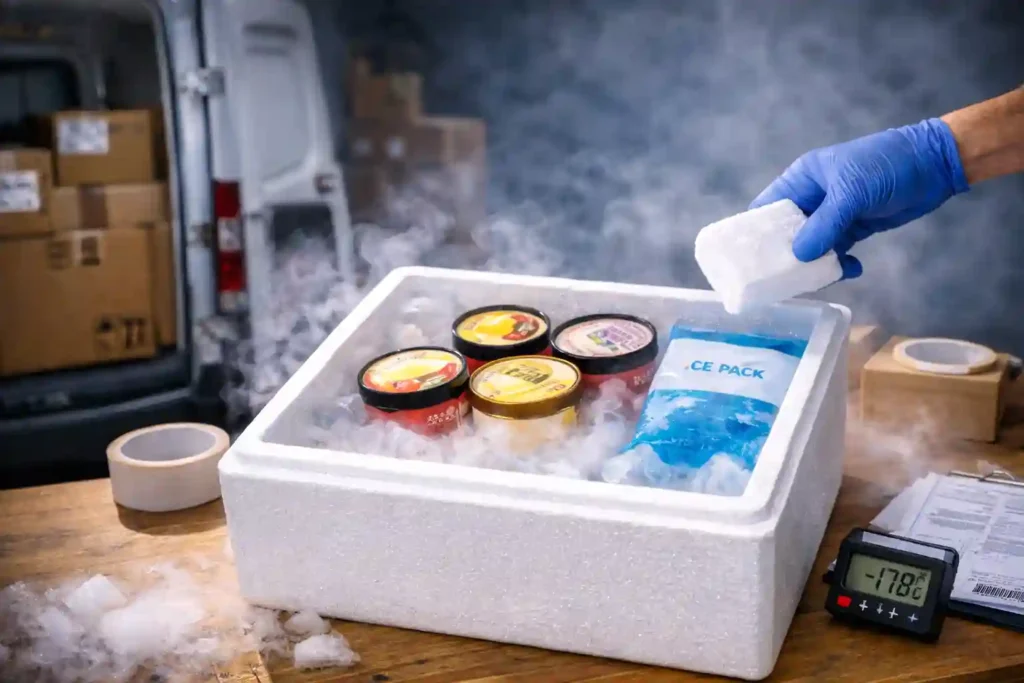
Ice cream starts breaking down the moment it leaves the freezer, so every minute outside cold storage works against you. If you have ever opened a shipped package to find soup instead of scoops, you know the stakes. Learning how to ship ice cream properly is not about luck. It comes down to four things done right: freezing the product hard, insulating it correctly, choosing the right cooling agent, and getting it moving fast.
At Bearcat Express, we handle temperature-sensitive local deliveries every day, and this guide covers exactly what that process looks like, from real packaging materials to the carrier rules most people forget.
Is It Possible to Ship Ice Cream Without It Melting? (Quick Answer)
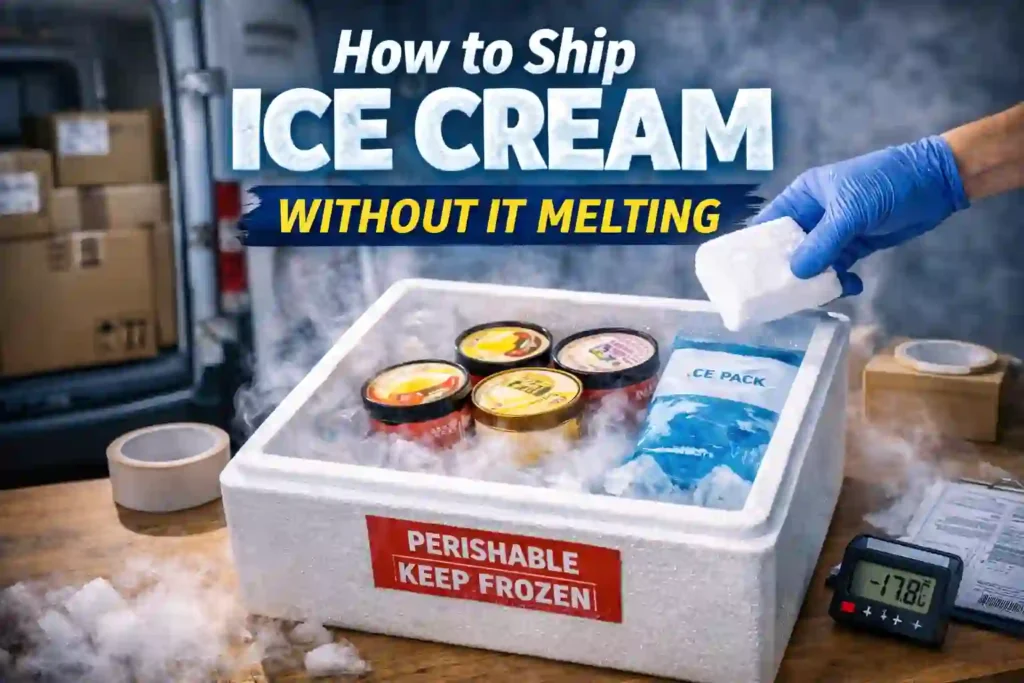
Yes, and it is done successfully every day by dessert shops, grocery suppliers, and home bakers. The formula is simple to state and harder to execute well: pack a fully hardened product in insulated packaging, surround it with enough dry ice or gel packs to outlast the transit time, seal it correctly without trapping gas, and choose the fastest delivery option available for the distance involved. Miss any one of those steps and the shipment is at risk, regardless of how good the rest of the packaging is.
Why Shipping Ice Cream Is So Challenging
Temperature Fluctuations and Last-Mile Risks
Anyone learning how to ship ice cream has to start by accepting that a package does not sit in one stable environment during transit. It moves between a loading dock, a delivery vehicle, and sometimes a customer’s front porch, and each transfer point introduces a small temperature spike. Those spikes add up. The last leg of a delivery, often called last-mile, tends to be the riskiest stretch because a driver may make several stops before reaching the final address, and every extra minute in a warm vehicle chips away at the cooling reserve inside the box.
This is exactly why so many businesses researching how to ship ice cream end up choosing local, same-day options instead of standard multi-day shipping. Fewer handoffs mean fewer chances for the cold chain to break, and it is usually the first thing we explain when a new customer asks How do you ship ice cream without risking the whole order.
Why Ice Cream Melts Faster Than Other Frozen Foods
Ice cream is not a solid block of frozen matter the way a frozen chicken breast is. It contains whipped air, sugar, and dairy fat, which is what gives it that soft, scoopable texture in the first place. That same composition makes it far more sensitive to temperature swings than denser frozen foods. A few degrees of warming can shift ice cream from firm to soft well before it looks visibly melted, and once that shift happens, refreezing never fully restores the original texture.
Essential Packaging Materials
Insulated Coolers and Corrugated Boxes
A rigid foam cooler is the core of any frozen shipment. Thicker walls slow down heat transfer more effectively, so thin, flimsy foam is one of the most common reasons packages arrive soft. That foam cooler should always sit inside a sturdy corrugated outer box, both to protect it from being crushed in transit and to give the package a stable, stackable shape that carriers can handle without extra care instructions.
Dry Ice vs Gel Packs vs Frozen Water | Which Is Better?
| Cooling Agent | Best For | Limitation |
| Dry ice | Long-distance or overnight frozen shipping | Requires venting and hazmat labeling |
| Gel packs | Short local trips, refrigerated (not frozen) goods | Loses cooling power faster than dry ice |
| Frozen water/ice packs | Not recommended for ice cream | Melts into liquid, risks leaks and soaking the box |
Dry ice sits at roughly negative 109 degrees Fahrenheit, which is why it remains the standard choice for keeping ice cream solid over longer transit windows. Gel packs work fine for chilled items but usually cannot hold a hard-frozen texture much past a few hours. Businesses that also ship other desserts often ask about how to ship chocolate without it melting, and the answer there leans more toward gel packs since chocolate only needs to stay cool, not frozen solid, while ice cream needs the harder cooling power dry ice provides. That distinction matters because using the wrong cooling agent is one of the most common mistakes we see when someone applies chocolate-shipping habits, meant for how to ship chocolate without it melting, to an ice cream order instead.
How Much Dry Ice Do You Need?
Dry Ice-to-Product Ratio by Weight
A reliable starting ratio is roughly one pound of dry ice for every pound of ice cream when the trip will take one to two days. For longer, two- to three-day shipments, that ratio climbs closer to one and a half pounds of dry ice per pound of product. These numbers assume a well-insulated cooler; a weaker box will burn through dry ice faster regardless of how much you pack in.
Local vs Long-Distance Shipping Duration
Local same-day routes generally need far less dry ice, often in the 5 to 10 pound range, because the product spends only a few hours outside deep freeze. Overnight shipments typically call for 10 to 20 pounds, and anything stretching beyond a day in transit should plan for 20 pounds or more. Anyone wondering how to transport ice cream across state lines should size their dry ice purchase around the total time the package will realistically spend on a truck, not just the advertised delivery window, since pickup delays and sorting time both count. Even shippers who only need to know how to transport ice cream a short distance within the same city should still weigh their box before pickup, since guessing at dry ice weight is one of the easiest ways to underprepare a shipment.
Carrier Rules and Regulations
Dry Ice Weight Limits and Hazmat Labeling
Dry ice is classified as a hazardous material because it releases carbon dioxide gas as it sublimates. Most major carriers cap dry ice at around 5.5 pounds per package for standard air shipments without additional paperwork, and packages containing it must carry a Class 9 hazard label along with a clear note of the net weight of dry ice inside. Skipping this labeling is not a minor technicality; carriers can refuse or delay a package that is not marked correctly, which defeats the entire purpose of paying for expedited shipping.
Domestic vs International Shipping Rules
Domestic dry ice shipments are generally straightforward once labeled correctly, but international shipments involving dry ice carry stricter documentation requirements and are sometimes restricted outright depending on the destination country’s regulations. Anyone planning how to ship ice cream across a border should confirm the receiving country’s rules before packing, since a shipment that gets held at customs will lose its cooling advantage entirely while it waits. For most local and regional orders, though, the honest answer to how do I ship ice cream comes down to domestic carrier limits rather than international paperwork.
Step-by-Step Packing Guide
Pre-Freeze, Pack, Layer Dry Ice, Seal, Label
- Freeze the ice cream at the coldest setting available for a full 24 hours before packing. Soft-frozen product has almost no buffer once it hits room-temperature air.
- Pre-chill the cooler itself in a freezer or walk-in cooler for a few hours so the packaging is not absorbing the product’s cold on day one.
- Pack the ice cream in airtight, leak-resistant containers, then place them inside the insulated cooler.
- Layer the dry ice above and around the product rather than underneath it, since cold air sinks and this positioning cools the entire package more evenly.
- Fill any remaining gaps with crumpled paper or extra insulation so warm air has nowhere to circulate.
- Seal the outer box tightly with strong tape, but never seal the inner cooler airtight when dry ice is inside, since trapped gas can build dangerous pressure.
- Label the box clearly as Perishable, Keep Frozen, and Contains Dry Ice, including the net weight of the dry ice.
Inside a Same-Day Frozen Delivery Run (Real Operational Walkthrough)
Here is what a same-day frozen pickup actually looks like on our end. When a dessert shop calls in a frozen order, dispatch flags it before it ever reaches the queue, because frozen and perishable freight always gets prioritized over standard package runs. The driver assigned to that stop checks the packaging at pickup, confirming the box feels solid and cold to the touch and that the dry ice or gel pack layer looks intact before it ever goes into the vehicle.
From there, frozen stops are routed to minimize the number of other deliveries in between, which keeps the vehicle door opening and closing less often near that package. If a stop ahead of the frozen delivery runs long, dispatch will often resequence the route on the fly rather than let the frozen order sit in a warm cabin waiting its turn. That kind of real-time adjustment is something a national carrier’s fixed route simply cannot do, and it is the biggest practical reason local same-day delivery outperforms standard shipping for anything that melts.
Bearcat Express applies this same prioritization logic to every temperature-sensitive pickup through our Same Day Delivery Service Augusta GA, which is part of why local dessert and grocery businesses in our service area lean on same-day routing instead of overnight carrier options.
Same-Day Delivery vs Standard Shipping | Comparison Table
| Factor | Same-Day Local Delivery | Standard Multi-Day Shipping |
| Typical transit time | 1 to 6 hours | 24 to 72 hours |
| Melting risk | Low | Moderate to high |
| Dry ice needed | 5 to 10 lbs | 15 to 25+ lbs |
| Best for | Local shops, catering, urgent orders | Regional or interstate customers |
| Relative cost | Higher per mile, lower packaging cost | Lower per mile, higher packaging cost |
For businesses wondering how to deliver ice cream without melting on a tight timeline, the math usually favors same-day local delivery once you factor in the reduced dry ice volume and lower risk of a spoiled, refunded order. It is the same logic we walk catering clients through whenever they ask how to deliver ice cream without melting for an event with a fixed start time.
Common Mistakes That Cause Ice Cream to Melt
Thin insulation is the most frequent culprit, followed closely by simply not buying enough dry ice for the actual transit time rather than the promised delivery window. Delayed carrier pickup after packing is another quiet killer, since every extra hour sitting in a warm garage or loading dock eats into the cooling reserve before the clock on transit even starts. Shipping during the hottest part of the afternoon, sealing the box poorly so warm air seeps in, and choosing the cheapest, slowest delivery tier available all compound the same underlying problem: too much time spent above freezing.
Pro Tips to Keep Ice Cream Frozen Longer
Double-boxing, meaning an insulated cooler nested inside a second outer box, adds a meaningful extra layer of protection for long trips. Shipping early in the week avoids weekend warehouse holds that can leave a package sitting unrefrigerated for an extra day. Simple temperature indicator strips, the kind that change color if a threshold is crossed, give both the shipper and the customer proof of whether the cold chain held. Keeping box openings to a minimum and storing packages out of direct sunlight before pickup round out the list of small changes that add up to real protection.
Shipping Ice Cream for Businesses
Ice Cream Shops, Dessert Brands, Grocery, Catering, Subscription Boxes
Local ice cream shops rely on fast frozen delivery mainly for catering orders and last-minute customer requests where a truck full of pints needs to arrive still scoopable. Growing dessert brands shipping regionally deal with a different challenge, balancing dry ice cost against delivery speed as their customer radius expands. Grocery stores depend on tight, repeatable frozen restocking schedules so shelves never sit empty, while catering companies need guaranteed arrival windows tied to event start times rather than a general delivery day. Subscription box businesses shipping frozen desserts monthly face the toughest version of this problem, since they are repeating the same packaging process at volume and any weak link shows up as customer complaints fast.
You may also read: How Much Does It Cost to Ship a Stroller?
Cost of Shipping Ice Cream
Packaging costs add up quickly once you factor in insulated coolers, corrugated outer boxes, and leak-proof containers, and dry ice itself is priced by the pound and varies by local availability. Distance is the biggest cost driver overall, since longer trips demand more dry ice and heavier, bulkier insulation. Same-day and overnight options cost more upfront than standard ground shipping, but that gap often narrows once you account for the reduced dry ice volume needed and the lower rate of spoiled, unsellable product.
Can You Ship Homemade Ice Cream?
Yes, with a bit more care than a commercial operation might need. Homemade batches should be frozen solid for a full day before packing, stored in leak-resistant, freezer-safe containers rather than thin deli tubs, and clearly labeled with the contents and any allergens for the recipient’s safety. Double-sealing containers, meaning a tight inner lid plus an outer sealed bag, cuts down on leakage risk significantly during transit. For most home shippers, keeping the delivery local and fast is a far easier path to success than attempting a long-distance shipment with limited packaging experience.
Ice Cream Shipping Checklist (Quick Reference)
- Freeze product solid for 24 hours before packing
- Pre-chill the insulated cooler
- Use leak-proof, airtight inner containers
- Calculate dry ice by weight ratio, not guesswork
- Layer dry ice above and around the product
- Fill space with insulation
- Seal the outer box tightly; vent the inner cooler
- Label as Perishable, Keep Frozen, Contains Dry Ice
- Confirm carrier dry ice limits and hazmat rules before shipping
- Choose the fastest realistic delivery method for the distance
Final Thoughts
Shipping ice cream without it melting is entirely achievable once you treat it as a repeatable process rather than a one-time guess, and that is the core message we share with every business asking us how to ship ice cream for the first time. The businesses that consistently get this right are the ones that respect every step, from a fully hardened product going into the box to the right amount of dry ice and the fastest realistic delivery method for the distance involved.
If your team is shipping frozen desserts locally and wants a same-day option built for exactly this kind of temperature-sensitive delivery, the Bearcat Express Same Day Delivery Service Augusta, GA team can walk you through pickup windows and routing before your next order goes out. Contact us today to talk through your frozen shipping needs.
Frequently Asked Questions
How long does dry ice keep ice cream frozen during shipping?
Dry ice typically holds ice cream frozen for 24 to 48 hours depending on insulation quality and outside temperature. Well-packed shipments with enough dry ice by weight can occasionally stretch closer to two full days under stable conditions.
Is dry ice or gel packs better for shipping ice cream?
Dry ice is generally the better choice because it reaches far colder temperatures and keeps products fully frozen rather than just chilled. Gel packs work better for short local trips or items that only need to stay cool, not hard-frozen.
Can I ship ice cream using a standard shipping box?
No, a standard box without insulation will not protect ice cream during transit. You need an insulated foam cooler inside a sturdy outer box along with an appropriate cooling agent like dry ice.
What is the fastest way to ship ice cream locally?
Same-day local delivery is the fastest and lowest-risk option since the product spends only a few hours outside deep freeze instead of a full day or more. This also reduces how much dry ice you need to buy for each shipment.
Do I need special labeling to ship ice cream with dry ice?
Yes, packages containing dry ice need a Class 9 hazard label along with a clear note of the dry ice’s net weight. This is a carrier requirement, not an optional step, and missing it can delay or block your shipment.