Shipping goods may seem straightforward, but every successful delivery depends on clear documentation that ensures accountability and proof of shipment. Businesses rely on records to confirm what was shipped, who handled it, and where it is going. One of the most important documents in logistics is the bill of lading.
If you’ve ever wondered what is a bill of lading, it serves as a receipt, a shipping contract, and proof of ownership for goods in transit. Companies like Bearcat Express help businesses manage shipment records and tracking. Understanding the bill of lading meaning helps companies organize deliveries, prevent disputes, and keep their supply chains running smoothly.
What Is a Bill of Lading in Shipping?
To explain bill of lading in simple terms, it is a legal shipping document issued by a carrier to acknowledge that goods have been received for transport. It includes details about the shipment and serves as proof that the carrier is responsible for delivering the goods to the correct destination.
The bill of lading definition generally includes three key elements:
- Confirmation that the carrier has received the goods
- Details about the shipment and the parties involved
- Instructions for transporting and delivering the cargo
In practical terms, the bill of lading and shipping contract work together to ensure that everyone involved in the shipment understands their responsibilities. If a shipment is delayed, damaged, or lost, this document provides the reference point for resolving the issue.
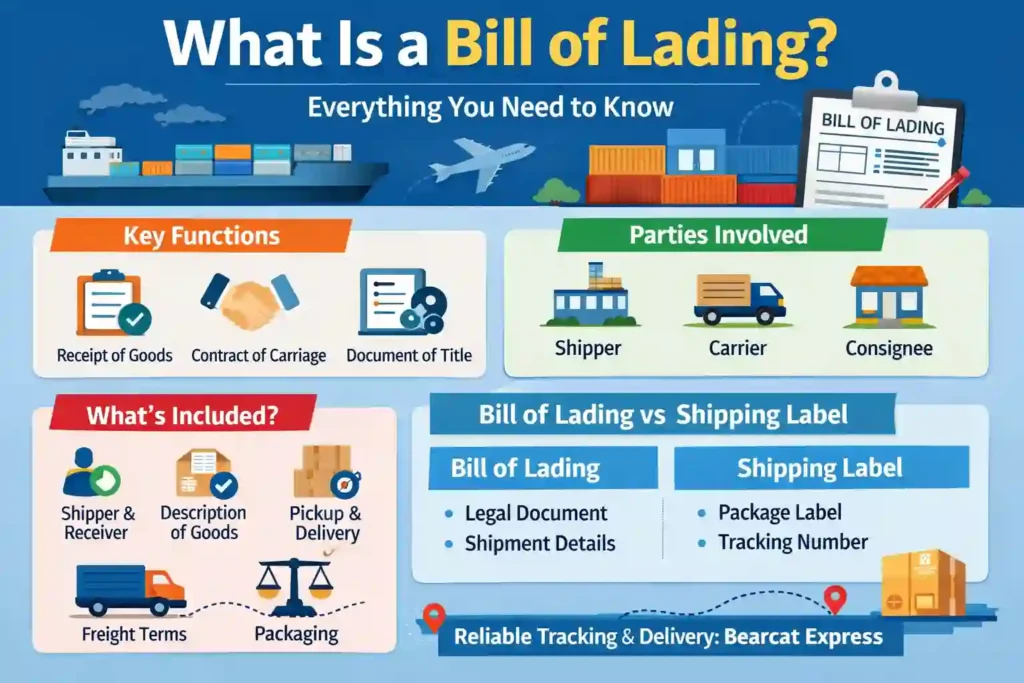
The Three Main Functions of a Bill of Lading
Understanding what is a bill of lading becomes easier when you look at its three primary roles in shipping.
- Receipt of Goods
The document confirms that the carrier has received the shipment in the condition described. This protects both the shipper and the receiver by creating an official record.
- Contract of Carriage
The bill of lading and shipping agreement act as a contract between the shipper and the carrier. It outlines the terms under which the goods will be transported.
- Document of Title
In some cases, the bill of lading also represents ownership of the cargo. This means the holder of the document can claim the goods upon delivery.
Who Are the Parties Involved in a Bill of Lading?
To fully explain bill of lading, it’s important to understand the people involved in the shipment process. Typically, three main parties appear in this document.
Shipper
The shipper is the individual or company sending the goods. They are responsible for preparing the shipment and providing accurate details.
Carrier
The carrier is the company transporting the goods from the origin to the destination. This could be a freight company, shipping line, or logistics provider.
Consignee
The consignee is the person or business receiving the shipment. Their information appears on the document, so the carrier knows where to deliver the goods.
In modern logistics, the relationship between the bill of lading and delivery tracking has become even more important. Courier companies often combine traditional documentation with digital tracking tools to ensure shipments are transparent and traceable.
What Information Is Included in a Bill of Lading?
The bill of lading definition includes several essential details that help ensure shipments move accurately through the supply chain.
Shipper and Receiver Details
This section identifies the sender and the recipient, including company names, addresses, and contact information.
Description of Goods
The document lists what is being shipped. This typically includes:
- Product name
- Quantity of items
- Weight or volume
- Special handling instructions
These details help carriers understand the shipment requirements.
Pickup and Delivery Locations
The bill of lading clearly identifies where the shipment starts and where it must be delivered.
Freight Terms and Conditions
This section explains how the goods are transported, who is responsible for freight costs, and what terms apply during transport.
Shipment Quantity and Packaging
Packaging details ensure the carrier knows how the items are prepared. For example, shipments might include pallets, boxes, or crates.
The bill of lading meaning becomes clearer when you realize it acts as the shipment’s official identity throughout the entire transportation process.
Why Bills of Lading Are Important in Logistics
The bill of lading and logistics operations are closely connected because this document protects everyone involved in the shipment.
Key reasons it is important include:
- Shipment proof: Confirms goods were received by the carrier
- Ownership documentation: Identifies who has the right to claim the goods
- Carrier responsibility: Holds the carrier accountable for delivering the shipment
- Dispute resolution: Provides evidence if problems arise
Today, many delivery services complement this document with digital tracking. Businesses can monitor shipments in real time and receive confirmation once delivery is completed.
Types of Bills of Lading
Different types of bills of lading exist depending on the type of shipment and the transport method. Understanding these helps clarify the bill of lading meaning in different logistics scenarios.
Straight Bill of Lading
This document is used when goods are delivered directly to a specific recipient and cannot be transferred to another party.
Order Bill of Lading
An order bill of lading allows ownership of the goods to be transferred during shipment. It is commonly used in international trade.
Negotiable Bill of Lading
This type can be bought, sold, or traded while the shipment is still in transit.
Inland Bill of Lading
An inland bill of lading covers shipments transported over land, typically by truck or rail.
Understanding these variations helps businesses explain bill of lading requirements when dealing with different types of shipping operations.
Bill of Lading vs Shipping Label
Many businesses confuse shipping documents, especially when comparing a bill of lading vs packing slip or shipping labels.
Here is the key difference:
Bill of Lading
- Legal shipping document
- Includes contract and shipment details
- Used mainly for freight or large shipments
Shipping Label
- Attached to the package
- Displays tracking numbers and delivery addresses
- Used commonly in courier deliveries
When discussing bill of lading vs packing slip, the packing slip usually lists the contents of the shipment for the receiver, while the bill of lading confirms the transportation agreement and shipment receipt.
Understanding the difference between a bill of lading vs packing slip helps businesses avoid confusion in their shipping paperwork.
How Courier Services Handle Shipment Documentation
While freight shipping often relies on traditional paperwork, courier services use more modern systems to manage shipment documentation.
Digital Shipment Records
Instead of physical paperwork, many courier companies store shipment data digitally. This makes records easier to access and track.
Real-Time Tracking
Customers can monitor shipments in transit through tracking systems that update automatically.
Delivery Confirmation and Signature Proof
Proof of delivery confirms when and where a shipment arrived. This often includes a digital signature from the recipient.
Companies like Bearcat Express provide these tools to help businesses maintain accurate shipment records without relying solely on traditional paperwork.
For local businesses that require reliable delivery support, services such as Scheduled Delivery Augusta, GA help ensure shipments move consistently while maintaining proper documentation and tracking.
When Is a Bill of Lading Required?
Although not every shipment requires this document, it is commonly used in several logistics situations.
Typical cases include:
- Freight shipments
- Large cargo transportation
- International shipping
- Supply chain logistics operations
Whenever goods move through multiple carriers or across long distances, the bill of lading and shipping documentation help ensure the shipment remains traceable.
Common Mistakes Businesses Make With Shipping Documents
Even experienced businesses sometimes make errors when preparing shipping paperwork. Understanding these mistakes can help prevent delays.
Common issues include:
- Incorrect shipment details
- Missing signatures
- Incorrect delivery addresses
- Misunderstanding freight terms
These mistakes can lead to delays or disputes. Reviewing documents carefully before shipment helps reduce these risks.
You may also read: What Is Hub and Spoke Model?
Tips for Businesses Managing Shipping Documentation
Shipping documents can seem complex at first, but following a few practical practices can simplify the process.
Verify shipment details
Always confirm that product descriptions, quantities, and addresses are correct.
Maintain digital records
Storing digital copies makes it easier to track shipments and resolve disputes.
Track deliveries in real time
Monitoring shipments helps businesses respond quickly to potential delays.
Work with reliable courier partners
Experienced delivery companies help ensure shipments move smoothly while maintaining proper documentation.
Final Thoughts
Understanding what is a bill of lading helps businesses manage shipments more efficiently and avoid unnecessary complications. This document serves as proof of receipt, outlines the transportation agreement, and ensures shipments can be tracked throughout the logistics process.
Although many modern delivery systems rely on digital records, the principles behind the bill of lading and shipping documentation remain essential in logistics. Businesses that understand how these documents work are better prepared to manage shipments, prevent disputes, and maintain clear records.
If your business regularly ships products and needs reliable logistics support, working with experienced courier providers can make a significant difference. Contact us today to learn how Bearcat Express can support your delivery needs with reliable tracking, documentation, and professional courier services.
Frequently Asked Questions
Is a bill of lading legally required for every shipment?
No, not every shipment requires one. However, it is commonly used in freight shipping and large cargo transportation where documentation is necessary to confirm ownership and shipment terms.
Who issues a bill of lading?
The carrier usually issues the document after receiving the shipment. It confirms that the goods were accepted and outlines the terms of transport.
Is a bill of lading the same as a shipping label?
No. A shipping label identifies the package and provides tracking information, while the bill of lading definition includes the legal contract and shipment details.
Can courier deliveries use digital shipment records instead?
Yes. Many courier companies rely on digital systems for tracking and proof of delivery. These systems serve a similar purpose to traditional shipping documentation.
What is the difference between a bill of lading vs packing slip?
The packing slip lists the items inside the shipment for the receiver, while the bill of lading confirms the transportation agreement and shipment details.