Bearcat Express

Courier

What Are Courier Contracts
Courier

What Are Courier Contracts? A Business Guide

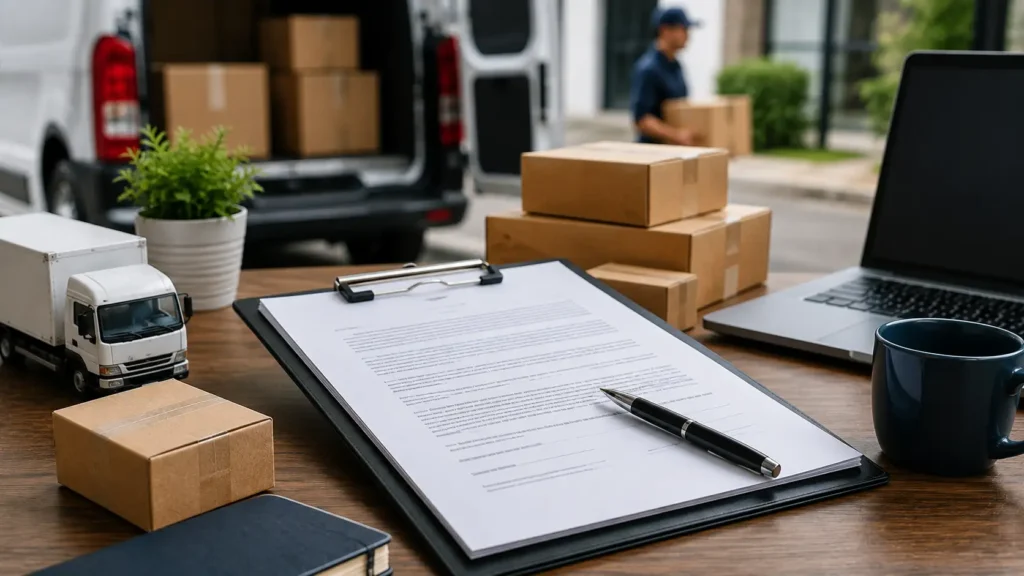
Most delivery problems do not start on the road. They start with a conversation nobody wrote down. So, what are courier contracts, and when does a business need one? A courier contract is a written agreement between a business and a courier that sets the services, prices, delivery windows, and responsibilities for ongoing or defined delivery work.  It replaces “we will sort it out when something goes wrong” with terms both sides can point to. Bearcat Express handles local and same-day deliveries every day, and these questions come up whenever a business moves from occasional bookings to regular work. Courier Contracts at a Glance A courier contract covers what is delivered, where, how fast, at what price, and who is responsible if something goes wrong. A courier service agreement is most useful for recurring work, not for a single urgent package. The clauses that cause the most disputes are waiting time, liability limits, and termination notice. Always ask for measurable terms. “Prompt delivery” cannot be checked, but “pickup within 60 minutes of request” can. A contract is only as good as the process behind it, so check how the courier handles exceptions. What Is a Courier Contract, Exactly? A courier contract is a legal agreement that defines a delivery relationship over a fixed term or until one side ends it. It describes the work before, during, and after a shipment moves. Factor One-off delivery Courier contract Focus One package, one price The whole working relationship Pricing Quoted per job Agreed rate card or route price Service promise Best effort for that job Defined windows and standards Exceptions Handled case by case Procedure written in advance Exit Nothing to end Notice period and exit terms Many people also call this a delivery contract. The name matters less than the terms inside it. What’s Actually Inside a Courier Contract? Good agreements describe how deliveries really happen. These four areas deserve the most attention. Scope of Service and Delivery Windows The scope names the service type (on-call, scheduled, same-day), the pickup and delivery locations, and the service area. It should also state time windows in plain numbers. A medical office moving supplies between two sites each weekday, for example, needs a fixed pickup time, a destination, handling instructions, and a delivery deadline. Without these, every late arrival becomes an argument. Rates, Fees, Surcharges, and Payment Terms Pricing models include per-delivery rates, mileage, hourly charges, and flat route fees. The contract should also name the extras: waiting time, additional stops, after-hours requests, oversized items, and special handling. Payment terms should say when invoices are issued, when payment is due, what happens with disputed charges, and whether fuel costs are included. If a driver waits twenty minutes for a shipment to be packed, the agreement should already say whether that time is billable and when the clock starts. Service Levels, Measurement, and Service Credits A service-level agreement turns promises into numbers: pickup response times, delivery completion targets, proof-of-delivery rules, and escalation contacts. The detail people miss is when measurement begins: at the moment you request pickup or when the driver actually collects. Some agreements also include service credits, a price reduction when agreed targets are missed. A small business with a few weekly deliveries may only need simple terms. A company with dozens of daily stops needs more. Liability, Insurance, and Declared Value This clause decides what happens when goods are lost, damaged, or delayed. Many courier agreements set a default liability limit per shipment, and that limit may be far below the real value of what you send. Declared value lets you state a higher value, often with an added fee, so protection matches the shipment. Check where responsibility passes from you to the courier at pickup and from the courier to the recipient at delivery. Liability wording and its legal effect depend on the contract and applicable law, so do not assume a general clause covers everything. Termination, Renewal, and Exit Terms Businesses read pricing first and termination last, which is backwards. Look for the notice period each side must give, whether either party can leave without cause, and what happens to deliveries already in progress. Watch for automatic renewal. A contract that quietly renews for another year unless you give long notice can lock you into a service that no longer fits. Also look for a cure period, which gives the other side a set time to fix a problem before the contract can be ended for breach. Terms should work both ways, not only in the courier’s favor. Prohibited Items, Confidentiality, and Specialty Cargo Every agreement should say what the courier will not carry. Typical exclusions include hazardous materials, cash, and items that need licensing. Do not assume a courier hired for ordinary parcels can also handle specialty cargo unless the contract says so. Sensitive work needs extra terms. Confidential documents may call for chain-of-custody records and restricted handling. Medical or laboratory shipments can involve temperature requirements and privacy obligations. Legal and financial documents often need signature confirmation. If your shipments fall into these groups, name them in the scope so there is no doubt about what is covered. Types of Courier Contracts Contract type Best for Typical term Pricing style On-demand Occasional urgent needs None, per request Per delivery Recurring or scheduled Regular business deliveries Fixed term or rolling Rate card or per-run price Dedicated route Repeating multi-stop runs Fixed term Flat route or hourly fee Large-account Higher volume, several locations Longer term with reviews Negotiated rates plus reporting The best contract is not the longest one. It is the one that matches how your delivery operation works. Business-to-Courier vs. Courier-to-Driver Contracts Search results for this topic mix two different situations. In the first, a business hires a courier company, and this guide mainly covers that. In the second, a courier company or independent driver wins or accepts delivery work from a business. The second type usually adds terms about vehicle and insurance requirements, how drivers are paid, who
What Are the Different Types of Courier Services
Courier

What Are the Different Types of Courier Services?

Not all couriers are built the same, and picking the wrong one can cost more than money; sometimes a client, a deadline, or a shipment is handled without care. So what are the different types of courier services, and how do you know which fits what you are sending? In simple terms, they fall into core categories based on speed, specialty, and scheduling: same day, next day, on demand, and specialty work like medical or legal couriers.  At Bearcat Express, years moving urgent filings and time-sensitive medical samples across Georgia shape this guide, so you leave knowing exactly which type fits your shipment. Why the Right Courier Type Matters Picking a courier is not just about speed. It is about matching the service to the actual risk and cost of the shipment. A same-day courier moving a signed contract has a completely different risk profile than a routed courier delivering weekly supply drops to five clinics. Get the match wrong and you either overpay for urgency you did not need, or underpay for reliability you needed badly.  This is where a clear courier service meaning matters. It is not one product. It is a category of solutions, each built around a different combination of time, handling, and accountability. Once a business understands the courier service meaning behind each tier, choosing between them stops being a guessing game and becomes a straightforward decision based on the shipment in front of you. Courier Types by Speed Speed is usually the first thing people think about when they ask what courier delivery really comes down to. It is a fair place to start, since turnaround time drives most of the cost difference between services. But once you break down what courier delivery is at each speed tier, it becomes clear that faster is not always better; it is just a different tool for a different job. Same-Day Courier This is exactly what it sounds like. The package is picked up and delivered within the same business day, often within a few hours. It is the go-to option for time-critical documents, urgent parts, or anything where waiting until tomorrow simply is not an option. Businesses that run on tight deadlines, like law firms filing before a court closes or a manufacturer waiting on a replacement part to keep a line running, rely on this the most. Next-Day / Overnight Courier Next-day service gives you a guaranteed delivery window without the same-day price tag. It works well when something is important but not urgent to the hour. Overnight couriers typically consolidate routes overnight, which keeps costs lower than same-day pickup while still beating standard shipping by days. Standard / Economy Courier This is the slower, more budget-friendly option, usually two to three business days. It is a solid fit for non-urgent business mail, routine restocking, or anything where the deadline has some breathing room. Many businesses use this tier for the bulk of their shipping and reserve faster tiers for exceptions. On-Demand / Rush Courier On-demand goes a step beyond same-day. Instead of fitting into a route, a driver is dispatched specifically for that one pickup, often within the hour. This is the tier businesses reach for when a mistake happened somewhere upstream, and there is no room left for delay, like a missing signature on closing documents or a piece of equipment that broke down mid-shift. Specialty Courier Services Speed only tells half the story. The other half is what is actually being moved, and this is where Bearcat Express sees the biggest gap between what most businesses expect from a courier and what a shipment actually needs. Medical & STAT Couriers Medical courier work is not just fast delivery with a different label. It involves temperature-sensitive handling, strict chain-of-custody documentation, and drivers trained to move lab specimens, pharmaceuticals, or diagnostic equipment without compromising them. A STAT run for a hospital lab has zero room for a delayed handoff, and the courier has to understand why that matters, not just drive fast. Legal Document Couriers Legal couriers handle filings, subpoenas, and case documents where a missed deadline can affect an entire case. This service usually requires proof of delivery, sometimes with a signature captured at the exact time of drop-off, and drivers who understand courthouse hours and filing windows down to the minute. Fragile & High-Value Item Couriers This category covers items like artwork, specialized equipment, or anything where standard packaging and handling is not enough. A courier moving a piece for a gallery show or a sensitive piece of lab equipment needs padded transport, careful loading, and sometimes a second person on the vehicle just to stabilize the item during transit. It is a completely different skill set than dropping off a standard parcel. Freight & Bulk Couriers When shipments move past what a standard vehicle can carry, freight and bulk courier services step in. This covers palletized goods, larger equipment, or multi-box shipments that need a bigger vehicle and sometimes a loading dock on both ends. On-Demand vs. Scheduled/Routed Delivery: What’s the Difference These two often get confused, but they solve different problems. On-demand delivery is reactive. Something needs to move right now, and a driver is dispatched specifically for that job. Scheduled or routed delivery is proactive. A business sets up recurring pickups and drop-offs, like a clinic that needs supplies delivered every Tuesday and Friday, and the courier builds that into a fixed route. Routed delivery is usually cheaper per drop because it is planned, while on-demand costs more because it interrupts a driver’s existing schedule to handle your job first. What Determines Which Courier Type You Need Four questions usually settle this decision: How urgent is it?  If a delay causes real damage, whether financial, legal, or medical, you need same-day or on-demand. If not, standard delivery saves money. What are you shipping?  Documents, medical items, and fragile goods each need different handling, not just different speeds. How far is it going?  Local courier services usually mean same-day

Your Quick Guide to Last Mile Carriers
Courier

Your Quick Guide to Last Mile Carriers

Anyone who has refreshed a tracking page five times in one afternoon understands why the final stretch of delivery matters more than people admit. A package can cross three states without a hiccup, then sit for hours once it reaches the local area, simply because that last leg is harder to manage than everything before it.  This is your quick guide to last mile carriers: what a final mile carrier actually does, how parcels get handed off to last-mile service teams, and what separates a dependable partner from one that leaves you guessing. At Bearcat Express, we run this stretch daily across Georgia and Alabama. Quick Answer A last mile carrier is the company responsible for moving a last mile parcel from a local hub to its final stop, whether that’s a home, an office, or a storefront. In simple terms, whats a last mile provider comes down to this: they own the shortest, costliest, and most visible leg of a shipment’s route. Choosing the right one shapes how a customer feels about the entire order, not just the delivery itself. What Is a Last Mile Carrier?   Simple Definition (Hub to Doorstep) A last mile carrier, sometimes called a final mile carrier, picks up a parcel from a local distribution point and completes the handoff to the person or business waiting for it. Everything before that moment- sorting, long-haul trucking, freight transfers- happens out of sight. The last mile is the part a customer actually experiences, and it’s the part they remember when deciding whether to order again. How It Differs from Long-Haul Shipping Long-haul shipping moves large volumes across long distances on predictable routes between major hubs. The last mile flips that entirely. It’s dozens of small stops packed into a few square miles, tight delivery windows, apartment buzzers, loading docks, and constant variability. A truck running highway miles between two cities deals with a scheduled dock time. A driver delivering that same freight to its final twenty addresses deals with parking, gate codes, missed doorbells, and school zone traffic. First Mile, Middle Mile, and Last Mile Explained The first mile is when a product leaves the manufacturer or supplier and enters the supply chain. The middle mile covers long-distance movement between warehouses, ports, or regional hubs. The last mile is everything after that: the local sort, the route build, and the drive to the customer’s door. Businesses that treat these three stages as one continuous process, instead of three separate vendors with separate expectations, tend to see far fewer delivery surprises. Last-Mile Delivery vs. Same-Day Delivery: How They Overlap Not every last mile delivery is a same-day delivery, but every same-day delivery depends on a strong last mile. Same-day delivery describes the speed promise: a package leaves and arrives within the same working day. Last mile delivery describes the stage of the journey where that promise gets kept or gets missed. A national carrier might take two or three days to complete its own last mile step, while a local courier running Same Day Delivery Service Augusta GA routes compresses that same stage into a matter of hours. Bearcat Express built its entire same-day model around owning this compressed last mile from pickup to confirmation, which is what makes the speed promise realistic instead of theoretical. How Last Mile Delivery Works Order Handoff and Sorting Every last-mile parcel begins with the handover of parcels to last-mile service provider teams at a local facility, the moment a shipment moves from long-haul transport or a client’s warehouse into the hands of the team that finishes the job. From there, the parcel gets sorted by delivery zone, priority level, and expected time window. This sorting step is where delay actually starts if it’s rushed, long before a driver ever gets behind the wheel. Route Planning and Dispatch After sorting, dispatch builds routes based on location clusters, delivery deadlines, and vehicle capacity. A well-run dispatch desk doesn’t send drivers out in the order packages happened to arrive. Routes get grouped by neighborhood and adjusted throughout the day as new pickups come in, which matters most for businesses running same-day requests that can’t wait for the next scheduled batch. Out-for-Delivery to Final Confirmation Once a driver leaves the facility, the parcel is officially out for delivery. This stage ends with confirmation: a signature, a photo at the door, or a scan marking the drop-off. That confirmation closes the loop and gives both sender and recipient proof the job got done. What Does “Last Mile En Route” Mean on a Tracking Page? If you’ve seen a tracking update that says last mile en route and wondered what does last mile enroute mean, the answer is simpler than it looks. The last mile enroute meaning is straightforward: the parcel has left the local sorting facility and is physically on a vehicle heading to the final address. It’s one step past out for delivery in some tracking systems and one step before final confirmation. Understanding what does last mile enroute mean saves a phone call, since it tells you the package is actively moving rather than sitting in a queue. Why the Last Mile Is the Most Critical (and Costly) Stage Traffic, Stops, and Delivery Delays The last mile carries a disproportionate share of total delivery cost. A truck making one stop every fifty miles on a highway runs efficiently. A van making forty stops inside a ten-mile radius does not, even though the total distance is far shorter. Every stop means slowing down, parking, walking to a door, and getting back on the road, and city traffic multiplies that time significantly. Direct Impact on Customer Experience This is also the stage customers actually notice. Nobody calls to ask how smoothly their package moved through a regional sorting facility. They call when the delivery window has passed, and nothing has arrived. The last mile is where a business earns trust or loses it. What Last Mile Delivery Actually Costs Industry estimates consistently point to

what is a legal courier
Courier

What Is a Legal Courier? A Complete Guide

Missing a court deadline can create serious problems. Legal documents may need to reach a courthouse, attorney, government office, business, or authorized recipient within a specific timeframe. What is a Legal Courier? A legal courier is a professional who transports confidential and time-sensitive legal documents while following detailed pickup, delivery, filing, signature, and documentation instructions.  Bearcat Express provides reliable courier solutions for legal document deliveries in Augusta and nearby areas. A legal courier does more than move documents from one location to another. The service focuses on accurate handling, secure transportation, deadline awareness, clear instructions, and reliable delivery confirmation throughout the assignment.  Quick Answer: What Is a Legal Courier?   A legal courier specializes in transporting legal documents and materials between law offices, courts, businesses, government offices, and other designated locations. Depending on the assignment, the courier may collect documents, deliver them to a recipient, make a courthouse run, obtain a signature, retrieve paperwork, or return a filed or signed document. Simple Definition of a Legal Courier A legal courier is a delivery professional who handles documents where timing, accuracy, confidentiality, and documented delivery may be especially important. Unlike an ordinary package delivery, a legal assignment often comes with specific instructions. The courier may need to deliver to a particular department, speak with a designated recipient, obtain a signature, return an original document, or provide delivery details afterward. What Makes Legal Courier Work Different? The main difference is the level of attention required around the delivery. A legal document can have a deadline attached to it. The wrong address, an incomplete instruction, a missed signature, or a delivery made outside the required window can create additional work for the sender. For that reason, legal courier work is built around accurate instructions, controlled handling, communication, and documentation. Legal Courier vs. Regular Courier at a Glance A regular courier can transport many everyday packages and documents. A legal courier is typically chosen when the shipment involves confidential paperwork, strict timing, court-related delivery, original records, signatures, or documented proof. The distinction is based on the assignment and the level of service required, not simply the size of the envelope. What Does a Legal Courier Do? Bearcat Express approaches legal deliveries as assignments that require clear instructions from pickup through final confirmation. Deliver Legal Documents A legal courier may transport pleadings, contracts, notices, signed agreements, case materials, records, and other documents between designated locations. The courier should confirm the pickup details and delivery instructions before leaving with the documents. That simple step can prevent avoidable problems later. Make Court and Government Office Runs Some assignments involve delivering documents to a courthouse, clerk’s office, recorder’s office, government department, or another official location. The courier may need to follow specific delivery instructions supplied by the customer. Court procedures and filing requirements can vary by jurisdiction, so the courier should not assume that every location handles documents in exactly the same way. Collect Signatures and Original Documents Certain deliveries require a recipient to sign for the document. Other assignments may involve collecting an original signed contract or another physical record and returning it to the sender. The instructions should clearly state what needs to be signed, collected, or returned. Return Filed or Signed Documents A delivery does not always end when the courier reaches the destination. For example, a customer may need a filed copy, receipt, signed contract, or other document returned after the initial drop-off. This creates a two-part assignment that must be planned from the beginning. Provide Delivery Confirmation After delivery, the sender may need confirmation showing when and where the document was delivered and whether the requested handoff was completed. The exact documentation depends on the assignment. What Types of Documents Can a Legal Courier Deliver? Legal couriers may transport many different types of paperwork. The important consideration is usually the handling requirement rather than the number of pages. Court Filings and Pleadings These can include motions, pleadings, notices, exhibits, supporting documents, and other court-related paperwork. When a filing has a deadline, the sender should provide complete instructions and enough time for the courier to account for the destination’s procedures. Subpoenas, Notices, and Summonses These documents can require special handling or service procedures. A courier transporting a document should not automatically be assumed to be performing formal service of process. Contracts and Signed Agreements Business contracts, real estate paperwork, closing documents, and other agreements may require original signatures and a secure return. Real Estate and Closing Documents Real estate transactions can involve multiple parties, original documents, signing deadlines, and separate pickup and return instructions. Deposition, Trial, and Discovery Materials Large document sets, exhibits, case files, and courtroom materials may need to move between offices, storage locations, attorneys, and legal proceedings. Original and Confidential Records Some assignments involve originals that cannot simply be replaced with a digital copy. These documents should be handled carefully and kept with the assignment instructions throughout the delivery. Government and Recorder Documents Some legal assignments involve government offices or recorders. Exact procedures vary by location, so the sender should provide the courier with the required destination and filing instructions. Who Uses Legal Courier Services? Legal courier services are not limited to large law firms. Any organization or individual with a legitimate need to move sensitive or time-sensitive documents may need this type of service. Law firms may use couriers for court filings, document exchanges, signatures, returns, and local office runs. Corporate legal departments may need documents moved between offices or delivered to outside parties. Real estate professionals may need original documents transported during a transaction. Government offices and other professional organizations may also require dependable document transportation. Individuals may use a courier when they need to send an important legal document locally but cannot make the delivery themselves. Legal Courier vs. Process Server: What Is the Difference? This distinction is important because a courier and a process server may perform different jobs. What a Legal Courier Does A courier transports documents according to the customer’s delivery instructions. The assignment

How much does an overnight courier cost
Courier

How Much Does an Overnight Courier Cost?

You need it there by morning, but what will it cost you? Overnight courier fills a critical gap when standard shipping won’t do. Yet pricing is rarely straightforward, and what’s advertised doesn’t always match your final invoice. This guide gives you a clear, honest breakdown of how much does an overnight courier cost what drives the price, which fees catch people off guard, and how to make smarter shipping decisions every time. Whether you ship once a month or daily, and whether you’re in Georgia, Alabama, or a nearby region, Bearcat Express is built around one promise: transparent, dependable, on-time delivery. What Is an Overnight Courier Service? An overnight courier is a delivery service that guarantees your package arrives at its destination by the next business morning, typically by 8:00 AM, 10:30 AM, or noon, depending on the service tier you choose. Unlike standard shipping, which may take two to five business days, overnight courier service is designed for time-critical shipments where waiting simply isn’t an option. It’s a premium service, and the price reflects that, but understanding exactly what you’re paying for makes it much easier to decide when it’s worth it. Who uses overnight courier most often? Law firms sending contracts, court filings, or closing documents Healthcare providers shipping lab samples, medications, or medical records Businesses fulfilling urgent client orders or last-minute inventory needs Individuals sending important personal documents or one-of-a-kind gifts Overnight Courier vs. Standard Shipping Standard ground shipping prioritizes volume and cost efficiency. Packages move through multiple hubs and hand-offs over several days. Overnight courier, by contrast, moves your item on a direct or near-direct route with a hard delivery commitment. You’re paying for speed, accountability, and the guarantee that your shipment won’t be delayed in a warehouse queue somewhere. How Much Does Overnight Courier Service Cost? (Average Pricing)   The average cost of overnight courier service varies significantly based on distance, weight, and service level. Here’s a realistic range to set your expectations: Local Overnight Delivery Cost For deliveries within the same city or metro area, overnight courier pricing typically ranges from $20 to $60. This is the most affordable tier because the driver covers a minimal distance, fuel costs are low, and the logistics are simple. Regional Overnight Delivery Cost Regional overnight delivery, typically within the same state or within a few hundred miles, generally runs between $45 and $120. Distance starts to become a bigger pricing factor here, and many couriers apply zone-based pricing to calculate your rate. Cross-State Overnight Delivery Cost For cross-state shipments, you’re looking at anywhere from $80 to $200 or more, depending on package size, the exact distance, and any surcharges applied. The overnight courier price per mile increases with distance, which is why a 400-mile shipment can cost noticeably more than doubling a 200-mile rate. Pricing Overview Table Delivery Type Estimated Cost Range Local (same city/metro) $20 – $60 Regional (same state / 150–300 miles) $45 – $120 Cross-State (300+ miles) $80 – $200+ Heavy or oversized packages Add $20 – $75+ Weekend or after-hours delivery Add $15 – $50 These are general market ranges. Your actual quote depends on the specific route, weight, and any applicable surcharges. 7 Key Factors That Affect Overnight Courier Pricing   Understanding how much an overnight courier costs means understanding what goes into the calculation. It’s never just a flat rate; it’s a combination of variables. Package Weight & Dimensions Most couriers price based on either actual weight or dimensional (DIM) weight, whichever is greater. A large but lightweight box may be billed at a higher DIM weight because it takes up more space in the vehicle. For overnight shipping cost for heavy packages, expect surcharges once you cross certain thresholds, often starting around 30–50 lbs. Distance & Delivery Zone Couriers divide their coverage area into pricing zones. The further your destination sits from the origin, the higher the zone and the higher the base rate. The overnight courier price per mile isn’t linear; each zone jump can add a meaningful percentage to your total cost. Pickup Time & Cutoff Windows Every courier has a daily cutoff time for scheduling pickups. Miss that window and your “overnight” shipment becomes a next-next-morning delivery, or you pay a premium for an after-hours pickup. Booking early in the day almost always gives you more options and sometimes a lower rate. Type of Item (Fragile, Documents, Parcels) A standard document envelope and a fragile piece of equipment are handled very differently. Special handling requirements, such as foam packaging, temperature sensitivity, and liquid containment, add to the price. Knowing your item’s characteristics before you call for a quote will get you a more accurate number. Insurance & Declared Value Basic courier service typically includes minimal liability coverage. If you’re shipping anything with significant monetary or legal value, adding declared value coverage is a smart move. Expect this to add a percentage of the declared amount, usually 1–3% on top of your base rate. Fuel Surcharges Fuel costs are a real operational expense, and most couriers pass a portion of that variability onto customers through fuel surcharges. This is typically listed as a percentage of the base rate and fluctuates with market fuel prices. Always ask for the current surcharge rate when getting a quote. Same-Day vs. Next-Morning Delivery Same-day delivery is a step above overnight because the pickup and delivery happen within the same business day, sometimes within hours. Expect same-day pricing to run 30–60% higher than overnight rates for the same route and package. Overnight Courier Cost Breakdown | What You’re Actually Paying For When you receive a courier invoice, the total is made up of several components: Base Rate: Covers the transportation itself, calculated from your weight, dimensions, and zone. Fuel Surcharge: A percentage added to reflect real-time fuel costs for the route. Residential Delivery Fee: Delivering to a home address versus a commercial dock costs more due to access, parking, and the time it takes. Signature Required Fee: If you need proof of

Difference Between In Home Delivery and Doorstep Delivery
Courier, Delivery

What is the Difference Between In Home Delivery and Doorstep Delivery?

When ordering a new appliance, furniture, or high-value item, you often face two choices at checkout: in-home delivery or doorstep delivery. While the decision may seem simple, it can greatly affect cost, convenience, safety, and the overall experience. Understanding the Difference Between In Home Delivery and Doorstep Delivery helps prevent unexpected fees, delays, or handling issues. Many customers assume both services are the same, but they differ in key ways.  At Bearcat Express, we guide customers on timing, safety, and service options. This guide covers what inside delivery means, how doorstep delivery works, cost factors, and safety considerations. What Is In-Home Delivery?   In-home delivery, often referred to as inside delivery, means the delivery team brings your item inside your residence or business, rather than leaving it outside.  If you’ve ever wondered what does inside delivery mean or searched for inside delivery meaning, the answer is straightforward: the carrier physically enters the property and places the shipment in a specified room. At Bearcat Express, we ensure each in-home delivery is handled carefully, providing professional placement and reliable service for every customer. How In-Home Delivery Works (Step-by-Step) Delivery is scheduled within a specific time window. The team arrives and confirms access conditions. The item is carried inside to a designated room. Depending on the service level, unpacking or basic assembly may occur. Packaging debris may be removed. Common Industries Using In-Home Delivery Furniture retailers Appliance companies Medical equipment suppliers Fitness equipment distributors This type of delivery from a home setup is ideal for heavy, bulky, or high-value items that require placement rather than simple drop-off. Main Features of In-Home Delivery Inside placement Room-of-choice delivery Unpacking Basic assembly Packaging removal Signature confirmation (if required) When customers ask what is inside delivery, it’s essentially a premium logistics service designed to reduce physical strain and ensure professional handling. What Does Doorstep Delivery Mean? Doorstep delivery is the more common and streamlined option. The carrier delivers the package to the exterior entrance of the home or building. Typical drop-off points include: Front door Porch Lobby Gate Garage entrance (if accessible) In this model, once the package reaches the doorstep, responsibility generally transfers to the recipient. What Doorstep Delivery Does NOT Include No entry inside the property No assembly or installation No packaging removal Limited post-drop-off liability Doorstep delivery is widely used in e-commerce because it’s efficient, scalable, and cost-effective. When comparing the Difference Between In Home Delivery and Doorstep Delivery, the physical entry point of the carrier is the core distinction. Side-by-Side Comparison Feature In-Home Delivery Doorstep Delivery Delivery Location Inside the home Outside the door Setup Included Usually included Not included Cost Higher Lower Best For Large/heavy items Small/standard parcels Time Required Longer Faster Customer Presence Often required Sometimes optional This comparison highlights the operational and cost differences clearly. Cost Differences One of the most noticeable aspects of the Difference Between In-Home Delivery and Doorstep Delivery is pricing. Why In-Home Delivery Costs More Additional labor (two-person teams) Liability coverage for entering property Equipment such as dollies and floor protection Scheduling coordination Risk mitigation procedures In many markets, in-home delivery can cost 20–50% more than standard doorstep service, depending on weight and service complexity. When Paying More Makes Sense Heavy appliances requiring installation Large furniture pieces Customers with mobility limitations Fragile, high-value equipment For everyday parcels or time-sensitive shipments, doorstep delivery often provides better value. You may also read: What is the Difference Between Service Fee and Delivery Fee? Safety & Liability Considerations Safety and accountability play a major role in choosing the right service. Insurance & Coverage Inside delivery generally carries higher insurance coverage because the carrier enters private property. Signature Requirements In-home delivery almost always requires a signature. Doorstep delivery may offer optional confirmation. Risk of Theft Packages left at the doorstep can be vulnerable to theft or weather exposure. This is a common concern in residential neighborhoods. Contactless Delivery Doorstep delivery supports contactless options easily, which became especially important during health-related restrictions. Real-time tracking and confirmation processes help reduce uncertainty for both delivery models, providing full visibility from dispatch to completion. Advantages of In-Home Delivery Maximum convenience Reduced lifting risk Professional placement Ideal for elderly or mobility-restricted customers Higher perceived service quality If you’ve ever received a heavy refrigerator or sectional sofa, you understand why inside delivery matters. Disadvantages of In-Home Delivery Higher cost Requires scheduling coordination Delivery windows may be broader Access restrictions may apply Customers must ensure clear pathways and safe entry conditions. Advantages of Doorstep Delivery Lower cost Faster turnaround Easier to scale for businesses Ideal for urgent shipments For example, businesses in Augusta often rely on Same Day Delivery Service Augusta, GA to move time-sensitive products efficiently through doorstep delivery. This approach allows rapid dispatch without the operational complexity of interior placement. Disadvantages of Doorstep Delivery Risk of theft No setup assistance Customer is responsible after drop-off Not ideal for large or heavy items Understanding the inside delivery meaning compared to standard drop-off prevents unrealistic expectations. How to Choose the Right Delivery Option 1. Consider Your Product Type Weight Size Fragility Assembly requirements Large items almost always justify inside delivery. 2. Understand Your Target Audience Are they mobility-limited? Do they prioritize convenience? Is budget sensitivity a concern? Businesses offering premium products often include inside delivery to enhance customer satisfaction. 3. Evaluate Operational Capability If you’re a business owner: Do you have trained staff? Adequate insurance? Proper lifting equipment? Not every courier provider supports in-home logistics. 4. Start Simple and Optimize Many businesses begin with doorstep delivery and later add inside delivery as a premium upgrade option. Impact on Businesses & Logistics The Difference Between In-Home Delivery and Doorstep Delivery also influences: Customer satisfaction ratings Return rates Damage claims Operational margins Retailers selling high-ticket items typically integrate in-home delivery to improve brand perception. Meanwhile, companies focused on volume and speed often prioritize doorstep delivery. Local courier providers, such as Bearcat Express, help businesses strike a balance between speed, safety, and cost by offering flexible delivery solutions tailored to

Difference Between Courier and Parcel Delivery
Courier

What Is the Difference Between Courier and Parcel Delivery?

Choosing the wrong delivery method can cost a business more than money. A late legal contract, a medical sample stuck in a sorting hub, or a retail order that misses its same-day promise all trace back to one decision: courier or parcel. Understanding What Is the Difference Between Courier and Parcel Delivery helps businesses match the shipment to the right service instead of guessing, and at Bearcat Express, this question comes up almost daily from local businesses.  In short, courier delivery moves one item directly and fast, while parcel delivery moves many items through a shared network on a fixed schedule, and the right choice depends on what you’re shipping and how quickly it needs to arrive. What Is Courier Delivery?   What is courier delivery, exactly? It’s a dedicated transport method where one driver picks up your item and takes it directly to its destination, often with no stops in between. There’s no sorting facility, no batching with other packages, and no waiting for a truck to fill up before it leaves. This is why courier delivery means speed and accountability rather than shared capacity. How a Courier Delivery Actually Moves, Step-by-Step Here’s what happens operationally when a courier pickup is booked. A dispatcher assigns the job to a driver already working in that area, not a driver starting from a central warehouse. The driver arrives, verifies the item, and often photographs or scans it before departure. From that point, the item stays with the same driver until delivery. There’s no cross-docking, no re-loading onto a second vehicle, and no overnight hold at a sorting center. For a medical courier run we handle regularly, a specimen leaves a clinic and reaches the lab in under 90 minutes because it never leaves that one vehicle. This direct-hand-off model is also how you would define delivery courier services when comparing them to standard shipping. The courier is responsible for the item from pickup to signature, which is very different from a shipment that changes hands five or six times before arrival. Where Courier Delivery Fits Best Courier services fit situations where timing and chain of custody matter more than cost per pound. Law firms use couriers for time-stamped filings. Retail stores use them to fulfill same-day online orders without holding excess inventory. Businesses that regularly need a Same Day Delivery Service Augusta GA rely on this direct-route model because it’s the only way to guarantee a same-day window with real accountability. What Is Parcel Delivery? Parcel delivery works differently. Instead of one driver handling your item start to finish, your package enters a network built for volume. What is a parcel courier in this context? The term is a bit misleading, since parcel shipping usually isn’t handled by a single dedicated courier at all. It’s handled by a system of hubs, sorting centers, and scheduled routes. How a Parcel Moves Through the Network, Step-by-Step When a parcel is dropped off or picked up, it’s first scanned into a local facility. From there, it’s grouped with other packages heading in a similar direction and loaded onto a larger vehicle. That vehicle takes it to a regional sorting hub, where it’s scanned again, re-sorted by destination, and loaded onto another vehicle for the next leg of the trip. Depending on distance, this can happen two or three times before the package reaches a local delivery route. Each stage adds time, but it also allows the network to move thousands of packages at a much lower cost per item than a dedicated driver could. Where Parcel Delivery Fits Best This structure works well for shipments that aren’t time-critical. E-commerce orders with a flexible delivery window, bulk shipments moving across states, and non-urgent business supplies are all a good match. If your shipment can tolerate a multi-day window, parcel delivery is usually the more cost-effective route. Courier vs Parcel Delivery: Side-by-Side Comparison Factor Courier Delivery Parcel Delivery Speed Same-day, often within hours Multiple days Handling Single driver, direct route Multiple hubs and handoffs Tracking Real-time GPS, live driver location Scan-based milestone updates Cost Structure Higher per item, based on urgency Lower per item, based on volume Service Area Local and regional National and long-distance Ideal Use Case Time-sensitive, high-accountability items Bulk or non-urgent shipments This table captures What Is the Difference Between Courier and Parcel Delivery at a glance, but the right choice still depends on the specific shipment in front of you. Real-World Scenarios: Which One Should You Choose? A law office needs a signed contract delivered across town before a 4 p.m. filing deadline. There’s no room for a sorting delay, so a courier is the only realistic option. A medical clinic needs a blood sample transported to a testing lab within the hour to keep the sample viable. This is exactly where courier delivery makes the difference between a usable result and a wasted trip. An online furniture store is shipping a couch to a customer 400 miles away, with a delivery window of five to seven business days. Parcel delivery handles this efficiently, since speed isn’t the priority and the network can absorb the volume. A regional distributor is moving 200 units of packaged goods to three warehouses across the state on a set weekly schedule. Parcel service, with its fixed routes and batch handling, is built for exactly this kind of predictable, high-volume movement. Courier vs Parcel Delivery for Businesses Beyond speed, the choice between courier and parcel delivery affects how a business actually runs day to day. With Bearcat Express, clients often tell us the deciding factor isn’t just delivery time; it’s how much the choice affects their own operations. Impact on Operations and Inventory Businesses that lean on courier delivery can often carry less inventory, since they can restock or fulfill orders on short notice instead of holding extra stock as a buffer. Parcel delivery, because it runs on longer and less flexible timelines, tends to push businesses toward holding more inventory to avoid stockouts while shipments

Difference Between Logistics and Courier Service
Courier

What Is the Difference Between Logistics and Courier Service?

Sending a document across town and moving 20 pallets across several states are both transportation tasks, but they require different operations. Understanding the difference between logistics and courier service starts with scope. Courier service focuses on moving individual shipments quickly from pickup to delivery, often with detailed tracking and controlled handoff.  Logistics is broader and can include transportation, warehousing, inventory, order fulfillment, routing, freight coordination, and returns. In simple terms, logistics manages the larger supply chain, while courier service handles specific delivery needs. Bearcat Express supports local delivery with speed, communication, tracking, and dependable service for time-sensitive shipments. Quick Answer: Courier vs Logistics in Plain Terms A courier service is primarily about moving a specific package, document, product, or other item from one location to another, often with fast pickup, direct routing, detailed tracking, and proof of delivery. Logistics is the broader process of planning and managing how goods are transported, stored, consolidated, distributed, and sometimes returned. A courier can therefore be part of a larger logistics operation rather than being completely separate from it. What a Courier Service and a Logistics Service Each Actually Cover People who search “courier service define” usually want one clean sentence: a courier moves a parcel or document from one address to another on a dedicated route. Logistics is wider. If you have ever wondered what does the word logistics mean outside of a textbook, think of it as the planning layer: storage, packing, routing, and transport, all decided before a truck moves. Courier delivery is one piece of that larger field, which is why courier and logistics are often grouped even though they work very differently. Provider type What it does Typical customer Courier service Moves single parcels directly, point to point Offices, clinics, retailers with urgent items Freight forwarder Arranges space with carriers, handles paperwork and customs Importers and exporters 3PL (third-party logistics) Stores inventory, packs orders, coordinates shipping E-commerce sellers and distributors 4PL (fourth-party logistics) Oversees several logistics providers and the overall strategy Large companies with complex supply chains What Happens When a Package Enters a Courier Dispatch System   A pickup request arrives, often with a tight time window. A dispatcher assigns it to the driver who is closest and already heading that way, not to whoever has the emptiest truck. The package is scanned at pickup and again at drop-off. There is no sorting facility and no storage step in between. That is the practical answer to what’s courier service: one driver, one route, one deadline. A driver carries a handful of stops, not hundreds, which is why legal documents, lab specimens, and same-day replacement parts tend to move this way. The tradeoff is capacity. A courier vehicle can hold only so much before it stops being fast, and that limit is intentional. What Happens When a Shipment Enters a Logistics Network A logistics shipment starts with planning, not a driver. Someone decides whether it moves as a full truckload, a partial load, or on a consolidated freight lane shared with other shippers’ goods. A pallet may wait in a warehouse for a scheduled window, get consolidated, then travel through a regional hub and a line-haul truck before a final delivery vehicle. This is what the word logistics means in daily operations: coordination before movement. None of it is slow because the provider is inefficient. It is slow because the system is built to lower cost per unit across large volumes. A manufacturer shipping 40 pallets a week benefits enormously. A business sending one urgent envelope does not. Side-by-Side: A Single Package’s Journey vs a Bulk Shipment’s Journey Picture two shipments leaving the same industrial park on a Tuesday morning. The first is an envelope of signed contracts that must reach a law office across town by noon. It is picked up within an hour, driven straight there, and signed for. The second is a pallet of retail inventory headed to a distribution center three states away. It rides a truck that has several more pickups, reaches a hub the next day, is consolidated, and arrives three to five days later. Both were handled correctly. Neither system failed. Logistics and courier services were simply never solving the same problem, and that is the clearest way to see the difference between logistics and courier service. Who Holds the Shipment: Custody, Tracking, and Liability at Each Stage Speed is only half of the story. The other half is who is responsible for your goods at any given moment. Liability terms depend on the contract and the shipping documents, so always read them before booking. Stage Who has custody What is scanned Who handles a damage claim Courier: pickup to drop-off The courier company and its driver Pickup and delivery, often with a signature The courier company, under its service terms Logistics: origin warehouse The warehouse operator Receiving, put-away, loading The provider named in the storage agreement Logistics: regional hub The hub operator or carrier Arrival, sort, departure Usually the carrier on the shipping documents Logistics: line-haul truck The freight carrier Loading and unloading The carrier, within its liability limits Logistics: final delivery The delivery carrier Delivery confirmation The carrier or the contracted provider Notice the pattern. A courier shipment usually has one custodian from start to finish. A logistics shipment can have four or five, and each handoff is a place where responsibility must be clearly documented. Where Local Courier Fits Into Bigger Supply Chains Local couriers rarely work apart from the logistics world. A retailer’s freight may travel 900 miles through a logistics network, then hand off the final stretch to a driver who knows the loading docks and the fastest route across town. That is the role a Local Courier Service in Augusta, GA plays for businesses in the region, whether the shipment needs that last time-sensitive leg or never touches freight at all. Understanding this handoff is often what people are really searching for. It is not always either-or. Sometimes the question is just which one handles

What is Outbound Delivery Services.
Courier

What Is Outbound Delivery Services?

Businesses today compete on speed, accuracy, and reliability. Customers expect orders to arrive quickly, in good condition, and exactly when promised. This expectation has made outbound delivery one of the most critical parts of modern operations. Understanding what is outbound delivery services are and how it works helps businesses improve customer experience, control costs, and grow sustainably. Outbound delivery services refer to the process of moving goods from a business location to the final customer. Whether the shipment involves retail products, medical supplies, documents, or food orders, outbound delivery is where fulfillment meets real-world execution. For local businesses in Georgia, companies like Bearcat Express support this final delivery stage with speed, visibility, and accountability. What Is Outbound Delivery Services and How It Works for Businesses   Outbound delivery services describe the structured process of delivering products from a warehouse, store, or business facility to the end recipient. This can include residential customers, retail locations, offices, or healthcare facilities. Unlike inbound operations, which focus on receiving goods, outbound delivery is customer-facing and directly influences satisfaction and repeat business. In practical terms, outbound delivery includes order preparation, pickup, route planning, transportation, and final drop-off. It often overlaps with outbound shipping, especially when products must leave a distribution point and move through local or regional routes. While outbound shipping focuses on the movement of goods, outbound service emphasizes execution, timing, and customer communication. For courier companies, outbound delivery is the core service. Every successful delivery reflects operational discipline, local knowledge, and driver reliability. What Does Outbound Delivery Mean for Businesses? To understand what does outbound delivery mean from a business perspective, it is important to look beyond transportation. Outbound delivery directly affects how customers perceive a brand and how efficiently a company operates. Customer experience Outbound delivery is often the only physical interaction a customer has with a business. Late arrivals, missed delivery windows, or lack of updates can damage trust. Consistent outbound service, on the other hand, builds confidence and strengthens long-term relationships. Delivery speed Fast and predictable delivery has become a baseline expectation. Same-day and scheduled deliveries are no longer limited to large retailers. Local businesses increasingly rely on outbound delivery partners to meet tight timelines without maintaining their own fleets. Order fulfillment reliability Reliable outbound delivery ensures that orders leave on time and reach the correct destination. Errors at this stage can lead to returns, refunds, and customer complaints, all of which increase operational costs. Revenue and repeat customers When outbound delivery performs well, customers are more likely to reorder. Efficient outbound shipping supports scalability by allowing businesses to handle higher order volumes without sacrificing quality. Why Outbound Delivery Services Are Critical Today Outbound delivery services have become essential due to changing customer behavior and market dynamics. Online ordering, local commerce, and time-sensitive deliveries now dominate many industries. Customers compare delivery experiences across brands, even when purchasing locally. If a competitor offers faster or more reliable outbound service, customers notice. This is why businesses increasingly partner with local couriers that specialize in last-mile execution rather than relying on generic carriers. Same-day delivery demand continues to grow, particularly in retail, healthcare, and professional services. Outbound delivery services bridge the gap between digital orders and physical fulfillment, making them a strategic priority rather than a back-office function. Step-by-Step Outbound Delivery Service Process A clear outbound delivery process ensures consistency and accountability. While the specifics vary by industry, most outbound services follow a similar structure. Order confirmation and dispatch planning Once an order is placed, it is confirmed and prepared for dispatch. Delivery requirements such as timing, destination, and handling instructions are reviewed to avoid errors later. Pickup from the store or the warehouse The next step is pickup from the business location. Couriers collect the package, verify details, and ensure secure handling. This stage is critical for outbound shipping accuracy. Route planning and scheduling Efficient route planning reduces delays and fuel costs. Local knowledge plays a major role here, especially for same-day or time-specific outbound delivery routes. Last-mile delivery execution Last-mile delivery is where outbound service becomes most visible. Drivers navigate traffic, follow delivery instructions, and interact directly with recipients. Proof of delivery and customer confirmation Final confirmation closes the outbound delivery loop. Proof of delivery, such as signatures or digital confirmation, protects both the business and the customer. Top Challenges in Outbound Delivery Services Outbound delivery presents operational challenges that require experience and planning to overcome. Meeting tight delivery deadlines Same-day and urgent orders leave little margin for error. Delays at any stage can impact the entire delivery schedule. Managing delivery windows Customers often require deliveries within specific timeframes. Coordinating multiple delivery windows increases complexity. Handling urgent and on-call orders Unexpected orders can disrupt planned routes. A flexible outbound service must adapt without compromising existing commitments. Route efficiency and traffic delays Traffic conditions, construction, and weather can affect delivery performance. Real-time adjustments are essential. Ensuring delivery accuracy and POD Incorrect deliveries lead to rework and customer dissatisfaction. Accurate proof of delivery is essential for accountability. Real-World Examples of Outbound Delivery Services Outbound delivery services apply across many industries, each with unique requirements. E-commerce order fulfillment Online sellers rely heavily on outbound shipping to meet customer expectations. Fast outbound delivery supports positive reviews and repeat purchases. Retail and big box store deliveries Retailers use outbound service to move products from stores to customers or other locations, often on tight schedules. Pharmacy and pharmaceutical deliveries Healthcare deliveries require accuracy, confidentiality, and reliability. Outbound delivery ensures medications reach patients and facilities on time. Restaurant and food delivery Food delivery depends on speed and handling quality. Outbound service directly impacts freshness and customer satisfaction. Grocery and local store deliveries Local grocery delivery has expanded rapidly. Reliable outbound delivery supports daily operations and customer loyalty. B2B and office-to-office deliveries Businesses frequently send documents, parts, and supplies to clients or branch locations. Consistent outbound delivery supports professional relationships. Outbound Delivery KPIs Businesses Should Track Tracking performance metrics helps businesses improve outbound delivery outcomes. On-time delivery rate

how to start a courier business
Courier

How to Start a Courier Business in 8 Steps

Fourteen years ago, a courier business could start with a used hatchback and a magnetic sign taped to the door. That is roughly how Bearcat Express began, and the fundamentals have not changed as much as software marketing suggests. If you are researching how to start a courier business, you are probably drowning in generic checklists that never explain what actually breaks a new operation in the first year. This guide walks through how to start a courier business in the order steps actually happen, including the parts most guides skip: the business plan you need before spending a dollar, the legal paperwork that trips up new owners, and a month-by-month look at your first year. What Nobody Tells You Before You Start a Courier Business   At Bearcat Express, we learned most of this by getting it wrong first. A courier business is not one job, it is three jobs stacked together: driving and routing, customer relationships, and dispatch communication. Most people learning how to start a courier company focus almost entirely on the first one and assume the rest will sort itself out. It will not. On a single Tuesday, a small courier operation might run a rush blood sample to a lab before 9 a.m., pick up a signed contract for a law office at noon, and deliver retail stock to a warehouse by 5 p.m., all with two or three drivers juggling different expectations. That operational complexity is what catches new owners off guard, not the driving itself. Step 1: Pick Your Niche Before You Pick a Vehicle Every guide on how to start a courier service or how to start a courier company says “find your niche,” but few explain why the order matters. Your niche determines your vehicle, insurance tier, pricing structure, and hiring needs, so picking the vehicle first usually means buying the wrong one. Same-Day vs Scheduled vs Specialty Courier Models Same-day delivery is built around speed, with pickup within the hour and delivery within a few hours. This rewards tight dispatch coordination over raw fleet size, which is why services like our own Same Day Delivery Service Augusta GA are built around that urgency rather than treated as an add-on. Scheduled route delivery runs the same stops on the same days, often for retail restocking or interoffice document transfer. It is predictable, but a driver calling in sick without a backup plan can unravel a client relationship built over months. Specialty delivery, medical and legal courier work especially, carries higher stakes. A missed lab sample or late court filing is a real problem for the client, which is exactly why these contracts pay well. Step 2: Build a Business Plan You’ll Actually Use A business plan for a startup courier company does not need to be fifty pages, but skipping it leaves new owners guessing at pricing and cash flow. Work through four sections before your first booking: service scope (which delivery model and cities you cover on day one), cost structure (every recurring expense against expected weekly volume), pricing logic (how you arrive at a price per job, not just what a competitor charges), and a twelve-month cash plan that accounts for the slow first quarter almost every new courier business experiences. Owners who skip this step tend to price reactively once real invoices arrive, and reactive pricing is hard to fix once clients are used to a number. Step 3: Register Your Business and Get Legal This is the step most guides on how to start your own delivery business rush through, and it is exactly where new owners create liability they will not notice until something goes wrong on the road. Anyone genuinely learning how to start a courier business should treat this as non-negotiable, not paperwork for later. LLC vs Sole Proprietorship for a Courier Company A sole proprietorship is simplest to set up, but it makes no legal distinction between you and the business, so if a delivery goes wrong, your personal assets are on the table. Forming an LLC separates that liability and signals to medical and legal clients that you are running a registered operation, which is why most owners planning business contracts choose it. Insurance and Licensing (Why It Changes by State) Requirements rarely match from one state to the next: commercial auto insurance minimums, cargo insurance, and local business licensing can all differ by location. If your service area crosses state lines, confirm requirements in every state before accepting your first cross-border job. Step 4: Budget for the Costs Nobody Puts in the Spreadsheet Anyone starting a courier business needs a clear picture of what money actually leaves the account in year one, because it rarely matches the original spreadsheet. Vehicle and Fuel Buying a vehicle outright drains cash you will need during the slow first few months. Leasing preserves capital but adds a fixed monthly cost regardless of volume. Fuel is the line item that fluctuates most and is the one owners underestimate most consistently. Dispatch Software and Tech Stack A startup courier company can survive its first few weeks on a spreadsheet and group texts, but not its first genuinely busy month. Route optimization software, real-time dispatch status, and basic proof of delivery tools are what keep one missed pickup from becoming a lost client. The Cash Buffer Most New Owners Skip Even a well-run courier business typically takes ninety to one hundred twenty days to build consistent weekly volume. A cash buffer covering at least three months of fixed costs is what lets an owner survive that ramp-up without underpricing out of desperation. Step 5: Price Your Services to Survive, Not Just Win Clients Common Pricing Models for New Courier Businesses Flat-rate pricing suits predictable, localized routes like legal document delivery. Per-mile or zone pricing fits when distances vary. Rush pricing should exist as its own tier from day one, priced meaningfully above standard delivery. Retainer pricing suits B2B clients needing recurring runs, trading a lower per-job rate

Scroll to Top