

Bearcat Express

Courier

How Much Does It Cost to Ship a Large Painting
Courier

How Much Does It Cost to Ship a Large Painting? (2026 Guide)

If you are asking how much does it cost to ship a large painting, or how much does it cost to ship a painting of any size, before requesting a quote, that $150 to $800 range is the honest starting point, though it is not the full answer. A 40 inch unframed canvas moving 50 miles and a 60 inch framed painting crossing three states are priced by completely different rules.  At Bearcat Express, we quote artwork shipments every week, and the number always traces back to a checkable set of variables, not a flat rate. Quick Answer Shipping a large painting typically costs between $150 and $800 domestically, and can reach $2,000 or more with crating, insurance, and rush delivery. The exact number depends on six factors: size, frame, distance, packaging, insurance, and speed. What Counts as a “Large” Painting   Most carriers treat a painting as large once it passes about 36 inches on its longest side, or once the packed box hits 20 to 25 pounds of dimensional weight. Below that line, standard parcel rates apply cleanly. Above it, oversize surcharges and stricter packaging requirements start showing up. 6 Factors That Actually Determine Your Price Size and dimensional weight: carriers charge by box size, not just actual weight, so a large light canvas can cost more than a small heavy piece. Framed vs. unframed: an unframed canvas can often be rolled into a tube, cutting cost by 50 to 60 percent versus the same piece framed. Shipping distance: regional moves within Georgia price very differently than cross-country shipments. Packaging method: basic bubble wrap sits at one end, custom wooden crating at the other. Insurance and declared value: standard carrier liability tops out around $1,000, so anything above that needs added coverage. Delivery speed: ground is cheapest; same-day or next-day adds a real premium. Cost by Painting Size Size Longest Side Typical Cost Small Under 18 in $50 to $150 Medium 18 to 36 in $150 to $350 Large 36 to 60 in $300 to $800 Oversized Over 60 in $500 to $2,000+ The Distance Breakpoint: When a Local Courier Wins At Bearcat Express, shorter hauls almost always favor a local courier over a national carrier, because national pricing carries fixed sorting and zone overhead that a single-trip local delivery skips entirely. Under about 150 to 200 miles, a local courier quote is usually worth comparing before defaulting to a national parcel or freight rate. Shipping Methods Compared Standard parcel works well up to about 36 to 40 inches and is the cheapest option, but insurance coverage is limited. Freight becomes necessary once a painting exceeds parcel size limits or is crated, and it is priced by pallet space rather than a simple box rate. A local same-day courier is often the smarter call for urgent or fragile artwork moving within the region, since the painting travels from pickup to delivery in one trip with no sorting facility handling. Our Same Day Delivery Service Augusta GA page covers how this works for regional art transport. White glove service, with trained handlers and room-of-choice delivery, is worth it for high-value pieces but is often more than a family heirloom move needs. DIY Packing: What It Actually Costs Materials for a well-packed large painting, including bubble wrap, foam corners, and a sturdy box, typically run $60 to $120, less than the $100 to $300 a carrier charges for the same job. The tradeoff is risk: a poorly built DIY pack that shifts in transit can cost far more in damage than it saved. Signs You Need a Custom Crate A crate is worth it when the frame has glass that cannot be removed, the surface has fresh or textured paint, the declared value exceeds standard carrier liability, the trip is over 250 miles, or the frame itself is irreplaceable. Inside a Regional Art Pickup: What We Check Every quote starts with questions most people do not expect. We ask about the frame separately from the canvas, since it can add 4 to 8 inches and real weight per side. We ask about glass or glazing, since that changes the build entirely. We ask about surface condition, since fresh oil or raised texture needs a spacer layer. We confirm pickup access, since a third-floor walk-up needs different scheduling than a gallery dock. Skipping any of these is how quotes end up wrong on delivery day. Hidden Fees to Watch For Re-packaging fees apply when a carrier repacks a box that does not meet its standard. Dimensional weight surcharges hit lightweight but bulky boxes especially hard. Failed delivery re-attempt fees apply when no one is available to sign for a high-value shipment. An itemized quote up front catches these before they surprise you. Real Cost Examples Scenario Details Cost Local gallery transfer 40 in unframed, 30 miles, same day $85 to $120 Regional move 48 in framed with glass, 250 miles $310 to $450 Cross-country freight 60 in. crated, coast to coast, insured $650 to $1,100 Do You Need Insurance? If the painting has real value beyond replacement cost, yes. Declared value coverage runs 1 to 3 percent of the painting’s worth, a small price relative to what would be lost without it. Shipping a Large Painting Internationally International shipping painting costs typically start around $300 to $500 for smaller pieces and climb from there based on size and destination customs requirements. A commercial invoice showing declared value and a description of the medium and dimensions is usually required, and high-value pieces often need a certificate of authenticity to avoid customs delays. Ask for a full landed cost estimate, shipping paintings cost plus duties combined, before committing. 5 Ways to Lower the Cost Remove the frame and reframe on arrival to cut size and weight. Choose ground speed over next-day when timing allows, saving 25 to 40 percent. Book a local courier for in-region moves to skip sorting facility fees. Bundle multiple pieces into one shipment to spread fixed costs. Get
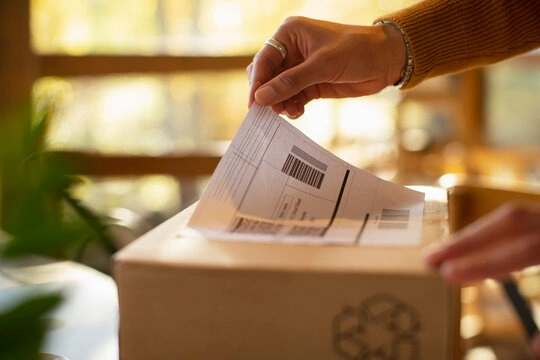
Where to Put Shipping Label on Box?
Courier

Where to Put Shipping Label on Box: Complete Placement Guide

A single crooked sticker can turn a same-day delivery into a two-day delay. If you have ever wondered where to put shipping label on box surfaces so a package scans correctly on the first attempt, placement matters far more than most people assume.  At Bearcat Express, our drivers inspect dozens of packages every day before they ever load onto a route, and the boxes that get flagged almost always share the same labeling mistakes. Quick Answer Place your shipping label flat on the largest, most visible top surface of the box. Avoid placing it over seams, edges, or tape lines. Ensure the entire barcode is completely flat and unobstructed, so courier scanners can read it instantly without errors. Why Shipping Label Placement Affects Delivery Speed   Even outside of large regional sorting hubs, delivery relies on scanning. Drivers use handheld scanners and mobile apps to confirm pickup, transit, and drop-off, and a poorly placed label slows that step down just as much on a local route as it does inside a national depot. If a barcode is wrinkled, split across a corner, or hidden under tape, the driver has to stop, re-type the tracking number, or call it in manually. That single pause adds minutes to a route that was built around tight same-day windows. Getting label placement right the first time keeps your shipment moving instead of sitting in someone’s hands while they figure out what to scan. Standard Shipping Label Placement Rules Knowing how to put address on box surfaces correctly starts with a few consistent rules that apply across almost every carrier and courier network. Top Surface is Always Preferred The top of the box is the largest, flattest side and the one most likely to stay facing upward during loading and transport. Placing your label here keeps it visible without anyone needing to flip or tilt the package. Flat, Unobstructed Area is Required Look for a section of the box free from ridges, manufacturer stamps, or dents. The label needs to lie completely flat so a scanner can read the barcode without distortion. Avoid Edges, Seams, and Curves Never let a label wrap around a corner or sit directly on the center seam. Both spots put stress on the label and increase the odds it tears or peels before the package arrives. Barcode Must Be Fully Visible Nothing should cross over the barcode lines, not tape, not a second sticker, not a marker. A single smudge can make the entire code unreadable to a scanner. Label Orientation Matters Too Orientation is often overlooked. The label should read left to right in the same direction the box would naturally sit when carried or set down. A sideways or upside-down label forces a handler to rotate the package just to read it, which adds an extra step every single time the box changes hands. Choosing the Right Label Material for Your Shipment Standard Adhesive Labels vs Thermal Labels Standard adhesive labels work fine for most day-to-day shipments and hold up well on smooth cardboard. Thermal labels, printed directly from a shipping scale or label printer, tend to resist smudging better and are worth using for anything time-sensitive, since a faded thermal print is one of the most common reasons a barcode fails to scan. When to Use a Weatherproof or UV-Resistant Pouch If a package will sit outside for pickup, travel in an open vehicle, or ship during a rainy stretch, a clear weatherproof pouch protects the label from moisture without blocking the barcode. This small step matters more in the Southeast than people expect, where humidity and sudden storms can soften standard adhesive within hours. Step-by-Step Guide to Apply a Shipping Label Correctly Here is how to put shipping label on package shipments correctly every time. Choose the correct side. Pick the largest, flattest surface with no dents or moisture damage. Clean and dry the surface. Wipe away dust or debris, and fully remove or black out any old labels if you are reusing a box. Apply from the center outward. Peel the backing and lower the label from the middle first to push out air bubbles. Secure without covering the barcode. If you are taping a printed label, tape the margins only, never the barcode itself. Double-check readability. Run a hand over all four edges to confirm they are bonded and won’t snag on handling equipment. Label Placement by Box Type Box Type Ideal Placement Key Consideration Small boxes Centered on the largest flat side Barcode should not wrap around side panels Medium boxes Centered on top, away from the seam Leave margin around all edges Large or extra-large boxes Top surface, closer to one corner Avoid hand-hole or strap areas Tubes or cylinders Parallel to the length on a flat plane Never wrap the barcode around the curve Padded mailers Centered on the smooth side Flatten the mailer fully before applying What to Do When a Package Needs Multiple Labels Shipments carrying fragile, perishable, or orientation-sensitive items often need a Fragile or This Side Up label alongside the shipping label on package surfaces. Keep the shipping label on the largest flat area as usual, and place the secondary label on an adjacent side rather than stacking it near the barcode. Overlapping labels confuse scanners and can hide critical routing information. Labeling Multi-Box Shipments Correctly When one order ships as several boxes, each box needs its own complete shipping label, not just a note referencing the others. Mark each one clearly, such as “1 of 3” or “2 of 3,” near the address block. This prevents a partial shipment from being scanned as complete and helps a recipient confirm nothing is missing when boxes arrive at different times. Where NOT to Place a Label Avoid seams, plastic handles, high-gloss tape, and folded corners. Each of these spots either damages the label during handling or splits the barcode across two surfaces, which almost always forces manual processing. Common Shipping Label Mistakes That Cause Delays Faded thermal

how much does it cost to ship furniture
Courier

How Much Does It Cost to Ship Furniture in 2026?

You find the perfect dresser online, or you’re finally sending the family dining table to your sister two states away, and then the first quote lands: $640 for one piece. How much does it cost to ship furniture, really, and is that number fair? It’s hard to say, because the cost of shipping furniture swings with size, distance, and who ends up carrying the thing up the stairs. This guide from Bearcat Express lays out real price ranges and simple decision rules so you can judge any quote with confidence. Quick answer: Moving a single piece of furniture across the country usually runs $300 to $1,000, while a full room or a multi-piece load tends to land between $800 and $4,500. Where you fall in that range depends on size, weight, shipping method, and distance. How Much Does It Cost to Ship Furniture on Average? Three things drive almost every price: distance, the space a piece takes up on the truck, and anything extra beyond curbside drop-off. Local runs are often billed by the mile, roughly $1.25 to $4.75 depending on vehicle size. Once a piece crosses state lines, carriers usually switch to distance zones. So if you’re wondering how much is it to ship furniture to another state, the table below is the place to start, and it also covers shipping furniture across the country. Distance Typical cost for one piece Local (same city or metro) $75 to $250 Under 250 miles $150 to $450 250 to 1,000 miles $300 to $800 Over 1,000 miles $300 to $1,000, more for bulky pieces International $1,000 to $4,500 and up, plus customs Treat these as planning ranges, not quotes. A full room or multi-piece load usually costs $800 to $4,500, because you’re paying for truck space rather than a single item. Furniture Shipping Cost by Item Type The piece itself decides which shipping method you can even use, and the method sets the price. Here is the usual pairing. Piece Usual method Typical range Sofa LTL freight $280 to $1,050 Sectional LTL or white glove $450 to $3,000 Mattress Parcel if compressed, LTL if standard $50 to $1,050 Dining table LTL freight $280 to $1,050 Dresser LTL freight $280 to $1,050 Bed frame Parcel when taken apart $50 to $220 Desk Parcel if flat-pack, LTL if solid $50 to $1,050 Bookcase Parcel if flat-pack, LTL if assembled $50 to $1,050 Wardrobe LTL freight $280 to $1,050, plus $140 to $360 if you want it taken apart and rebuilt Antique White glove with custom crating $450 to $3,000 Sofas and Sectionals A standard sofa usually rides as LTL freight, so you pay for the space it takes, not only its weight. Sectionals are the budget trap. They travel as several heavy sections, and many drivers only deliver to the curb. If you want them placed in the living room, price white glove service. Mattresses and Bed Frames So, how much does it cost to ship a bed? Price the frame and mattress separately. A frame that comes apart into flat rails and a headboard can often go by parcel, while a standard innerspring mattress is safer on a freight route. Skip folding it to save space and ask for a mattress bag instead. Dining Tables, Dressers, and Desks Glass or stone tops need edge protection and sometimes a crate, and that is where quotes jump. For dressers, pull the drawers and wrap them separately so the frame is lighter and safer. Flat-pack desks are the cheapest in this group, while a solid executive desk behaves like a dresser. Antique and Fragile Pieces Old finishes, loose joints, and irreplaceable value change the plan. Expect white-glove service, custom crating, and a declared value you choose yourself. Photograph every surface before pickup so there’s no argument later. What Factors Affect Furniture Shipping Costs? The cost of shipping furniture comes down to a handful of choices you can mostly control: Distance: more miles mean more fuel, driver time, and handling. Size and weight: carriers bill for the space a piece occupies, so a bulky, light piece can cost like a heavy one. Fragility: glass, stone, and antiques need protection that adds labor. Access: stairs, narrow hallways, long driveways, and missing elevators all add time. Speed: a firm pickup date or rush delivery costs more than a flexible window. Season: summer moving months are busier and usually pricier. Two identical sofas, two different prices. Picture two matching sofas heading to the same city. Sofa A leaves a ground-floor house with a wide driveway and a flexible pickup window. Sofa B leaves a third-floor walk-up with a tight stairwell, and the owner needs it gone by Friday. Same freight lane, yet Sofa B collects stair, residential, and rush charges that Sofa A never sees. Furniture Shipping Methods Compared If you’re working out how to ship large furniture across country, the method matters more than almost anything else. Method Cost Speed Best for Watch out for Courier or parcel $50 to $220 Several days Flat-packs and pieces under 150 lbs Oversize fees if not taken apart, and you pack and drop off LTL freight $280 to $1,050 Moderate, shared truck Sturdy single pieces like a sofa Often curbside delivery only Full truckload (FTL) Highest, you pay for the whole truck Fast, direct Whole households and bulk loads Overkill for one piece Movers with white glove service $450 to $3,000 Scheduled Fragile or high-value items Check licensing and coverage Moving container $800 to $2,500+ Slower A room or small apartment You do the loading Peer-to-peer shipping Set by bids Flexible One-off or odd items Service quality varies DIY rental truck Rental, fuel, and your time Your own pace Multiple pieces on your own move Heavy lifting and long drives Bus freight Low for light pieces Tied to the bus schedule A single piece under about 150 lbs Strict size limits and terminal pickup How Furniture Shipping Costs Are Calculated: Estimate Yours in 5 Steps Most quotes follow one formula:

How Long Does Pending Remote Fulfillment Take
Courier

How Long Does Pending Remote Fulfillment Take?

You paid for the order and got the confirmation email. Then the tracking page shows a label you didn’t expect: pending remote fulfillment. Nothing has shipped, nothing seems to be moving, and there’s no hint whether to wait a day or a month. Quick answer: Most standard online orders clear this stage in one to three business days. Prepaid phone and SIM kit orders, backordered items, and anything moving between warehouses or across a border can stretch the wait from about three days to well over three weeks. So how long does pending remote fulfillment take for your order? It depends on the seller, the stock, and the route the item has to travel. Bearcat Express works on the delivery side of that journey, so this guide shows you how to read the status and judge whether the wait is normal. What Does Pending Remote Fulfillment Mean Pending remote fulfillment means the seller has accepted your order and your payment, but nobody has picked, packed, or handed the item to a carrier yet. The word ‘remote’ tells you the stock sits somewhere other than the seller’s main shipping point. That could be a partner warehouse, a regional overflow site, or a third-party logistics center that stores goods for several brands at once. A remote fulfillment center is just a storage and shipping facility that runs apart from a retailer’s primary hub. Sellers use them to keep products closer to buyers, to carry slow-moving items without crowding headquarters, or to let another company handle the physical work. So what does pending remote fulfillment mean in plain terms? Your order has been routed, but the hands-on work hasn’t started. It is a waiting line, not a failure. Plenty of shoppers expect a problem when they see the label, yet most of the time the system is doing exactly what it was built to do. One thing the status does not tell you is whether the item is actually sitting on a shelf. That gap matters later. How Long Does Pending Remote Fulfillment Actually Take Every seller runs a different operation, so there is no universal number. There are, however, dependable patterns. Treat the ranges below as planning guides, not promises. Situation Typical wait Main driver Standard in-stock order 1 to 3 business days Warehouse queue and weekend gaps Multi-item order Standard window plus extra days The slowest item sets the pace Backordered item Days to weeks Supplier restock date Peak season or big promotion Standard window plus extra days Order volume Cross-border or secondary warehouse transfer Can run to several weeks Export screening, trade compliance, customs SIM kits About 5 to 10 days Promotion volume Phones and hardware About 2 to 4+ weeks Promotion volume and warehouse transitions The search phrase pending remote fulfillment straight talk comes up mostly for those last two rows, since prepaid phone and SIM orders tend to run through busy promotions and warehouse changes. Cross-border orders have no fixed window at all, because each package has to clear export screening and border customs before a carrier can take it. The honest answer to how long pending remote fulfillment takes is a range, not a figure. A related question, how long does order fulfillment take from payment to shipment, has the same shape: a day or three for a well-stocked seller, and much longer once stock has to travel. The Pending Clock: What Should Happen at Hour 24, 48, 72, and Day 5 A single range doesn’t help when you’re staring at the screen on day two. This clock turns the wait into checkpoints you can act on. Count business days, since most warehouses don’t pick on weekends. Checkpoint What’s normal What to do Hour 24 Status hasn’t changed. Evening and weekend orders often wait for the next pick cycle. Confirm your order email has an order number and that your payment shows as charged or on hold. Hour 48 Still pending, especially for multi-item or promotional orders. Reread the product page and order details for ship-from notes, backorder labels, or an estimated ship date. Hour 72 You’ve reached the edge of the standard one- to three-business-day window. Screenshot the status and keep your order number handy. No need to contact anyone yet. Day 5 The upper end of the 3 to 5 business day grace period many sellers need. A polite check with support is fine now. Ask for the current ship estimate. Day 7 and beyond Past normal for most items. Ask support to confirm the item is physically in stock, and check your bank or payment portal for a quiet refund. The clock exists to stop two mistakes: panicking on day one and doing nothing on day ten. How the Remote Fulfillment Process Works Knowing the steps makes the wait easier to read, and it explains why two orders placed minutes apart can move at different speeds. Order confirmation. Payment is verified, and the system chooses which location should fill the order. This takes seconds, but it sets the whole timeline. Inventory allocation. The remote site checks its physical shelves against the digital count. Small mismatches show up here, and this is where an order sits as pending because nothing has been touched yet. Picking and packing. Staff pull the item, check it against the order, and pack it for its handling needs. Fragile, oversized, or paperwork-heavy items take longer. Carrier handoff. A label is created, the carrier scans the package, and the status flips to shipped. Many sites work in pick waves, so an order placed just after a cutoff waits for the next wave. That alone can separate two similar orders by a day. Only after the carrier scan does the delivery clock you actually care about begin. Why Orders Get Stuck in Pending Remote Fulfillment A status that lingers usually traces back to a short list of causes. Stock mismatch. The storefront shows the item as available, but the shelf count says otherwise. Customer discussion forums often point to this as

what is a order number
Courier

What is a Order Number Mean? Understanding Its Role in the Delivery Process

You place a delivery request, receive confirmation, and get a short code to keep safe. If you have searched “what is a order number,” you are not alone. An order number is a reference made of numbers, letters, or both that a business assigns to a purchase or service request. It helps identify your order and connect it to updates, customer support, and delivery records.  At Bearcat Express, it helps our team and customers discuss the same delivery. This guide explains where to find it, how it differs from a tracking number, and what to do when it doesn’t work.  Quick Answer: What Does an Order Number Mean? An order number is the label a seller or courier attaches to your request the moment it is created. It points to the record that holds what was ordered, who it is for, where it is going, and how it was paid for. Support staff use it to open your file in seconds, and the business uses it to follow the job through fulfillment, billing, and record-keeping. It is created first by the business. A tracking number comes later and follows the physical parcel. What Is an Order Number in Delivery? In retail, the number marks a purchase. In courier work, it marks a job: a pickup address, a drop-off address, a package description, a time window, and a service level, all bundled under one reference. When people ask what an order number is in plain terms, the honest answer is that it works like a file name. The file holds the details, and the number is how anyone retrieves it. The key idea is that the number belongs to the request, not to the box. If a driver changes vehicles, a package is split into two stops, or a pickup is rescheduled, the order number stays put while everything around it changes. Understanding what an order number is, and what it is not, saves a lot of back and forth later. How Order Numbers Are Assigned in Courier Services Order numbers are normally generated automatically when a booking is completed, so no two jobs can receive the same one. Some systems count upward in sequence, some blend letters with digits, and some include a date or a location code. There is no universal standard, which means the format of one business’s number tells you nothing reliable about another’s. For the customer, the practical point is timing. The number exists as soon as the booking is accepted, long before a parcel moves, so you can quote it to support right away. Order Number vs Tracking Number vs Invoice Number People mix these three up constantly, so here is the cleanest way to separate them. Number Created by Created when What it points to Best used for Order number The seller or courier At booking or checkout The full request: items, addresses, payment, service level Support questions, changes, cancellations, returns Tracking number The party moving the parcel When the parcel is ready to travel The physical package and its journey Checking where the parcel is Invoice number The billing system When a charge is issued The bill itself Payment questions and accounting records So, is order number and tracking number the same? No. One identifies the request, the other follows the parcel. One order can produce several tracking numbers if the goods ship in separate boxes, but each tracking number leads back to a single order. In a local same-day job, the two can sometimes look identical because one system produces both. That is a design choice, not a rule. Why Every Shipment Needs a Unique Order Number Picture two pickups from the same office building, both for documents, both heading across town that afternoon. Without a unique reference, a driver and a dispatcher can easily disagree about which envelope belongs to which job. A unique number protects against three specific problems: Mix-ups at pickup, when several packages wait at one counter or front desk. Wrong drop-offs, when two similar jobs share a destination area. Lost history, when a job is edited, and nobody knows which version is current. How Order Numbers Help Track Your Delivery The order number is usually your entry point to status information. Most tracking pages let you search order number details in a single box and then show the stages of the job. Typical stages include pickup confirmation, in transit, estimated delivery time, and proof of delivery with a signature where it applies. Example: Tracking a Same-Day or On-Call Delivery Say an office manager books an urgent on-call run to carry sealed paperwork to a client across town. The booking confirmation arrives with a number. She enters it on the tracking page, sees the job marked as picked up, then watches the estimated arrival update as the driver heads out. When the recipient signs, the same number shows the delivery as complete. She never had to phone anyone, because one number answered every question she would have asked. Inside a Dispatch Desk: The Life of One Order Number From the dispatcher’s chair, the order number is the thread that holds a job together. This is a general picture of a same-day courier workflow, and details vary by company and job type. Stage What happens Why the number matters Booking The request is entered, and the number is generated Locks the job’s details into one record Assignment A driver is matched to the job The driver works from the number, so the right pickup is made Pickup The driver confirms collection Status updates attach to the number Delivery The recipient receives the package, with a signature where required Proof of delivery is stored under the number Aftercare A question, claim, or billing query comes in Support opens the full history by number Nothing in this table changes the number. Addresses can be corrected, and windows can shift, yet the job keeps one reference from first call to last signature. That continuity makes a dispute solvable weeks later. How

how much to charge for delivery per mile
Courier

How Much to Charge for Delivery Per Mile

A driver finishes a 3-mile run, checks the clock, and finds the job swallowed most of an hour. The customer paid for three miles. The business paid for the hour, the van, the insurance, and the empty drive back. That gap is where delivery companies quietly lose money, and it is why how much to charge for delivery per mile deserves real arithmetic instead of a guess. At Bearcat Express, we build courier quotes from actual trip costs, so this guide follows the path a dispatcher would: rates first, then the math behind them, then three trips priced line by line. Quick answer: Cars and cargo vans usually get quoted between $1.25 and $3.25 per mile, while box trucks sit higher, roughly $2.75 to $4.75. Short local runs often start at about $5 to $15, or include a radius, and the return drive has to be covered somewhere in the price. Quick Answer: What to Charge Per Mile Treat these as planning benchmarks, not promises. Your own cost per mile should always overrule them. Vehicle or structure Typical price Common extras Car or cargo van $1.25 to $3.25 per mile Starting charge of about $5 to $15, or a small included radius Box truck $2.75 to $4.75 per mile Handling time, liftgate or dock fees Hybrid quote Flat charge of roughly $5 to $10 for the opening miles, then about $0.50 to $1.00 per added mile Common on short urban runs Anyone researching how much to charge per mile is really asking two questions: what will the market accept, and what keeps the vehicle profitable? The sections below answer the second one first, because the first only matters once your costs are covered. What Is Delivery Cost Per Mile? Delivery cost per mile is what it costs to move one vehicle and one driver a single mile, before profit. It folds fuel, tires, maintenance, insurance, depreciation, and driver pay into one figure you can hold up against your price. Customers think in miles, but your bills arrive monthly. Knowing how to calculate delivery cost per mile turns those bills into something you can quote in seconds. Without it, a rate is a hopeful number that usually forgets depreciation and the drive home. Is Per-Mile Pricing Right for Your Service? Per-mile pricing is a good tool, but it does not suit every job. When It Works Best It fits when distances change from job to job, routes rarely repeat, and the vehicle spends most of the trip actually moving. Regional runs between towns, document transfers across a metro area, and on-demand same-day work all behave this way, because mileage really is the main driver of cost. When It Does Not It struggles on very short hops, stair-heavy furniture jobs, and tight clusters of drops where the clock matters more than the odometer. A customer asking how much is three miles for a dishwasher on a third floor is buying labor, not distance, and a pure mileage quote will undercharge that job. Key Factors That Influence Delivery Price Per Mile Distance and area: Dense city routes mean fewer but slower miles, rural routes mean long empty stretches, and tolls or parking belong in the price either way. Fuel: Prices move, so a rate that worked in spring can be thin by autumn. Driver pay: Wages, payroll taxes, and downtime are usually the highest single cost, and they keep running while the van waits at a dock. Vehicle: Insurance, maintenance, and depreciation differ widely between a sedan, a cargo van, and a box truck. The load: Weight, bulk, and fragile items add handling time and liability. Timing: Rush, after-hours, and weekend work disrupt a route and justify a higher rate. Average Delivery Price Per Mile by Service Level Speed changes the price more than most people expect, because urgent work breaks the efficient route a dispatcher would otherwise build. Service level How it is usually priced Where it sits Scheduled local Per mile, or starting charge plus per mile Lower half of the car and van range Same-day Starting charge plus per mile, priority dispatch Middle to upper part of the range Rush or after-hours Same-day rate plus a time surcharge Upper end of the range, sometimes above it Multi-stop route Per-stop fee plus a reduced mileage charge Priced by stop count as well as distance Heavy or bulky Box truck rate plus handling Roughly $2.75 to $4.75 per mile A dispatcher at a Same Day Delivery Service Augusta, GA knows that one job accepted at 2 p.m. can rearrange three other pickups. That ripple effect is the real reason same-day work sits in the upper half of the range. Cost Per Mile by Vehicle Type Vehicle Rate to plan around What pushes the cost up Passenger car or small SUV Lower part of $1.25 to $3.25 Limited cargo space, so more trips per load Cargo van Full $1.25 to $3.25 range Higher insurance, fuel, and tire wear Box truck $2.75 to $4.75 Fuel, size-based insurance, parking and dock time Whatever the vehicle, how much to charge per mile starts with that vehicle’s own cost, not a number borrowed from another website. A van that earns $3.00 a mile on paper but returns half empty can earn less than a car that stays full. How to Calculate Your Cost Per Mile, Step by Step With Real Numbers Here is how to work out cost per mile for a cargo van. The figures are illustrative round numbers for a van driven 2,400 miles a month at 18 miles per gallon and $3.60 a gallon, so replace them with your own bills. Step 1: Add up monthly vehicle costs. Cost Per month Per mile Fuel $480 $0.20 Maintenance and tires $288 $0.12 Insurance $456 $0.19 Depreciation $600 $0.25 Registration, tracking, phone $72 $0.03 Total $1,896 $0.79 As a sanity check, the IRS raised its business mileage rate to 76 cents per mile on July 1, 2026, up from 72.5 cents earlier that year (IRS

What Is Order Fulfillment?
Courier

What Is Order Fulfillment? A Complete Guide

A customer taps “Buy Now” and expects everything after that to happen quietly. In short, order fulfillment is the full journey of an order, from confirmed purchase to the item being picked, packed, shipped, and delivered, including any returns. Knowing what is order fulfillment, and where it breaks, often decides whether a buyer returns or asks for a refund.  At Bearcat Express, we see this from the delivery end, and late orders are frequently decided long before a driver starts the route. This guide covers the process, models, costs, and metrics, plus the final local handoff that most guides skip. Quick Answer Order fulfillment covers everything a business does between a customer placing an order and that customer holding the product. That includes taking in stock, storing it, confirming the order, pulling the right items, boxing them, handing them to a carrier, and dealing with anything sent back. A business can run all of it in-house, outsource it to a warehousing partner, let a supplier ship directly, or combine these approaches. What Is Order Fulfillment? So what is order fulfillment in day-to-day terms? It is the chain of physical and digital tasks that turns a payment into a delivered product. Think of it as a fulfillment business process with a clear start (the order is placed) and a clear finish (the product is delivered, or returned and dealt with). A fulfilled order means four things went right: the correct item was chosen, it was packed to survive the trip, it arrived inside the promised window, and the customer could follow its progress. If any one of these fails, the parcel may have shipped, but it is not a fulfilled order in the customer’s eyes. Three related terms are often mixed up: Term What it covers Where it starts and ends Order fulfillment The whole chain, including returns Order placed to product delivered or returned Shipping fulfillment Packing, labeling, carrier choice, transport Packed parcel to doorstep Logistics Wider movement and storage of goods, including sourcing and planning Supplier to customer and back The Order Fulfillment Process, Step by Step Before any order exists, two background tasks make the rest possible. Receiving means accepting stock from suppliers, counting units, and checking for damage. Storage means holding that stock in an organized space so items are easy to find later. Weak habits here, such as unlabeled shelves or uncounted deliveries, show up as picking errors further down the line. Once those basics are in place, every order fulfilment process follows the same seven steps, whoever performs them. Order capture. The order arrives from a website, marketplace, or phone call, and the system checks payment and address. A missing apartment number is a small error here that becomes a failed delivery later. Inventory allocation and routing. The system confirms stock is available, reserves it, and decides which location ships it. Reserving stops two customers from buying the last unit. Picking. Staff retrieves the exact items listed on the packing slip. Accuracy matters more than speed at this step, because one wrong item costs a return, a reship, and a frustrated customer. Packing. The right-sized box, padding, label, and documentation go in. Oversized boxes raise shipping charges, and weak padding raises damage claims. Shipping and tracking. The parcel is handed to a carrier, and the customer receives tracking details. For local orders, this handoff can happen within minutes of packing. Returns. Returned items are inspected, restocked, or disposed of, and the refund is issued. Clear return instructions reduce both errors and support requests. Inventory update. Stock counts are corrected so the store never sells something that has already left the building. Types of Order Fulfillment The right model depends on how many orders you ship, how much control you want, and how much fixed cost you can carry. Model Best for order volume Control Cost pattern In-house Low to steady volume Highest Fixed costs for space, staff, and software Third-party logistics (3PL) Growing or seasonal volume Medium Storage and per-order fees, less overhead Dropshipping Testing products, no stock held Lowest Supplier markup, no storage cost Hybrid Mixed volume or several regions Medium to high Blend of fixed and per-order costs A common hybrid setup keeps nearby orders in-house, where a local courier can collect them the same day, and sends distant orders through an outsourced partner. This keeps the fulfillment business process simple for local customers while still covering the rest of the map. How Much Does Order Fulfillment Cost? Exact prices vary by region, product size, and provider, so get written quotes before you commit. What stays constant is where the money goes: Cost component What drives it Where businesses overspend Storage Space used and how long stock sits Slow-moving inventory Receiving and handling Units, pallets, inspection time Unlabeled supplier deliveries Pick and pack Items per order, packaging type Oversized boxes Shipping Distance, weight, speed Fastest service used for every order Returns Return rate, inspection effort Vague product descriptions Technology Software and integrations Paying for unused features Fulfilment processing costs often look small per order, but they compound once returns and reships are counted. A simple way to see your real number is to divide total monthly fulfillment spend by orders shipped, then compare it with what you charge for delivery. Inside a Same-Day Dispatch Desk: Where Local Fulfillment Wins or Loses Time Most guides stop when the parcel is packed. For a local order, that is exactly where the clock becomes decisive. At Bearcat Express, the dispatch desk is where a packed parcel becomes a scheduled pickup, and small gaps there decide whether the delivery lands inside the promised window. Here is an illustrative timeline for a local order placed at 11:00 AM. Real times depend on distance, traffic, and driver availability. Time Event Owner Common risk 11:00 Order placed and paid Seller Address typo 11:20 Picked and packed Seller Wrong item or weak padding 11:45 Pickup request sent to dispatch Seller Request sent too late 12:00 Driver assigned Dispatcher No driver

what is last mile delivery
Delivery, Courier

From Dispatch to Doorstep: What Is Last Mile Delivery?

A parcel can cross several states in two days and still leave a customer annoyed because of what happens in the final ten minutes. A missed handoff, a vague tracking message, or a driver stuck behind a locked gate can undo all the work that came before. If you have ever asked what is last mile delivery and why logistics teams obsess over it, this guide covers how it works, why it costs so much, and how to read the status updates on your tracking page.  Bearcat Express runs local same-day routes, so the focus here is on how this final stretch behaves in practice. Quick Answer: Last-mile delivery is the closing stretch of a shipment’s trip, when a parcel leaves a nearby hub or store and gets to the person who ordered it. It covers the shortest distance but usually the highest cost, since it means many stops, small loads, and high expectations. What Is Last Mile Delivery? Most shipments move through three stages, and the last mile is the only one the customer ever sees. Stage Where it happens Typical vehicle Main goal First mile Seller or warehouse to the first carrier facility Truck or van Get goods into the network Middle mile Between hubs and regional centers Linehaul truck, rail, air Move volume cheaply Last mile Local hub to the recipient Van, car, bike, on foot Deliver accurately and on time So what is last mile delivery in practical terms? It is short in distance but dense in work: many separate addresses, each with its own access rules, delivery window, and recipient. A late truck between hubs can be absorbed by a buffer. A late driver on a local route cannot, which is why same-day and scheduled services depend almost entirely on this stage. Why the Last Mile Costs So Much Commonly cited industry estimates place the last mile anywhere from roughly a quarter or a third of total delivery cost up to about half, depending on route density and service level. Treat that as a range, not a fixed rule. Cost driver Why it hurts Labor Driver time is spent per stop, not per mile Fuel and vehicle wear Stop-and-go driving burns more than highway miles Low drop density Few parcels per stop raises cost per parcel Failed attempts A redelivery repeats the trip Narrow windows Tight promises reduce routing flexibility Failed attempts deserve special attention. When nobody answers, an address is incomplete, or a building blocks access, the driver either returns with the parcel or schedules a second trip. The business pays twice, and the customer waits longer. Repeat that often enough, and the damage goes beyond cost: customers stop reordering, and your brand takes the blame for a problem that happened on the doorstep. Key Steps in the Last Mile Delivery Process Hub check-in. The parcel arrives at a nearby facility or store and is scanned into the local system. Sorting and route assignment. Parcels are grouped by area and assigned to a driver, with stops sequenced by delivery window, traffic, and vehicle capacity. Loading in reverse order. The first stop is loaded last, so the driver is not digging through the vehicle at every door. Out for delivery. The driver starts the route, and the customer usually receives live tracking or automated alerts. Handoff and proof. The parcel is handed over, left in a safe spot, or placed in a locker, and a photo, signature, or scan confirms it. Inside a 10-Stop Route: Where the Minutes Actually Go A route is not one long drive. It is ten small jobs stacked end to end, and the minutes between them decide whether a schedule holds. The Time Budget Per Stop The table below is an illustrative planning example for a residential route, not measured data. Real numbers shift with neighborhood, parcel size, and building type. Task at each stop Example time Driving to the next address 4 to 8 minutes Parking and walking to the door 1 to 3 minutes Handoff or doorstep drop 1 to 2 minutes Proof capture (photo, signature, scan) Under 1 minute Exception (gate code, no answer) 3 to 10 minutes, when it happens Even with no problems, ten stops can fill about two hours. Driving looks like the main cost, but the walk to the door, the handoff, and the proof capture add up quietly. Three minutes lost at one gated entrance is three minutes borrowed from every stop after it. What Breaks a Route Most delays come from a short list of repeat offenders: Locked gates, or apartment buildings with no working call box Missing unit numbers, or addresses that map to the wrong entrance Recipients asking to change the window after the route is set Oversized items that need two people or a ramp A traffic incident on the one road that connects two clusters of stops When one of these hits early, a dispatcher usually has to resequence the remaining stops so the tightest windows are still met. Flexible stops move back, and the route is rebuilt in real time. Last Mile Tracking Statuses Decoded Carriers word their updates differently, but a few phrases come up constantly. People often search for last mile enroute meaning when a status changes and then nothing moves for hours. Status What it usually means What to do Last mile enroute The parcel is heading to or assigned within the local delivery area Watch for a delivery window Last mile departed The parcel has left the local hub on a delivery vehicle Make sure someone can receive it Out for delivery The driver is working the route Check access notes and gate codes Delivery attempted The driver tried but could not complete the handoff Respond to the notice and reschedule The short version of what does last mile departed mean: the parcel has left the local hub and is now with a driver. The last mile departed meaning is good news, but it is not a promise for the next

Centralized Dispatching for Courier Services
Courier

Centralized Dispatching for Courier Services

A delivery request that sits unread for twenty minutes is already a late delivery. That gap is exactly why centralized dispatching for courier services exists. Instead of orders, drivers, and deadlines being scattered across phone calls, emails, and separate branches, one desk sees everything at the same moment and decides who goes where.  At Bearcat Express, that desk is what decides whether a same-day promise is kept or broken. In this guide, we explain how a centralized dispatching setup really works, where it fits best, what its limits are, and what can fail when the dispatch desk suddenly goes down. Quick Answer In centralized dispatching for courier services, one control point, either a dispatcher, a software platform, or both, receives every delivery request, picks the driver, and follows the job until proof of delivery is recorded. Branches and drivers do not make separate decisions, so fewer messages get lost, fewer miles are driven empty, and it is easier to add drivers or new areas later. What is Centralized Dispatching? Think of a switchboard, not a group chat. Every call, email, and online booking lands in one place, and one team decides what happens next. Centralized dispatching does not mean one person does everything. It means the decisions about who goes where, in what order, and by when are made with the full picture in view. The drivers still drive, but they stop guessing what the rest of the fleet is doing. How Does a Centralized Dispatch System Work? If you have ever wondered how does dispatching work behind a single “your driver is on the way” message, it follows five stages. Stage Who decides Data used What can go wrong Intake Dispatcher or booking software Addresses, time window, package size Missing suite number, wrong window Assignment Dispatcher, supported by software Driver location, vehicle type, current load Nearest driver has the wrong vehicle Routing Dispatcher and routing tool Traffic, stop order, deadlines Fast route ignores a dock that closes early Monitoring Dispatcher Live location, status updates Silent driver, stale status Close-out Dispatcher and driver Proof of delivery, timestamps Missing signature, unrecorded delay A centralized delivery system is only as good as the people reading it. Software suggests, but a dispatcher who knows that one building’s loading dock closes at noon will overrule a clean-looking route. Centralized vs. Decentralized vs. Hybrid Dispatching In a decentralized setup, each depot or driver group runs its own dispatching. In a hybrid setup, a central team plans and monitors while local depots load and deliver. Factor Centralized Decentralized Hybrid Service area Compact metro or one region Several far-apart depots Wide area with local depots Fleet type One shared pool Separate fleet per depot Shared planning, depot fleets Urgent orders Fast reassignment across all drivers Fast locally, slow across depots Fast if the depot has capacity Local knowledge Depends on dispatcher experience Strong, drivers know their area Strong at depot level Failure risk One desk is a single point of failure Spread out, but inconsistent Moderate Neither model is automatically better. A 2024 study in Transportation Research Part C on crowdsourced delivery found that mixing committed couriers with flexible ones outperformed either approach alone in its models, which supports the idea that the best answer is often a blend. Benefits of a Centralized Dispatching System Fewer empty miles. One desk can chain a drop-off with a nearby pickup that separate branches would never connect. One version of the truth. When a customer calls, the answer comes from the same record the driver sees. Faster quoting. Live driver positions make price and time estimates realistic instead of padded guesses. Clear accountability. Every reassignment and delay has a timestamp and an owner. Easier growth. A new driver or zone plugs into an existing workflow instead of needing its own. Drawbacks and Limits of Centralized Dispatching Centralized dispatching is not free of trade-offs. Setup takes money and training time, and a centralized delivery system leans heavily on software and connectivity. Dispatcher overload is real: when too many live jobs sit on one person, assignments slow down, and quotes lag. Local knowledge can also thin out. A dispatcher in one office may not know that a rural road floods after rain or that a hospital entrance changes by shift. Finally, very large or widely spread networks can find that one desk adds distance between the decision and the street. Which Dispatch Model Fits Your Operation Start with geography. If you run from one depot and serve one metro area, you are already centralized by default, and the real question is how much software support the desk needs. If you run several depots far apart, a hybrid usually fits better, with central planning and local execution. Then look at your order mix. Mostly scheduled routes need fewer dispatchers because the plan is set in advance. Mostly on-demand and urgent requests need more desk capacity, because every new order can reshuffle the whole board. A simple test: can one experienced dispatcher hold the full map in their head during your busiest hour? If not, the desk needs software to carry that load. For small teams, centralized dispatching for courier services can start very simply and grow in steps. What a Central Dispatcher Decides in a Busy Hour Here is an illustrative late morning. Three requests arrive within ten minutes: a signed legal document that must arrive before 1 pm, a box of lab supplies with a two-hour window, and a retail pickup that can wait until afternoon. The dispatcher does not simply send the nearest driver. They check vehicle fit, how much time each driver has before their next fixed stop, and which job would hurt most if it ran late. Then a fourth call asks for a price. Dispatching quotes well depends on knowing who is actually free, so a quote given without live positions is a guess. This is the daily judgment behind same-day work such as Same-Day Delivery Services in Augusta, GA: decisions made in minutes, with a clear

what is white glove delivery
Courier

What Is White Glove Delivery? Inside the Process, Cost, and When It’s Worth It

You order a heavy sofa or a diagnostic machine for your clinic, and the carrier leaves it shrink-wrapped in the driveway. Now you are the moving crew. That is the moment most people start asking what is white glove delivery and whether it is worth paying for. In plain terms, it is a delivery level where a trained crew brings the item inside, puts it in the right room, unpacks it, and takes the mess away.  At Bearcat Express, we handle this kind of work as same-day courier jobs, so this guide explains it the way a dispatch desk sees it: what is included, what moves the price, and when ordinary delivery is enough. Quick Answer: What White Glove Delivery Means White glove delivery is a high-care handling level for fragile, heavy, or valuable items. A crew arrives in an agreed window, carries the item past the door to the room you pick, removes the packaging, and often assembles or connects it. The job counts as finished only when the item is ready to use, not when it leaves the truck. What Is White Glove Delivery Service? So what is white glove delivery beyond a pricing label? The white glove service meaning comes from the image of a museum handler or butler wearing clean gloves so nothing gets marked. The definition of white glove service in logistics is simple: the carrier takes responsibility for an item from pickup until it is placed and usable. And what does white gloving mean day to day? It means the handoff is treated as part of the job rather than the end of it. One caution matters more than the definition. White glove is not a regulated standard. No agency or trade body sets what must be included, so one company’s white glove service can be another company’s threshold drop. That is why the written scope matters more than the label on the quote. What’s Included in a White Glove Delivery Most providers build the service from the same parts, though few include all of them: Appointment window: the crew calls ahead and commits to a time range instead of arriving unannounced. Inside delivery: the item goes past the entry into the room of your choice, usually with a stated limit on stairs. Unpacking: the item comes out of its crate or carton and gets a visual check for damage. Assembly or connection: basic furniture assembly, or positioning and plugging in electronics and appliances. Debris removal: cartons, wrap, and strapping leave with the crew. Haul-away: removal of the old item, but only when it is arranged before the job. Work that needs licensed trades, such as new plumbing or electrical hookups, is normally outside the scope. Inside a Same-Day White Glove Run: A Dispatcher’s Walkthrough At Bearcat Express, a same-day request starts with a call, not a web form. The scenario below is typical of what lands on a courier dispatch desk: a medical office needs a new piece of diagnostic equipment moved from a supplier’s warehouse to a treatment room the afternoon it is released. Before a driver leaves, dispatch confirms three things: which room and floor the item goes to, whether any doorway, hallway, or elevator is tight, and whether old equipment must be disconnected and removed first. That last question is easy to miss, and it is often what turns a smooth job into a long one. Stage What happens Typical timing Request and scope call Room, access path, and old-item removal confirmed Within the first hour Pickup and loading Padded, strapped load at the supplier Depends on warehouse readiness Transit Direct run with no hub stops Local drive time Placement Item carried in, unboxed, positioned Often the longest stage Cleanup and sign-off Packaging removed, client confirms placement Final stage Many local jobs fit inside a single afternoon, though distance, item size, and building rules decide that. Long-haul freight handling often runs on scheduling windows measured in days, which is a different kind of service. White Glove vs. Standard vs. Threshold Delivery Standard (curbside) Threshold Room of choice White glove Where it stops Curb or driveway Just inside the door Chosen room Chosen room, placed Unpacking No No No Yes Packaging removal No No No Yes Assembly No No No Often Typical crew One driver One driver One or two Usually two Proof of delivery Photo or signature Signature Signature Signature plus placement check Best for Sturdy, light items Items you can move yourself Boxed items needing a spot Fragile, heavy, high-value The real difference is how success is measured. Standard delivery is judged on arrival at the drop point. White glove delivery is judged on whether the item is usable when the crew leaves. White Glove Service Levels: What’s Included and What’s Not Think of it as rungs above room-of-choice delivery. Basic white glove covers inside delivery, unpacking, and debris removal. Full setup adds assembly, installation, leveling, or connection, and sometimes haul-away. Specialty handling adds crating, rigging, or careful transport for art, lab, or medical items. What is usually left out: licensed electrical or plumbing work, disassembly of built-in fixtures, moving unrelated furniture, unlimited stair carries, and items that physically cannot pass through a door or stairwell. Providers name these levels differently, so always ask which rung a quote actually covers. Who Needs It and What Products Benefit Most Homeowners use white glove service for sofas, dining tables, mattresses, and large appliances. Businesses use it more often than they label it: medical offices for calibration-sensitive equipment, retailers for fixtures and displays, and offices during relocations, where downtime costs money. A practical test works well. Choose it if the item is too heavy for one person, expensive to replace, easy to damage, or needs exact placement. Electronics, custom art, lab instruments, and specialty furniture all pass that test. A boxed lamp or a sturdy shelf kit usually does not. What Drives the Cost You are paying for labor, time, and reduced risk, not only transport. Local same-day work often has

Scroll to Top