A single crooked sticker can turn a same-day delivery into a two-day delay. If you have ever wondered where to put shipping label on box surfaces so a package scans correctly on the first attempt, placement matters far more than most people assume.
At Bearcat Express, our drivers inspect dozens of packages every day before they ever load onto a route, and the boxes that get flagged almost always share the same labeling mistakes.
Quick Answer
Place your shipping label flat on the largest, most visible top surface of the box. Avoid placing it over seams, edges, or tape lines. Ensure the entire barcode is completely flat and unobstructed, so courier scanners can read it instantly without errors.
Why Shipping Label Placement Affects Delivery Speed
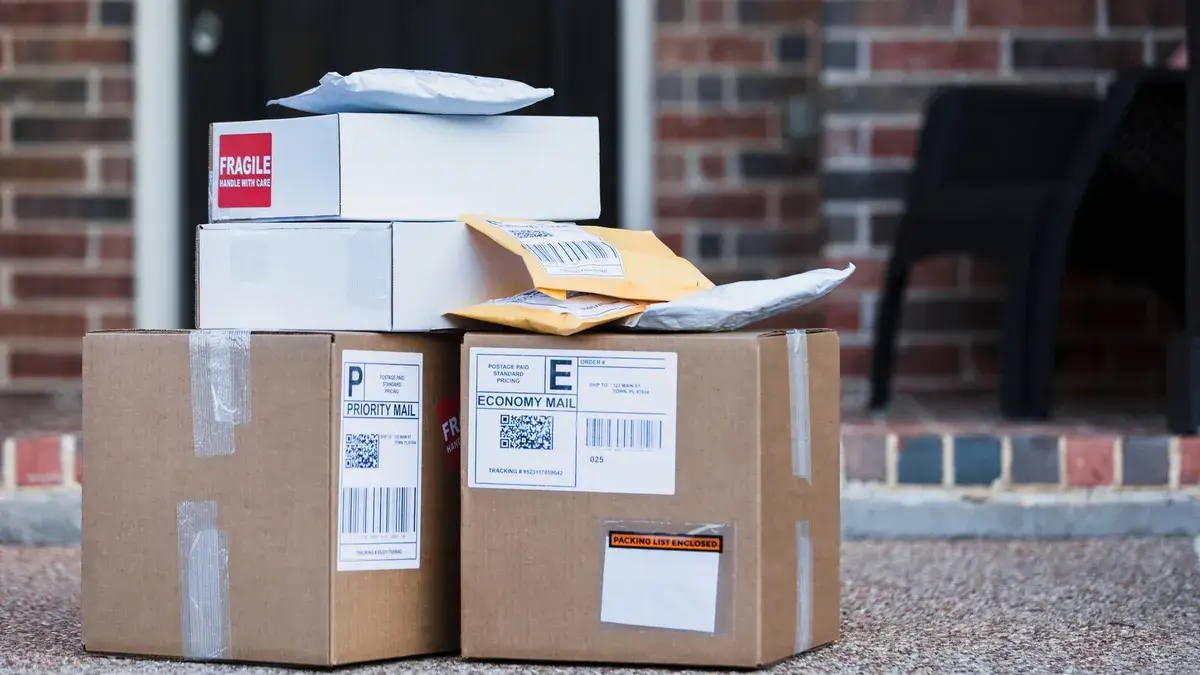
Even outside of large regional sorting hubs, delivery relies on scanning. Drivers use handheld scanners and mobile apps to confirm pickup, transit, and drop-off, and a poorly placed label slows that step down just as much on a local route as it does inside a national depot. If a barcode is wrinkled, split across a corner, or hidden under tape, the driver has to stop, re-type the tracking number, or call it in manually. That single pause adds minutes to a route that was built around tight same-day windows. Getting label placement right the first time keeps your shipment moving instead of sitting in someone’s hands while they figure out what to scan.
Standard Shipping Label Placement Rules
Knowing how to put address on box surfaces correctly starts with a few consistent rules that apply across almost every carrier and courier network.
Top Surface is Always Preferred
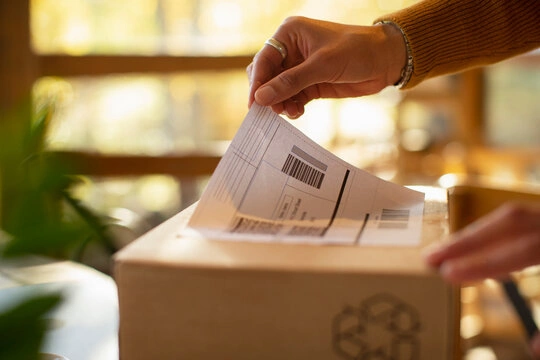
The top of the box is the largest, flattest side and the one most likely to stay facing upward during loading and transport. Placing your label here keeps it visible without anyone needing to flip or tilt the package.
Flat, Unobstructed Area is Required
Look for a section of the box free from ridges, manufacturer stamps, or dents. The label needs to lie completely flat so a scanner can read the barcode without distortion.
Avoid Edges, Seams, and Curves
Never let a label wrap around a corner or sit directly on the center seam. Both spots put stress on the label and increase the odds it tears or peels before the package arrives.
Barcode Must Be Fully Visible
Nothing should cross over the barcode lines, not tape, not a second sticker, not a marker. A single smudge can make the entire code unreadable to a scanner.
Label Orientation Matters Too
Orientation is often overlooked. The label should read left to right in the same direction the box would naturally sit when carried or set down. A sideways or upside-down label forces a handler to rotate the package just to read it, which adds an extra step every single time the box changes hands.
Choosing the Right Label Material for Your Shipment
Standard Adhesive Labels vs Thermal Labels
Standard adhesive labels work fine for most day-to-day shipments and hold up well on smooth cardboard. Thermal labels, printed directly from a shipping scale or label printer, tend to resist smudging better and are worth using for anything time-sensitive, since a faded thermal print is one of the most common reasons a barcode fails to scan.
When to Use a Weatherproof or UV-Resistant Pouch
If a package will sit outside for pickup, travel in an open vehicle, or ship during a rainy stretch, a clear weatherproof pouch protects the label from moisture without blocking the barcode. This small step matters more in the Southeast than people expect, where humidity and sudden storms can soften standard adhesive within hours.
Step-by-Step Guide to Apply a Shipping Label Correctly
Here is how to put shipping label on package shipments correctly every time.
- Choose the correct side. Pick the largest, flattest surface with no dents or moisture damage.
- Clean and dry the surface. Wipe away dust or debris, and fully remove or black out any old labels if you are reusing a box.
- Apply from the center outward. Peel the backing and lower the label from the middle first to push out air bubbles.
- Secure without covering the barcode. If you are taping a printed label, tape the margins only, never the barcode itself.
- Double-check readability. Run a hand over all four edges to confirm they are bonded and won’t snag on handling equipment.
Label Placement by Box Type
| Box Type | Ideal Placement | Key Consideration |
| Small boxes | Centered on the largest flat side | Barcode should not wrap around side panels |
| Medium boxes | Centered on top, away from the seam | Leave margin around all edges |
| Large or extra-large boxes | Top surface, closer to one corner | Avoid hand-hole or strap areas |
| Tubes or cylinders | Parallel to the length on a flat plane | Never wrap the barcode around the curve |
| Padded mailers | Centered on the smooth side | Flatten the mailer fully before applying |
What to Do When a Package Needs Multiple Labels
Shipments carrying fragile, perishable, or orientation-sensitive items often need a Fragile or This Side Up label alongside the shipping label on package surfaces. Keep the shipping label on the largest flat area as usual, and place the secondary label on an adjacent side rather than stacking it near the barcode. Overlapping labels confuse scanners and can hide critical routing information.
Labeling Multi-Box Shipments Correctly
When one order ships as several boxes, each box needs its own complete shipping label, not just a note referencing the others. Mark each one clearly, such as “1 of 3” or “2 of 3,” near the address block. This prevents a partial shipment from being scanned as complete and helps a recipient confirm nothing is missing when boxes arrive at different times.
Where NOT to Place a Label
Avoid seams, plastic handles, high-gloss tape, and folded corners. Each of these spots either damages the label during handling or splits the barcode across two surfaces, which almost always forces manual processing.
Common Shipping Label Mistakes That Cause Delays
Faded thermal print, labels shrunk to fit a box too small for a standard size, and crumpled paper that will not lie flat are the three most common culprits behind sorting delays. If your box cannot fit a label flat on its largest surface, switch to a larger box rather than folding the label around an edge.
Our Same-Day Pickup Label Verification Checklist
Before a package leaves with a Bearcat Express driver, we run through the same short checklist on every same-day pickup.
| Check | What We Look For |
| Surface | Label sits flat with no bubbles or ridges |
| Barcode | Fully visible, no tape or stickers crossing it |
| Orientation | Reads correctly when the box sits in its normal position |
| Multiple labels | Fragile or orientation labels placed without overlap |
| Weather protection | Pouch used if the pickup involves rain or long outdoor exposure |
If anything fails this check, our drivers carry backup labels and can fix the issue on-site before the package ever loads into the vehicle.
Conclusion
Getting shipping label on package placement right is a small step that prevents a disproportionate number of delivery delays. Choose a flat, unobstructed surface, keep the barcode fully visible, and pay attention to orientation and label material just as much as position.
For businesses managing frequent or time-sensitive shipments, having a courier partner who checks these details before pickup removes one more thing to worry about. Contact us at Bearcat Express, and ask about our Local Courier Service Augusta, GA to see how careful handling from pickup to delivery keeps your packages moving on schedule.
Frequently Asked Questions
Where do I put shipping label on box surfaces if the box has no clear top?
Choose the side most likely to stay facing upward during transport and handling. Avoid the bottom entirely, since it is the least visible spot and the most likely to be overlooked during sorting.
Can I place a shipping label over old tape residue?
It is best to clean the surface first, since leftover adhesive or torn paper can cause bubbling under the new label. A flat, debris-free surface helps the barcode stay readable throughout transit.
Does label material matter for short local deliveries?
Yes, especially if the pickup happens outdoors or during unpredictable weather. A standard adhesive label can smudge in humidity, while a thermal label or weatherproof pouch holds up better for same-day handling.
What if my package needs both a shipping label and a fragile sticker?
Keep the shipping label on the largest flat surface as usual, and place the fragile sticker on a nearby side rather than overlapping it. This keeps both pieces of information fully visible to handlers.
How should I label a shipment that is split across multiple boxes?
Every box needs its own full shipping label, along with a marking like “1 of 2” near the address. This prevents confusion if the boxes are scanned or delivered separately.