
Every day, a vial of blood, a bag of donor tissue, or a box of chemotherapy medication depends on someone getting it from point A to point B before it loses its value or its safety. That someone is a medical courier, and if you have ever searched how to become a medical courier, the honest answer is that it takes far less time than most healthcare careers, but it demands more precision than most delivery jobs.
At Bearcat Express, we dispatch medical couriers across Georgia, Alabama, South Carolina, North Carolina, and Tennessee, and we have watched exactly which habits separate a courier who lasts six months from one who builds a decade-long career out of it.
Quick Answer
To become a medical courier, you typically need a valid driver’s license, a clean driving record, a dependable vehicle, and the ability to pass a background check. Most companies handle training in-house, covering chain of custody, basic HIPAA rules, and specimen handling rather than requiring a formal certificate. Many new couriers are running their first routes within one to three weeks of applying.
What Is a Medical Courier?
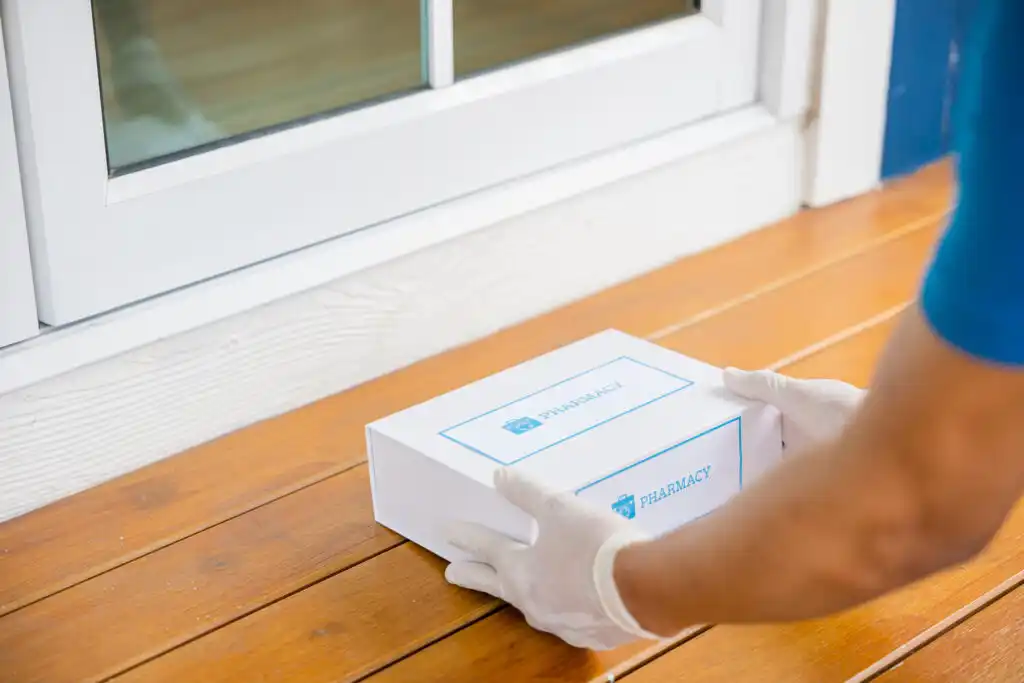
A medical courier transports time-sensitive and often regulated items between healthcare facilities: blood samples, lab specimens, prescriptions, medical records, organs, and diagnostic equipment. Unlike a general delivery driver, a medical courier is trusted with items that can affect a patient’s diagnosis or treatment, so accuracy and timing matter as much as the drive itself.
Medical Courier vs. Standard Courier: What’s the Difference?
A standard courier focuses on speed and proof of delivery. A medical courier adds chain of custody logging, temperature control awareness, and strict confidentiality around protected health information. Standard couriers rarely handle biohazard bags or STAT lab runs with a fixed thirty-minute window, while that is a normal Tuesday for a medical courier.
| Factor | Standard Courier | Medical Courier |
| Typical cargo | Documents, retail packages | Specimens, medications, records |
| Handling rules | General care | Chain of custody, HIPAA awareness |
| Time pressure | Flexible windows | Frequent STAT, fixed windows |
| Training | Minimal | Specimen and safety orientation |
What Does a Medical Courier Do?
Daily Responsibilities
A typical shift includes picking up specimens from clinics, running lab-to-lab transfers, delivering prescriptions to patients, and returning completed paperwork or signed forms to the originating office. Routes are usually a mix of scheduled stops and same-day, on-demand pickups that come in through dispatch.
Types of Medical Items Transported
Blood and urine samples, tissue biopsies, pharmaceuticals, durable medical equipment, dental impressions, and sealed medical records are all common. Some couriers also move organs or donor tissue for transplant programs, though those runs usually go to drivers with additional vetting.
Chain of Custody and Time Sensitivity
Every handoff gets logged: who released the item, who received it, and at what time. A missed thirty-minute STAT window on a blood sample is not a minor delay; it can mean a redrawn sample and a delayed diagnosis, so couriers learn to treat the clock as part of the cargo.
Requirements to Become a Medical Courier
Most companies ask for a minimum age of 18 to 21, a valid driver’s license, at least one to three years of clean driving history, proof of auto insurance, and a passed background check. A reliable vehicle is required, and some employers ask for a smartphone capable of running a dispatch or GPS tracking app.
Skills Needed to Succeed
Strong time management, calm communication under pressure, comfort with paperwork and digital scanning tools, physical stamina for lifting coolers and equipment, and a genuine respect for confidentiality all matter. Couriers who read addresses carelessly or skip double-checking labels tend to wash out fast in this field.
Do You Need Special Training?
Formal certification is not usually required to start, but most employers run a short orientation covering bloodborne pathogen safety, specimen packaging, and basic HIPAA rules. Some couriers later pursue optional bloodborne pathogens or hazardous materials training to qualify for higher-paying specialty routes.
Step-by-Step Guide: How to Become a Medical Courier
- Confirm you meet the basic age, license, and insurance requirements in your state.
- Pull your driving record and clear up any outstanding issues before applying.
- Apply to local medical courier companies, hospital systems, and lab networks in your area.
- Complete a background check and any required drug screening.
- Finish company orientation on chain of custody, specimen handling, and route software.
- Shadow an experienced courier for a shift or two before running solo routes.
Learning how to become a medical courier is really about proving reliability first and speed second. Bearcat Express looks for that same order of priorities in every driver we bring on.
Inside a Regional Medical Dispatch Desk
Picture a Tuesday morning dispatch board: a STAT blood draw needs to leave a clinic in twenty minutes, a routine lab transfer is scheduled for its usual 10 a.m. slot, and a pharmacy delivery is waiting on a signature confirmation from earlier in the day. The dispatcher weighs distance, current driver location, and urgency level before assigning each run, then tracks every leg of the trip through GPS and digital proof of pickup and delivery. This is the operational reality behind how to start a medical courier service that actually holds up under real demand instead of just looking good on paper.
What Vehicle Do You Need?
A standard sedan works for most specimen and document runs. Larger equipment, multiple stops, or bulk pharmaceutical deliveries usually call for a cargo van with insulated storage. Whatever the vehicle, it needs enough interior space to keep coolers upright and secure during transit.
Equipment and Technology
Insulated coolers with ice packs, biohazard specimen bags, a route or dispatch app, a signature capture device or tablet, and basic personal protective equipment like gloves are standard gear. Many companies now issue GPS-tracked handheld scanners so every pickup and drop-off is timestamped automatically.
How Long Does It Take?
Most applicants go from application to first paid run in one to three weeks, depending on how quickly the background check clears and how the company structures orientation. Independent couriers building their own client base typically need two to four months to line up enough contracts for full-time income.
How Much Do Medical Couriers Make in 2026?
Pay varies widely by work structure. Salaried employees at courier companies commonly earn in the $16 to $22 an hour range, with national averages for the role landing between roughly $36,000 and $46,000 a year depending on the data source and region. Independent contractors who build direct relationships with labs and clinics often earn significantly more, with some reports putting experienced independent medical couriers well above $50,000 annually once they manage several direct routes.
Benefits and Challenges
The role offers flexible scheduling, low barriers to entry, and the satisfaction of doing work that genuinely matters to patient care. The challenges are real too: unpredictable STAT calls, vehicle wear and tear, and the mental load of knowing a late delivery can affect someone’s treatment. Couriers who thrive tend to enjoy structure paired with a bit of adrenaline.
Common Mistakes New Couriers Should Avoid
New drivers often underestimate traffic buffers on STAT runs, forget to double-check specimen labels against paperwork, or leave coolers in a hot vehicle longer than recommended. Skipping the habit of confirming pickup and delivery times with dispatch is another mistake that tends to catch up with new couriers within their first month.
Medical Courier Safety Best Practices
Always treat unlabeled biological samples as a hazard until confirmed otherwise, keep gloves and hand sanitizer in the vehicle, secure coolers so they cannot shift during hard braking, and never leave temperature-sensitive cargo unattended in direct sunlight. Following posted speed limits still matters more than beating a STAT window by a few minutes.
What Employers Actually Ask in Interviews
Expect questions about how you would handle a flat tire during a STAT run, how you keep track of multiple stops without missing a pickup, and whether you are comfortable working around biological samples. Employers also tend to ask how you would respond if you arrived at a clinic and no one was there to hand off the specimen.
Career Growth Opportunities
Experienced medical couriers often move into dispatcher or route supervisor roles, specialize in higher-paying organ or clinical trial transport, or transition into starting their own courier operation. Some use their industry contacts from years of daily pickups to build direct relationships with labs and clinics before going independent.
How to Start a Medical Courier Business
Once you understand the daily routines, the next natural question is how to start a medical courier business rather than just working for one; that path starts with registering the business, securing commercial auto insurance, and building direct relationships with local labs, clinics, and small hospitals rather than relying solely on staffing platforms. Many successful operators begin part-time, running a handful of scheduled routes, such as a scheduled delivery or an Augusta, GA contract, before scaling into full-time STAT coverage. Anyone researching how to start a medical courier service should also budget for coolers, biohazard supplies, and basic route software from day one, since clients expect professional handling immediately, not after a learning curve.
The Future of Medical Courier Work
Demand keeps climbing as outpatient testing, at-home lab draws, and decentralized clinical trials grow. Route optimization software and real-time tracking are becoming standard rather than optional, and clients increasingly expect proof of delivery within minutes, not hours. Couriers comfortable with basic technology will have an edge over the next few years.
Is It Worth It?
For people who want flexible hours, a low cost of entry, and work that has a tangible impact on patient care, becoming a medical courier is a genuinely solid option. It rewards reliability over flash, which makes it a good fit for anyone who prefers steady, meaningful work over a fast-paced sales grind.
Conclusion
Figuring out how to become a medical courier really comes down to proving you are dependable, detail-oriented, and comfortable with time pressure. Whether you are applying to your first courier job or exploring how to start a medical courier service of your own, the fundamentals stay the same: protect the chain of custody, respect the clock, and treat every specimen like it matters, because it does.
If you are located in our service area and want to talk about medical courier routes, contact us at Bearcat Express, and we will walk you through what a day on the road actually looks like.
Frequently Asked Questions
Do I need a college degree to become a medical courier?
No, a college degree is not typically required. Most employers care more about your driving record, reliability, and ability to pass a background check than your formal education.
Can I become a medical courier with no experience?
Yes, most companies provide short in-house training covering chain of custody and specimen handling, so prior courier experience is not usually required. What matters most is a clean driving history and dependable transportation.
What is the fastest way to become a medical courier?
The fastest path is applying directly to local medical courier companies or lab networks, since many can complete a background check and orientation within one to two weeks. Having a clean driving record ready to share speeds up the process further.
Is being a medical courier a stressful job?
It can be during STAT runs with tight time windows, but most routes are steady and predictable. Couriers who build good habits around planning and communication tend to find the stress manageable rather than overwhelming.
How is starting a medical courier business different from working as one?
Working as a medical courier means following someone else’s routes and schedule, while starting a medical courier business means building your own client relationships, insurance, and equipment from scratch. Many people spend a year or two as an employee first to learn the operational details before going independent.