Fourteen years ago, our first vehicle was a used hatchback with 90,000 miles on it and a magnetic sign taped to the door. Our first client was a small pharmacy needing a same-day run, paid in cash, and asked us back the next morning. That second call is what people chasing how to start a courier business are really after.
At Bearcat Express, we grew from that one hatchback into a courier operation serving fifteen-plus cities across Georgia, Alabama, South Carolina, North Carolina, and Tennessee, learning most of it by getting it wrong first. This guide skips the copied checklists and shares what actually happens when you start a courier business for real.
What a Courier Business Actually Looks Like Day to Day
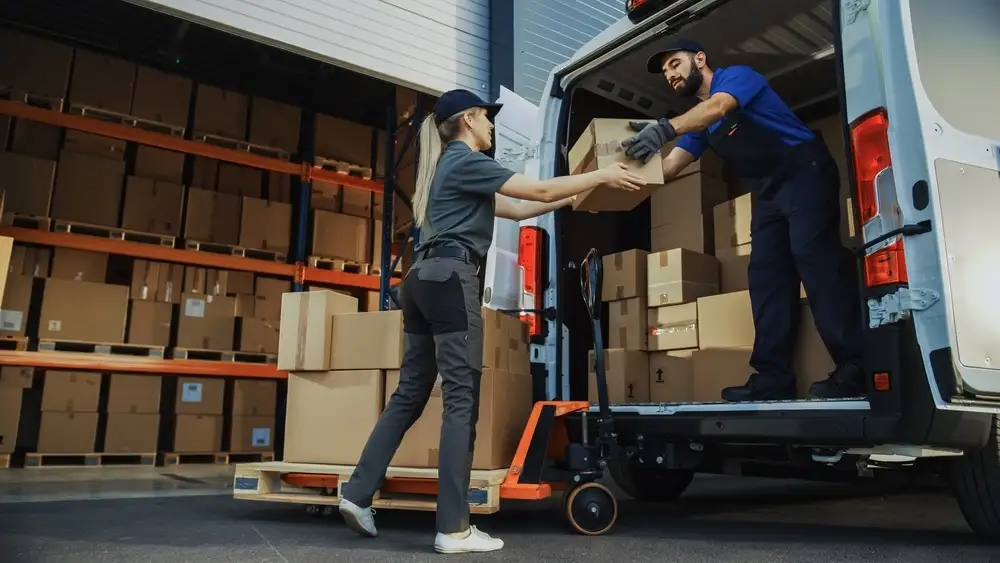
Textbooks describe a courier business as a company that transports goods from one point to another for a fee. That definition is technically correct and almost useless. What it does not tell you is that on any given Tuesday, you might be running a rush blood sample to a lab before 9 a.m., picking up a signed contract for a law office at noon, and delivering three pallets of retail stock to a warehouse by 5 p.m., all with the same three drivers.
If you are researching how to start a courier company, understand this first: the business is really three businesses stacked on top of each other. There is the driving and routing side, the customer relationship side, and the dispatch and communication side. New owners tend to focus almost entirely on the first one and get blindsided by the other two.
Same-Day vs Scheduled vs Specialty Models
A startup courier company usually has to pick a lane before it can grow into others.
Same-day delivery is built around speed. Clients call or book online and expect pickup within the hour and delivery within a few hours. This model rewards tight dispatch coordination and route flexibility, and it is where a lot of local demand actually sits, which is why we built our Same Day Delivery Service Augusta GA offering around exactly this kind of urgency.
Scheduled route delivery is the opposite. You are running the same stops on the same days, often for retail restocking or interoffice document transfer. It is predictable and easier to price, but it does not tolerate a driver calling in sick without a backup plan already in place.
Specialty delivery, medical and legal courier work in particular, sits in its own category because the stakes are higher. A missed lab sample pickup or a late court filing is not just a bad review; it can be a real problem for the client. These contracts pay well specifically because most new courier businesses are not equipped to handle the accountability they require.
The Real Costs Nobody Tells You About
Anyone starting a courier company needs a clear, honest picture of what money actually leaves the account in the first year, because it is rarely what the initial business plan spreadsheet predicted. This is the part of learning how to start your own delivery business that catches almost everyone off guard, including us in year one. At Bearcat Express, our early budgeting missed two categories entirely, and we want to save you that mistake.
Vehicle and Fuel
Buying a vehicle outright drains cash you will need for the slow first few months. Leasing preserves capital but adds a fixed monthly cost you have to hit regardless of how many deliveries come in. Fuel is the line item that fluctuates the most and the one owners underestimate most consistently, especially once you are running specialty routes that involve highway miles between cities rather than short in-town hops.
Insurance and Licensing
This is where geography matters more than most new operators expect. Requirements are not identical across Georgia, Alabama, South Carolina, North Carolina, and Tennessee. Commercial auto insurance minimums, cargo insurance for higher value shipments, and local business licensing can all differ from one state to the next, and if you plan to operate across state lines, you need to confirm requirements in every state you touch before you accept your first cross-border job, not after.
Dispatch Software and Tech Stack
A startup courier company can survive its first few weeks on a shared spreadsheet and group texts. It cannot survive its first busy month that way. Route optimization software, a dispatch system that lets drivers update status in real time, and basic proof of delivery tools are not luxuries; they are what keeps a missed pickup from turning into a lost client. We resisted paying for proper dispatch software far longer than we should have, and the missed pickups it caused cost us more than the software ever would have.
How to Actually Get First Clients
Most guides on how to start a courier service tell you to build a website and market your business. That advice is not wrong; it is just incomplete, because a website alone does not generate the kind of repeat, high-frequency clients a courier business actually needs to survive.
The first real clients almost always come from direct relationships, not advertising. Walk into medical offices, law firms, and local retailers in person and ask who currently handles their deliveries and what frustrates them about it. Every established courier company has clients who are one bad experience away from switching, and those frustrations are your opening.
Referral loops matter more than most owners expect. A satisfied pharmacy will refer you to the dentist’s office next door. A law firm that trusts you with sensitive documents will mention you to another firm in the same building. These relationships compound in a way that paid ads rarely do for a small, regional operation.
B2B contracts are where sustainable revenue lives. A single retail client needing daily restocking runs is worth more than a dozen one-off individual deliveries, because it gives you predictable volume to plan drivers and routes around. When you are still learning how to start a courier company from scratch, prioritize two or three solid B2B relationships over chasing every individual booking that comes through.
Pricing Mistakes New Courier Businesses Make
The single most common mistake we see, and one we made ourselves early on, is pricing purely based on what a nearby courier charges, without accounting for actual cost per mile, driver time, and vehicle wear. Underpricing feels like it wins clients in month one and quietly bankrupts the business by month eight.
The second mistake is failing to separate rush pricing from standard pricing clearly enough. If a same-day rush job and a next-day scheduled job are priced too close together, clients will always choose rush, and your drivers will burn out trying to meet urgency you never got properly compensated for.
The third mistake is failing to build in a mechanism to adjust pricing as fuel costs shift. A flat rate that worked when fuel was cheaper can quietly erase your margin during a price spike if there is no built-in adjustment clause in your client agreements.
Systems That Separate Surviving Couriers From Ones That Fail
Route optimization is not just about saving fuel; it is about how many stops a single driver can realistically complete in a shift without errors creeping in. Businesses that plan routes manually tend to hit a ceiling around a dozen stops a day per driver. Businesses running proper route software regularly push well past that.
Proof of delivery, whether it is a photo, a signature, or a timestamped scan, is the single biggest driver of client trust in this industry. Disputes over whether something arrived on time or arrived at all are common, and the courier businesses that survive are the ones that can settle those disputes in thirty seconds with documentation instead of a back-and-forth argument.
Dispatch discipline is the least glamorous system and the most important one. A dispatcher who confirms pickup, confirms transit status, and confirms delivery on every single job, not just the difficult ones, is what prevents small errors from becoming client complaints. This is a habit, not software, and it is the hardest one to build consistently as you scale past a handful of drivers.
You may also read: How Much Does It Cost to Ship Furniture Across Country?
Biggest Challenges After Year One
Surviving the startup phase and surviving growth are two different problems. Once you get past your first year, driver retention becomes the challenge that quietly determines everything else. Good drivers who understand your clients and your routes are difficult to replace, and losing one mid-contract can jeopardize a relationship you spent months building.
Fuel volatility keeps mattering long after the startup phase ends, and it hits harder once you have locked in B2B contracts with fixed pricing that did not anticipate a spike.
Scaling routes without breaking the reliability that earned you your early clients is the final major hurdle. It is tempting to say yes to every new territory or every new client, but adding volume faster than your driver and dispatch capacity can absorb it is exactly how service quality slips, and service quality is the entire reason clients chose a smaller regional courier over a national one in the first place.
Final Thought
Starting a courier business rewards patience and systems more than it rewards ambition alone. The owners who make it past year one are rarely the ones with the most vehicles at launch; they are the ones who got dispatch discipline, pricing, and client relationships right early and kept refining them as the business grew. If you are in the Georgia, Alabama, South Carolina, North Carolina, or Tennessee region and want to see what a mature, well-run courier operation actually looks like day to day, including our own same-day model, you are welcome to reach out to Bearcat Express directly. Contact us any time; we are always glad to talk shop with people serious about building something real in this industry.
Frequently Asked Questions
Is a courier business profitable?
Yes, but profitability depends heavily on route density and contract mix rather than just delivery volume. A business with tightly clustered B2B routes tends to be far more profitable than one with scattered, one-off individual deliveries spread across a wide area.
Do I need an LLC to start a courier company?
An LLC is not legally required in every case, but it is strongly recommended once you start signing contracts with businesses, since it separates your personal liability from the company’s. Many clients, especially medical and legal ones, will also expect to see a registered business entity before signing.
How much does it cost to start a courier service?
Costs vary widely depending on whether you buy or lease vehicles and how many states you plan to operate in, but new owners should budget well beyond the vehicle itself for insurance, dispatch software, and a cash buffer for the first slow months. Underestimating the ongoing costs, not the startup costs, is what causes most early failures.
Do I need a van to start a courier business?
No, many successful courier businesses start with a sedan or hatchback and only add vans once they win contracts that specifically require larger cargo capacity. Starting smaller and scaling vehicle type with actual client demand is generally safer than overbuying up front.
What is the biggest mistake people make when starting their own delivery business?
Underpricing to win early clients is the most common and most damaging mistake, because it creates a client base trained to expect rates that cannot sustain the business long term. It is far easier to price correctly from day one than to raise rates on clients later.