
A warehouse full of unsold inventory and an empty shelf during peak season are two sides of the same problem: nobody predicted what customers would actually need. Demand forecasting in logistics solves this by using historical data, market signals, and statistical models to estimate future demand before it happens, giving businesses the lead time to prepare instead of scramble.
At Bearcat Express, we see the operational side of this every day, because a forecast is only useful once it turns into a truck on the road at the right time.
Quick Answer
Demand forecasting in logistics is the process of predicting future customer demand using historical sales data, market trends, and statistical or AI-driven models so that businesses can plan inventory, warehouse space, and transportation capacity rather than reacting after demand spikes.
Why Demand Forecasting is the Backbone of Modern Logistics
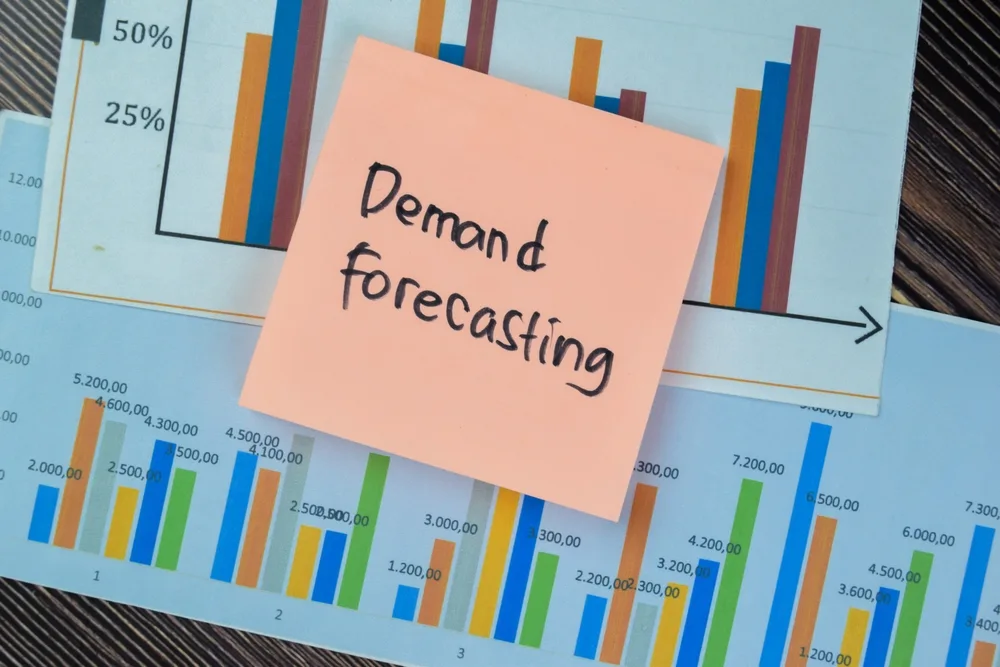
Every efficient supply chain starts with an accurate picture of what is coming next. Without that picture, warehouse managers guess, fleet planners overcompensate, and customers end up waiting longer than they should. Forecasting in logistics turns that guesswork into a repeatable process, one that connects sales data directly to physical operations.
Optimized Inventory & Reduced Costs
Carrying too much inventory ties up cash that could be used elsewhere in the business, while carrying too little leads to missed sales and frustrated customers. When a company applies demand forecasting in a supply chain consistently, it can hold leaner, more precise inventory levels. That means less money sitting in a warehouse as unsold stock and a lower risk of goods becoming obsolete before they ever reach a customer.
Smarter Warehouse & Fleet Management
A forecast is more than a sales number. It is a planning tool for physical space and physical labor. If historical data and seasonal trends point to a 25 percent jump in regional orders next month, a warehouse manager can adjust shelf space in advance, and a fleet manager can line up extra drivers before the rush starts, not during it. This kind of preparation prevents the loading dock bottlenecks and last-minute overtime costs that eat into margins.
Enhanced Last-Mile & Same-Day Deliveries
Same-day and next-day delivery expectations have made forecasting accuracy even more important at the final mile. When a business understands demand forecasting models in supply chain planning well enough to apply them locally, it can position inventory closer to the customers who are likely to order it, cutting down on delivery distance and fuel costs. Businesses that need to move quickly on short notice often rely on a Same Day Delivery Service Augusta GA provider to close that final gap between a forecasted spike in demand and an actual delivery at the customer’s door.
The Real Cost of Getting Demand Forecasting Wrong
It is easy to treat forecasting as a background task, but the financial impact of getting it wrong is direct and measurable. A retailer that underestimates demand by even 15 percent during a seasonal peak can face stockouts that send customers straight to a competitor, and those customers rarely come back for the next order. On the opposite end, overestimating demand means paying to store, insure, and eventually mark down inventory nobody wanted.
Consider a regional distributor stocking seasonal outdoor equipment. A forecast that misses a heat wave by two weeks can leave shelves bare during the exact window when demand peaks, while the same product sits in a warehouse a month later after interest has already cooled. The cost is not just the lost sale. It is the wasted warehouse space, the rushed reorder at a higher price, and the expedited freight needed to catch up. Bearcat Express works with businesses that feel this pressure firsthand, moving urgent replacement stock the moment a forecast miss becomes visible on the ground.
Primary Types of Demand Forecasting in Logistics
Not every forecast serves the same purpose. Choosing the right type depends on how far ahead you need to plan and how specific that plan needs to be.
Time-Based Forecasting
Short-term forecasting typically looks a few weeks to three months ahead and drives day-to-day decisions like driver scheduling and weekly inventory replenishment. Long-term forecasting stretches from one to five years and supports bigger decisions, including facility expansions, capital investments, and fleet growth tied to expected market conditions.
Scope-Based Forecasting
Micro-level forecasting zooms in on a single product, a specific warehouse, or one city, giving planners granular control over a narrow slice of the business. Macro-level forecasting takes the opposite view, analyzing broader market conditions, industry-wide trends, and economic shifts that affect the whole supply chain at once.
Approach-Based Forecasting
Passive forecasting assumes the future will look like the past and works reasonably well for businesses with a stable, predictable customer base. Active forecasting factors in planned changes such as marketing campaigns, new product launches, or aggressive growth targets, building a more dynamic model for businesses expecting things to shift.
Core Demand Forecasting Methods & Techniques
Most logistics teams blend more than one method rather than relying on a single approach, since each technique compensates for the weaknesses of the others.
Quantitative Methods
Quantitative forecasting relies on historical numbers and statistical models such as regression analysis and time-series modeling to calculate expected demand. This approach depends heavily on clean, well-organized data, since noisy or incomplete records will produce misleading forecasts no matter how sophisticated the model is.
Qualitative Methods
When historical data is limited, such as during a new product launch or an unfamiliar market entry, qualitative methods fill the gap. Market research, focus groups, and input from experienced sales staff bring real-world context that numbers alone cannot capture, especially when consumer sentiment is shifting quickly.
The AI Shift: Next-Gen Analytics
Machine learning has changed how demand forecasting models in supply chain planning are built. Instead of relying on fixed formulas, AI systems can process large volumes of live data, recognize patterns that are not obvious to human planners, and adjust predictions automatically as new information comes in. This does not replace human judgment, but it does reduce the lag between a shift in the market and a corresponding shift in the forecast.
How to Measure Forecast Accuracy (Key KPIs & Formulas)
A forecast that nobody measures is just a guess with extra steps. Tracking accuracy tells you whether your forecasting in the logistics process is actually improving or just producing more confident-sounding numbers.
Mean Absolute Percentage Error (MAPE) is the most widely used accuracy metric. It calculates the average percentage difference between forecasted and actual demand:
MAPE = (Average of |Actual Demand minus Forecasted Demand| divided by Actual Demand) multiplied by 100
A MAPE closer to zero means your forecast is closer to reality. Many logistics teams treat a MAPE under 10 percent as strong performance, though the right benchmark varies by industry and product type.
Forecast Bias tells you whether your model consistently over-predicts or under-predicts demand, which MAPE alone will not reveal:
Forecast Bias = (Forecasted Demand minus Actual Demand) divided by Actual Demand.
A positive result means you are consistently forecasting too high, which usually shows up as excess inventory. A negative result means you are forecasting too low, which usually shows up as stockouts. Reviewing bias alongside MAPE gives planners a much clearer picture of what to fix and why.
Step-by-Step Process: How to Implement Logistics Forecasting Successfully
Building a forecasting process that actually holds up requires discipline at every stage, not just a good model at the end.
Step 1: Data Gathering
Start by collecting historical sales records, identifying recurring seasonal patterns, and mapping customer purchasing behavior across every sales channel you operate. Incomplete data at this stage will undermine everything that follows.
Step 2: External Factor Integration
Raw sales history rarely tells the whole story. Layer in regional economic conditions, competitor activity, planned promotions, and known disruptions like weather patterns or major local events to give the numbers proper context.
Step 3: Model Selection & Execution
Choose the forecasting method, or combination of methods, that fits your business model and data quality, then run the model to generate an official forecast that planning teams can act on.
Step 4: Continuous Monitoring & Adjustments
Treat the forecast as a living document rather than a finished product. Compare actual outcomes against predictions on a regular schedule, and feed those results back into the model so accuracy keeps improving over time.
Inside the Dispatch Desk: Turning a Forecast Into a Same-Day Delivery Plan
Most explanations of demand forecasting stop at the spreadsheet. But a forecast only creates value once it becomes a real decision on the ground, and that is where the gap usually shows up between planning teams and operations teams.
Here is what that translation actually looks like inside a regional dispatch operation. When historical data and seasonal patterns point to a surge in local demand, say a manufacturing client expecting a 20 percent increase in outbound parcels over the next two weeks, the dispatch desk does not wait for the surge to arrive before reacting. Drivers are pre-scheduled for the affected routes, vehicle capacity is checked against the expected parcel volume, and pickup windows are adjusted so trucks are not idle during slow hours and are not overbooked during peak ones.
If the forecast signals a spike concentrated in one part of a service area, such as a business district ahead of a local event, dispatchers can pre-stage a vehicle closer to that zone rather than routing it from a central depot after the order comes in. That single adjustment, made possible only because a forecast flagged the pattern in advance, can shave meaningful time off a delivery window during the exact period when customers are least patient.
This is the piece that separates forecasting theory from forecasting that actually works: a demand planning logistics process is only as good as the operational team translating it into vehicles, drivers, and routes on a given day. Businesses that partner with an experienced regional courier get the benefit of that translation happening automatically, without needing an in-house logistics team to manage it.
Critical Challenges in Logistics Forecasting (And How to Fix Them)
Even well-built forecasting models run into obstacles that require active management rather than a one-time fix.
The Bullwhip Effect
A small 5 percent increase in consumer demand at the retail level can snowball into a much larger, distorted order as it moves up through distributors, manufacturers, and suppliers, each adding their own buffer along the way. The fix is establishing direct, real-time data sharing across the supply chain so every link is reacting to actual demand instead of an exaggerated version of it.
Data Silos & Inaccuracies
When sales, warehouse, and finance teams each work from separate systems that do not talk to each other, forecasts end up built on fragmented information. Centralizing data in a shared planning platform gives every stakeholder access to the same verified numbers, removing a major source of forecasting error.
Black Swan Events & Market Volatility
Sudden disruptions such as extreme weather, supplier failures, or unexpected shifts in consumer behavior can make historical data far less reliable overnight. Building flexible safety-stock buffers and diversifying supplier relationships across regions give a business room to absorb these shocks without a full operational breakdown.
Choosing the Right Forecasting Tools & Software
Selecting a forecasting platform is less about finding the most advanced tool available and more about finding the one that matches your actual data and team capacity. A few practical questions to ask before committing to any system: Does it integrate cleanly with your existing warehouse and transportation management systems, or will it require manual data transfers that introduce errors? Can it handle the volume and frequency of your sales data without slowing down reporting? Does it explain why it generated a particular forecast, or does it produce a number with no visibility into the reasoning?
Smaller operations are often better served by simpler tools that a small planning team can actually manage day-to-day, rather than an enterprise platform that requires a dedicated analytics staff to maintain. The right tool is the one your team will use consistently, not the one with the longest feature list.
The Future of Forecasting: Tech Driving Supply Chain Visibility
The next stage of forecasting in logistics belongs to systems that share information instantly rather than in periodic batches. Internet of Things sensors and smart asset trackers are increasingly feeding live location and inventory data directly into warehouse and transportation management systems. Instead of waiting for a monthly sales review, planners can watch conditions shift in near real time and adjust distribution strategy accordingly, creating a supply chain that corrects itself faster than any manual process could.
Conclusion
Demand forecasting in logistics has moved from a nice-to-have planning exercise to a core requirement for staying competitive. The businesses that get the most value from it are not necessarily the ones with the most advanced software, but the ones that connect the forecast to real operational decisions, from inventory levels down to which truck leaves the depot first. Combining reliable data, the right forecasting models in supply chain planning, and a team that can act on the numbers is what actually protects margins and keeps customers satisfied.
If your business is dealing with unpredictable order spikes, tight delivery windows, or last-mile bottlenecks that a forecast alone cannot solve, Contact Us at Bearcat Express to talk through how a regional courier partnership can turn your demand planning into consistent, on-time execution.
Frequently Asked Questions
What is the difference between demand forecasting and demand planning in logistics?
Demand forecasting focuses on predicting what future customer demand will look like using historical data and market trends. Demand planning in logistics takes that prediction and turns it into an actual operational plan, covering inventory purchases, labor scheduling, and fleet allocation.
How often should a business update its demand forecast?
Most logistics teams review short-term forecasts weekly and long-term forecasts monthly or quarterly, though businesses with highly seasonal products often need more frequent check-ins during peak periods. The right frequency depends on how quickly your market conditions typically shift.
What is a good forecast accuracy target for a small logistics operation?
A MAPE under 10 to 15 percent is generally considered strong for most small to mid-sized operations, though the right benchmark depends on product type and demand volatility. New product lines with limited sales history will naturally have higher error rates until more data builds up.
Can small businesses use AI-driven demand forecasting without a large budget?
Yes, many forecasting platforms now offer scaled-down versions built for smaller data sets and simpler use cases, so a large in-house analytics team is not required to get started. The key is choosing a tool sized to your actual order volume rather than an enterprise system built for much larger operations.
How does demand forecasting in a supply chain affect delivery speed?
Accurate forecasting allows a business to position inventory and transportation resources closer to where demand is expected to spike, which directly shortens delivery windows. Without that advance positioning, even a fast courier network has to travel further and react later, which slows down last-mile delivery times.