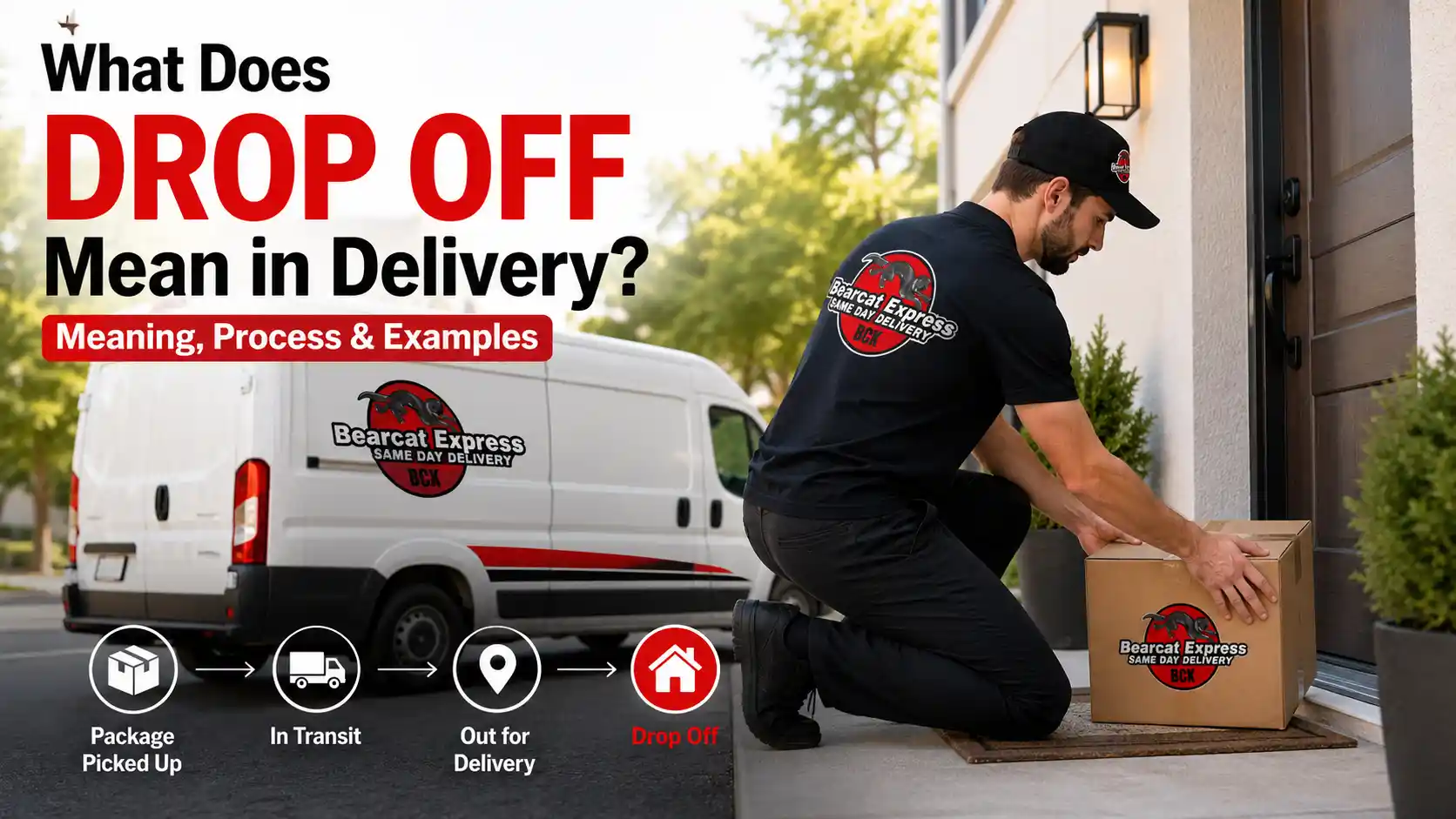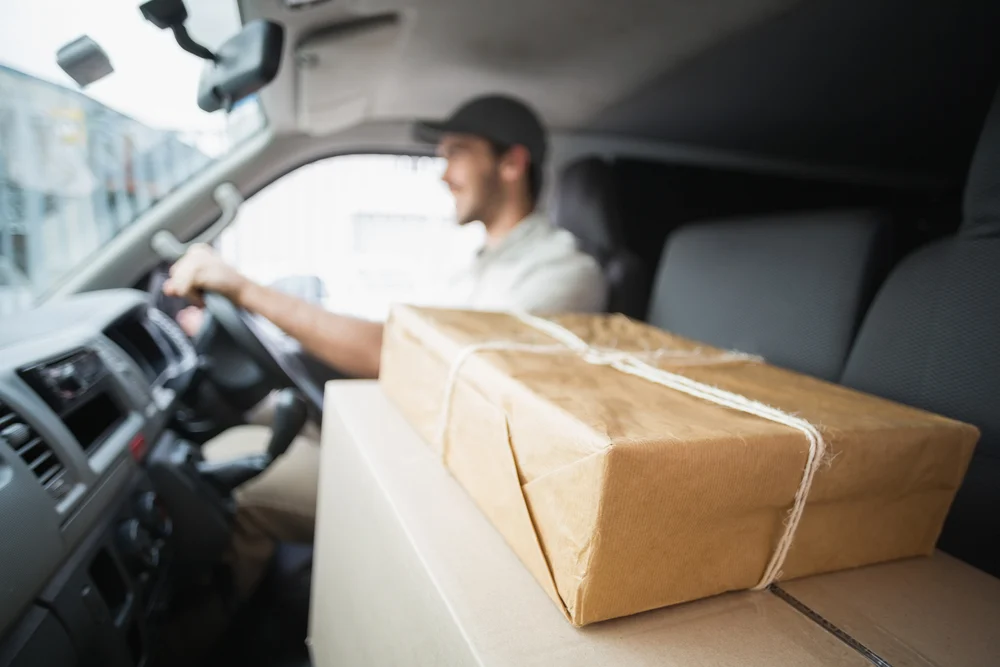

If you have ever watched a tracking page change to “scheduled for delivery” and wondered what that means for your afternoon, you are not alone. What is scheduled delivery, in plain terms? It means your pickup, transit, and drop-off times are agreed on in advance, instead of leaving you guessing when a driver might show up.
At Bearcat Express, we treat that agreement as a promise, not a rough estimate, because a delivery landing on the wrong day creates more work than the one it was meant to save.
Quick Answer
Scheduled delivery means a courier locks in a specific date and time window for pickup, transit, and drop-off before the shipment ever leaves the building. It differs from same-day and on-demand delivery because the window is planned around a route, not requested on the spot. Here is exactly how that window gets built, tracked, and occasionally missed.
What Is Scheduled Delivery, in Plain Terms
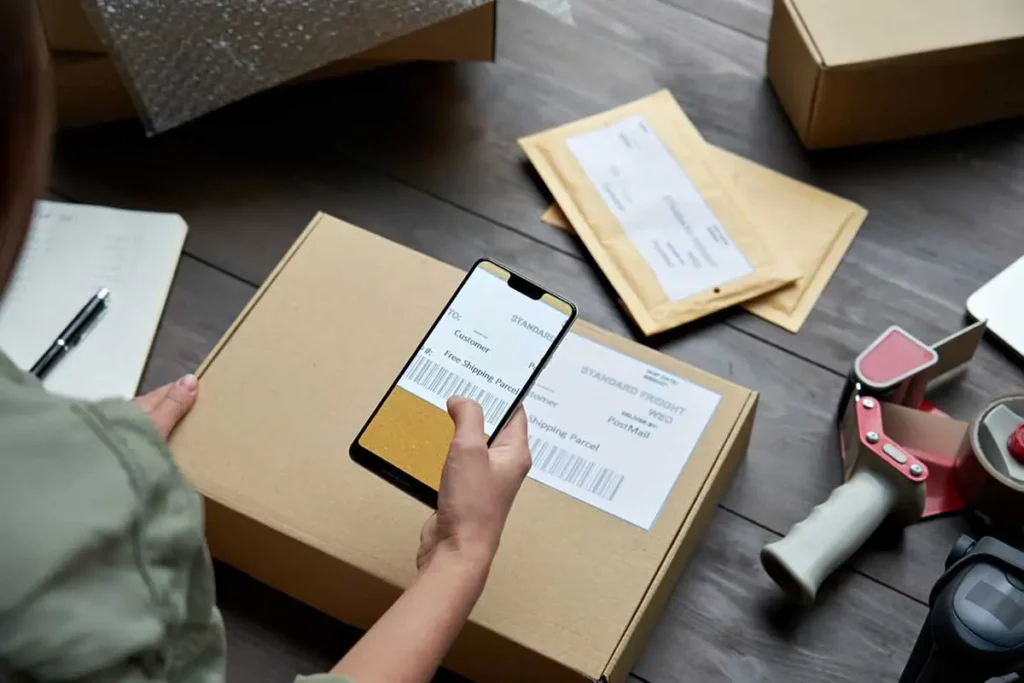
At its core, scheduled delivery means the pickup, transit, and drop-off times are set ahead of time rather than left open to whenever a route happens to reach your address. The scheduled delivery meaning that matters most in practice is the agreement itself, made either between a business and its courier or directly between a customer and the delivery provider at the time of booking.
The gap between what people expect and what actually gets promised is where delivery scheduled commitments matter most. If your order shows a window of 1 to 4 p.m. on Thursday, that window reflects a route a dispatcher has already planned around, not a placeholder pulled from an app. For businesses moving time-sensitive items such as legal filings, medical specimens, or same-day retail orders, that distinction is not a minor convenience. It is the entire reason they choose a scheduled service over standard shipping in the first place.
How Scheduled Delivery Works, Step by Step
Most explanations of scheduled delivery stop at the definition. Here is what actually happens between the moment you request a delivery appointment and the moment your package lands at your door.
- Step one: the request comes in. A customer or business submits a pickup request and specifies a preferred delivery window, either through an online booking form or a direct call to dispatch.
- Step two: the window gets checked against the route. This is the part most people never see. A dispatcher does not simply confirm whatever time you typed into a form. They check pickup location, destination, current route density for that day, and available staffing before they lock in the window.
- Step three: the window is confirmed, and the stop gets slotted into a route. Once a window is realistic, it is built into a driver’s sequence of stops for the day. This is the point where your delivery appointment schedule becomes a live commitment rather than a placeholder.
- Step four: the package moves through pickup, transit, and drop-off inside that window. The status updates you see on a tracking page reflect each of these stages, which is exactly why the next section matters as much as it does.
What “Scheduled for Delivery” Actually Means on a Tracking Page
This is one of the most common questions people search for, and for good reason. Seeing “scheduled for delivery” appear during scheduled delivery tracking tends to raise more questions than it answers. What “scheduled for delivery” means in practice is simpler than it looks: the package has cleared sorting or dispatch and has been assigned to a specific route and time window, either later that day or on a future date. It does not mean the item is loaded on the truck yet. It means a plan exists for it to be on the truck.
People often ask what “scheduled for delivery” means when the status has not moved in several hours. In most cases, that is normal, since routes get built in batches and a stop near the end of a driver’s sequence will not show movement until the truck gets closer to that window. Good scheduled delivery tracking should separate the planning stage from the active transit stage clearly, so customers are not left guessing between “scheduled” and “actually moving.”
Inside a Regional Dispatch Desk: How a Delivery Window Gets Built
Most articles on this topic describe scheduled delivery from the outside. Here is what it looks like from the dispatch side, where the actual decisions get made. At Bearcat Express, this is the part of the job that never shows up on a tracking page but decides whether the window holds.
Picking a Realistic Time Slot, Not Just Available
A booking system does not just check whether a slot is open. A dispatcher looks at pickup location, destination, current route density, and staffing for that day before confirming a window. In a tighter downtown area, a two-hour slot is usually workable. Out toward rural stretches in surrounding counties, that same window has to widen, because drive time between stops eats into the schedule fast.
Solving the Nine A.M. Problem
Here is a scenario that plays out constantly. Five customers in different parts of town all want a 9 a.m. delivery. Only one of them can realistically get it first, and the other four need a window that still feels tight without breaking the route. An experienced dispatcher resolves this before the driver ever leaves the building, usually by offering the earliest slots to stops that sit along the most efficient path and pushing others to slightly later windows that still meet the commitment made at booking.
What Happens When a Route Gets Disrupted Mid-Day
A locked gate, a wrong suite number, or a customer who stepped out five minutes before the driver arrived can throw off every stop behind it. A good dispatch desk does not just let the rest of the day slide. They recalculate the remaining windows in real time and, if a slot is genuinely at risk, contact the customer before the window closes instead of after.
Aligning Warehouse and Pickup Cutoffs With the Promised Window
This is the part most businesses overlook until it costs them a missed window. A retailer or office that promises a morning delivery slot but does not finish picking and packing until noon cannot keep that promise no matter how good the courier’s routing is. The fix is operational, not technical: internal processing cutoffs, meaning when an order actually needs to be ready for pickup, have to be set earlier than the published delivery window, not at the same time as it. A shipment that needs to go out on a 9 a.m. to 1 p.m. window should realistically be staged and ready well before that window opens, not scrambled together as the driver pulls up.
Scheduled Delivery vs Same-Day, Standard, and On-Demand Delivery
These terms get used interchangeably, but they solve different problems.
| Delivery Type | What It Prioritizes | Best For |
| Standard Delivery | A delivery date, not a specific time | Non-urgent items, flexible timing |
| Same-Day Delivery | Speed within one business day | Urgent documents, last-minute orders |
| On-Demand Delivery | Immediate pickup as soon as a request comes in | One-off urgent runs with no planning |
| Scheduled Delivery | A committed time window, today or a future date | Signature-required items, large items, recurring business drop-offs |
None of these is universally better. An on-demand courier run for an urgent legal filing does not need a scheduled window, because speed is the entire point. A large furniture delivery, a lab specimen pickup tied to strict operating hours, or a shipment that requires someone to sign for it benefits from a fixed appointment instead of a physical drop-off.
Why Businesses and Customers Choose Scheduled Delivery
Predictability is the main draw, but it plays out differently depending on who is booking. For businesses, a reliable delivery scheduled commitment means staff time can be planned around a known drop-off instead of someone waiting by the door for an undefined stretch of the day. A medical office does not need to pull a receptionist off the front desk to watch for a driver if the pickup window is fixed and dependable.
Industry surveys on delivery preferences consistently find that most online shoppers rate a narrow, predictable delivery window as being just as important as fast delivery itself, sometimes more so once an order involves a bulky or high-value item. That preference is exactly why a delivery scheduled well in advance, rather than promised vaguely as “sometime today,” tends to produce fewer missed handoffs and fewer frustrated calls to customer service.
There is also a cost angle that often gets overlooked. Because a scheduled stop gets batched into an existing route instead of triggering a special, one-off trip, it is frequently priced close to standard delivery rather than carrying a premium.
Industries That Rely on Scheduled Delivery the Most
Scheduled delivery is not equally valuable to every type of shipment, but a handful of industries lean on it heavily. Medical practices and labs depend on it for specimen pickups and time-sensitive supply drops, where a missed window can mean a compromised sample. Legal offices use it for court filings, contracts, and notarized documents where the delivery timestamp matters as much as the delivery itself. Retailers rely on it for large or fragile items such as furniture or electronics, where a customer genuinely needs to be present to receive and inspect the shipment.
If you are coordinating deliveries in the Augusta area and want a window built around how your business actually runs, Scheduled Delivery Augusta GA covers exactly how our booking and confirmation process works, including how windows get set and what happens if one is at risk.
When Scheduled Delivery Fails, and Why It Actually Happens
Scheduled delivery is reliable, but pretending it never fails does not help anyone booking one. The most common cause is a route that got overbooked, where too many tight windows were promised for the same driver’s day without realistic drive time between stops. The second most common cause is an access issue discovered too late, such as a locked gate or a recipient who is not actually available during the confirmed window.
There is also a specific frustration tied to what “delivery” even means once a package arrives. Curbside scheduled deliveries, the kind large retailers use for bulky items, are built around leaving the shipment at the end of a driveway rather than carrying it to a door. That is standard practice for freight-sized items, but it is also a common source of confusion when a large box shows up in the driveway instead of on a porch. This is exactly why so many people search for Home Depot scheduled delivery outside confusion after finding an appliance or large item sitting in the driveway. The delivery technically happened exactly as scheduled. It just was not what the customer pictured when they booked the window. A provider that is upfront about exactly where an item will be left- curbside versus door versus a signature handoff- prevents that Home Depot scheduled delivery outside style mismatch before it happens, rather than explaining it after the fact.
Your Rights When a Scheduled Delivery Window Is Missed (U.S. Consumers)
Most articles on this topic never mention what actually protects you when a promised window slips, and in the United States there are real rules that apply. Under the Federal Trade Commission’s Mail, Internet, or Telephone Order Merchandise Rule, a seller who promises delivery by a specific date must ship by that date. If no specific date was promised, the rule requires shipment within 30 days of the order.
If a seller cannot meet the promised or default timeframe, they are required to notify the customer, offer a revised shipping date, and give the customer the choice to agree to the delay or cancel for a full refund. This applies to the retailer or business that took the order, and it is a separate layer of protection from whatever a courier’s own service guarantee covers. It does not replace the value of good communication from your delivery provider, but it does mean a scheduled delivery window is not just a courtesy. In many cases, it provides a real consumer-protection backstop. This is general information, not legal advice, and specific situations can vary, so a consumer with a serious dispute should confirm details directly with the FTC or a qualified attorney.
Practical Questions to Ask Before You Book
Before committing to a scheduled window, a few direct questions save a lot of frustration later. Ask how narrow the window actually is, since some providers advertise scheduled delivery but still work in four-hour or longer blocks. Ask what happens if you miss the window, since some providers attempt same-day redelivery while others automatically push the delivery to the next business day. Ask whether the tracking reflects real driver movement or just a static plan, since that affects how much you can trust the status page in the moment. And if you are shipping something sensitive, medical or legal materials especially, ask what handling procedures apply to scheduled runs versus standard ones.
Key Takeaways
| Point | Details |
| What scheduled delivery means | Pickup, transit, and drop-off times agreed in advance, not left to whenever a route arrives |
| How the window gets built | Checked against route density, staffing, and drive time before it is confirmed |
| Tracking page status | “Scheduled for delivery” means a plan exists, not that the item is loaded yet |
| Biggest failure point | Overbooked routes and access issues discovered too late |
| U.S. consumer protection | FTC rule requires shipment by the promised date, or within 30 days, with notice and refund rights if missed |
Final Thought
Understanding what scheduled delivery is comes down to one idea: control over timing, not just speed. Whether you are a business coordinating recurring drop-offs or someone waiting on a single important shipment, a dependable schedule reflects a real planning process built on route construction, dispatcher judgment, and honest communication when something threatens the window.
If you are shipping in Georgia or a nearby region and want a delivery window built around your schedule, contact Bearcat Express, and we will walk you through how our scheduling process fits your specific delivery needs.
FAQs
Is scheduled delivery more expensive than standard delivery?
Not necessarily. In many cases, scheduled delivery costs about the same as standard service, since batching a confirmed window into an existing route is often more efficient than sending a driver back after a failed attempt.
Can I change my delivery window after it is already booked?
Most providers allow changes if you ask early enough, typically a few hours before the day’s route gets finalized. Once a driver’s route is locked in, adjustments become harder to make without pushing the window later.
What does scheduled for delivery mean if the tracking status has not changed in hours?
It usually means your shipment is still queued for its assigned window and has not reached the active transit stage yet. This is normal and does not necessarily point to a delay.
Is scheduled delivery the same thing as on-demand delivery?
No. On-demand delivery is dispatched as soon as a request comes in, while scheduled delivery is built around a committed time window that could land today or on a future date depending on what you book.
What should I do if my scheduled delivery misses its window?
Contact the provider directly instead of waiting it out. If the missed window came from a retailer’s order rather than the courier itself, you may also have shipment timing protections under U.S. consumer rules that entitle you to a revised date or a refund.