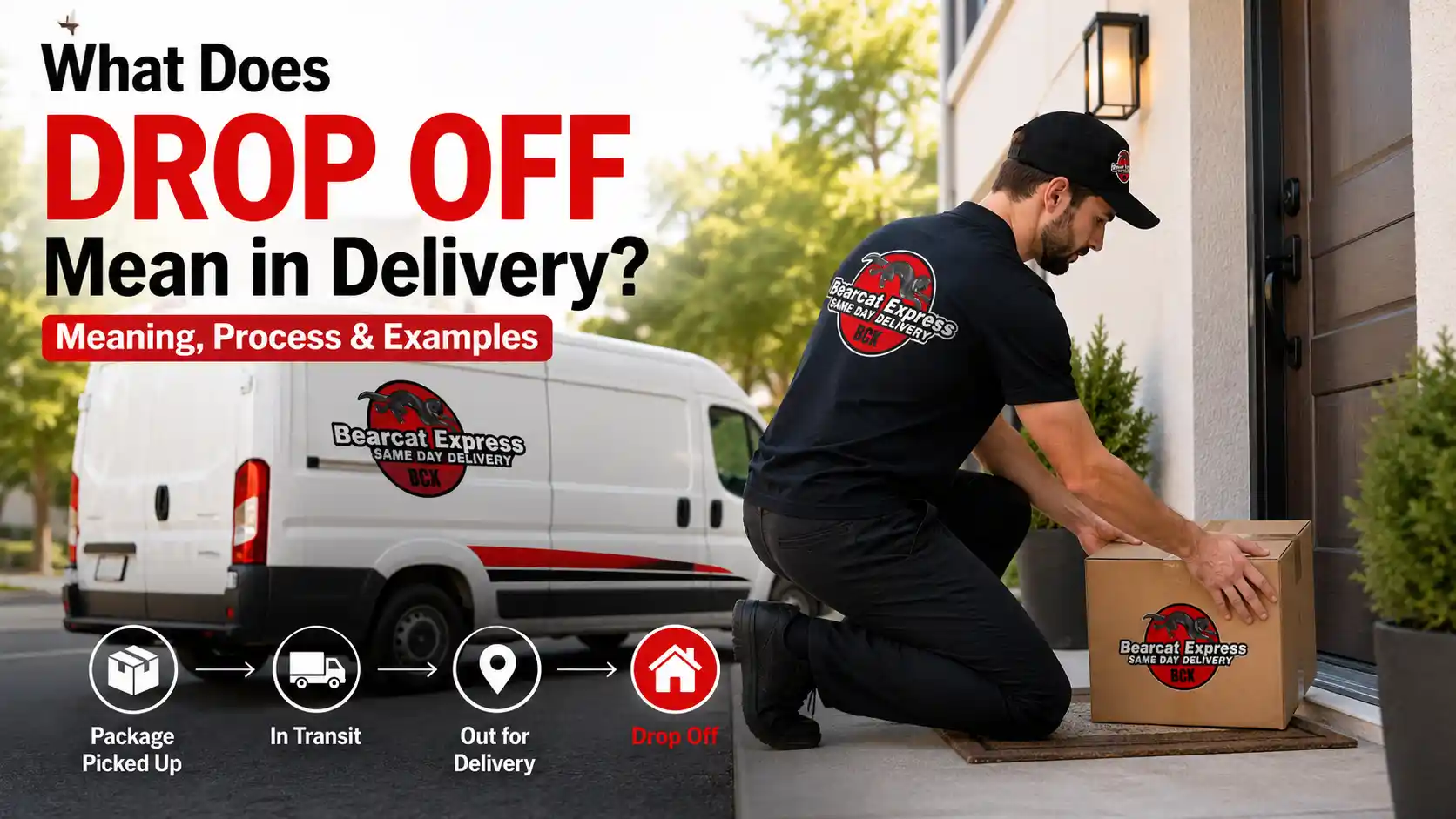

You are in a meeting, the doorbell camera pings, and the courier is already walking back to the van. Was the delivery missed or finished? For a growing share of orders, it is finished, and that is the whole idea. So, what is contactless delivery? It is a way of completing a drop where the courier leaves the order in an agreed spot, such as a porch, lobby shelf, or front desk, and proves it with a photo and an instant alert instead of a handoff.
Local couriers like Bearcat Express use it to keep routes moving while customers choose when and how they receive things.
Quick Answer: Contactless Delivery in 50 Words
Contactless delivery means the courier finishes a drop without meeting the recipient. The customer orders and pays online, chooses a no-contact option, and adds drop instructions. The driver leaves the parcel in the agreed spot, takes a photo, and sends an alert, so everyone has proof without a handoff.
What Is Contactless Delivery?
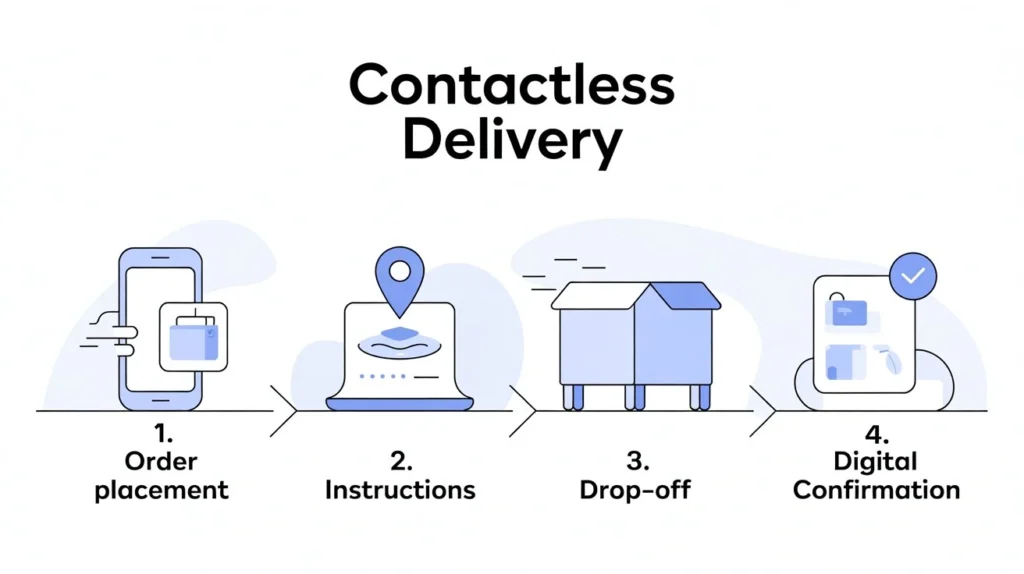
The meaning of contactless delivery is simple: the order reaches the customer, but the two people never need to be at the door at the same moment. Companies use different labels. No-contact, contact-free, and no-touch delivery all describe the same idea, which also answers what no-contact delivery means for most shoppers.
Picture a law office waiting on a signed contract. Instead of waiting for a receptionist to come out, the courier leaves the envelope at the front desk, photographs it beside the suite sign, and the office gets a time-stamped alert within seconds.
Types of Contactless Delivery
What is no-contact delivery in practice? It is wider than leaving a box on the doormat, and the right format depends on the item and the building.
| Type | Where the package goes | Best for | Proof needed |
| Doorstep drop | Porch, mat, or shelf by the door | Standard parcels and meals | Photo showing the item at the door |
| Lobby or reception | Front desk or mailroom shelf | Offices, apartments, documents | Photo plus desk or suite name |
| Locker or pickup point | Secure locker opened by a code | Higher-value items | Code scan or locker confirmation |
| Contactless pickup | Customer collects at the curb or counter | Retail and bulk orders | Order number check |
| Secure box or gated drop | Lockbox, garage, or side gate | Homes with repeat deliveries | Photo plus location tag |
Contactless pickup flips the direction. The customer comes to the store, and staff places the order at the curb or counter without a handoff.
How Does Contactless Delivery Work?
- Order and pay online. The customer pays by card or mobile wallet and selects a no-contact option.
- Write the instructions. Say where the parcel goes, which entrance to use, and how to get in. “Side door, blue bin on the porch, gate code sent by text” beats “somewhere safe.”
- Dispatch. The request is flagged so the driver sees it before arriving.
- Drop. The driver places the parcel on the ground, a chair, or a shelf in the agreed spot, out of the weather when possible.
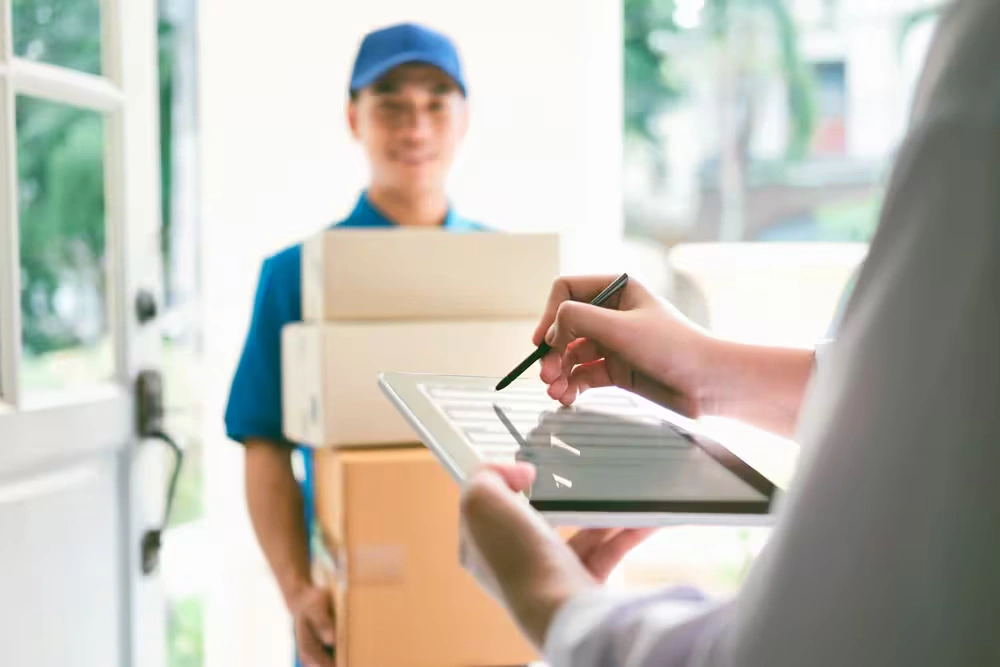
- Confirm. A photo, timestamp, and GPS point are saved, and the customer gets a text, email, or app alert.
Vague notes are where drops tend to go wrong, so the instruction step deserves the most care.
Contactless Proof of Delivery: What Counts as Valid Proof
Contactless proof of delivery is the record showing the drop happened where it should have. A useful record combines four things: a photo with context, a timestamp, a GPS location, and the notification sent to the recipient.
Context matters most. A parcel on bare concrete proves little, while the same parcel beside a unit number proves a lot. Some items need more, such as an electronic signature or an access code, and a good contactless delivery solution can collect those without face-to-face contact.
Why Contactless Delivery Is Still in High Demand
Anyone asking what is contactless delivery today is usually asking why it stayed popular. Convenience is the first reason: people can receive orders during meetings, school runs, or night shifts without planning around a knock. Hygiene and personal space still matter to many customers too.
The operational reason is just as strong. A driver who does not wait for a door to open completes more stops, and fewer failed attempts mean fewer repeat trips. For same-day work, saved minutes add up, which is why a local Same Day Delivery Service Augusta, GA provider treats unattended drops as a core part of the route rather than an exception.
Drop or Hold? The Green, Amber, Red Rule Behind Every Contactless Drop
Every contactless drop is a small decision. A practical way to make it consistently is to sort the stop into green, amber, or red before the parcel leaves the van. Exact policies vary by company, but the logic holds.
Green: Drop and Document
The note is clear, the spot is reachable, the weather is fine, and the item is low risk. Drop it, photograph it with a landmark in the frame, and send the alert. A box of printer paper beside a marked side door is a typical green stop.
Amber: Drop With Extra Safeguards
Something is slightly off: the spot is exposed, rain is coming, the item is valuable, or the note is vague. Choose the most sheltered position, message the recipient, and record what was changed and why.
Red: Hold, Call, or Return
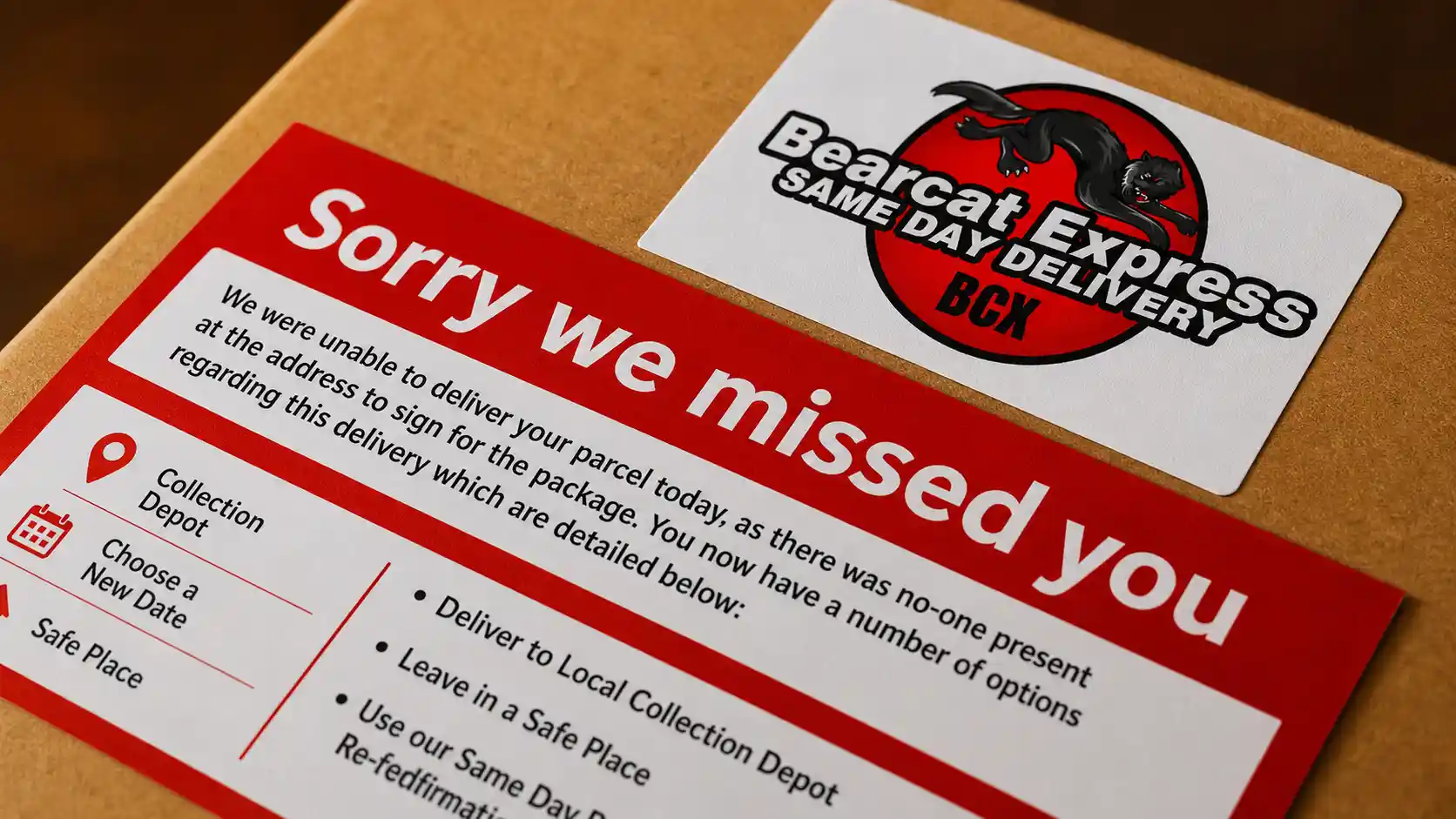
Do not leave it. Age-restricted or signature-required items, temperature-sensitive goods, a locked building with no access, or an unsecured dog at the gate all belong here. Hold the parcel, call, reschedule, or return it, and tell the sender the reason.
| Light | Situation | Action | Record kept |
| Green | Clear note, safe spot, low-risk item | Drop | Photo, time, GPS, alert |
| Amber | Exposed spot, weather, higher value, vague note | Drop with safeguards or message first | Photo plus note on what changed |
| Red | Restricted item, no access, no safe spot | Hold, call, or return | Attempt log and reason sent to sender |
Which Industries Benefit Most From Contactless Delivery?
| Industry | Why it fits | Typical items |
| Food and groceries | Short drop windows, hot or chilled orders | Meals, grocery bags |
| Online retail | High stop counts, customers often out | Boxes, returns |
| Medical and pharmacy | Discreet, documented drop-offs | Supply bags, non-controlled items |
| Legal and financial | Time-sensitive papers with proof | Contracts, filings |
| Parcel and 3PL networks | Signature-free release keeps routes moving | Business parcels |
How to Request or Set Up Contactless Delivery
If you are unsure what is no contact delivery at checkout, it is usually a simple option or a note field.
As a customer:
- Select the no-contact option when ordering.
- Name the exact spot, entrance, and any gate or door code.
- Choose a delivery window and keep alerts switched on.
As a business:
- Add the option at checkout and make sure the driver sees it.
- Define acceptable drop spots and a red list of items that always need a person.
- Require photos with a visible landmark.
- Offer contactless pickup next to delivery so customers can choose.
How a Local Courier Handles Contactless Delivery
We handle contactless requests inside same-day, on-call, and scheduled routes, with real-time tracking and digital proof of delivery attached to each shipment. Local work has an edge: the dispatcher knows the area, so a note like “rear entrance, past the loading dock” makes sense, and a driver can be redirected quickly if a gate is locked. That mix of local knowledge and a dependable contactless delivery solution keeps a drop from turning into a missed delivery.
Contactless vs Traditional Delivery
| Factor | Contactless | Traditional |
| Recipient at the door | Not required | Required |
| Wait time per stop | Short | Can be long |
| Proof | Photo, GPS, timestamp | Signature, often on paper |
| Best for | Low to medium risk items | Restricted or high-value items |
| Main risk | Theft or weather if the spot is poor | Missed attempts |
Contactless is not always better. It simply fits more everyday drops.
Common Challenges in Contactless Delivery and How to Solve Them
Theft. Pick a sheltered or out-of-sight spot, use lockers for valuables, and send the alert immediately.
Weather. Use a covered position. If none exists, treat the stop as amber or red instead of leaving fragile or temperature-sensitive goods outside.
Wrong drop spot. Buildings often have several entrances. A photo with a landmark and a GPS point settles most disputes, and customers can prevent the issue by naming the exact door.
Liability. Terms differ on who is responsible after a documented drop. For high-value or fragile items, confirm the rules with the sender or courier before booking. This is general guidance, not legal advice.
Conclusion
Knowing what is contactless delivery is one thing; using it well comes down to clear notes, solid proof, and the judgment to hold a package when the situation is red. When those three work together, customers get flexibility and couriers get smoother routes. Bearcat Express builds that approach into everyday local delivery, and you can contact us to talk through the right setup for your shipments.
Frequently Asked Questions
What is contactless delivery in simple terms?
It is a drop-off where the courier leaves the order in an agreed spot and confirms it digitally. The recipient never has to meet the driver. That is the core contactless delivery meaning.
What does no-contact delivery mean at checkout?
It means you are asking the courier to place the order without a handoff. Add a clear spot and any access codes in the notes so the driver can complete it correctly.
Is contactless pickup the same as contactless delivery?
Not quite. Contactless pickup has the customer collect the order from a curb or counter, while delivery has the courier bring it to you. Both avoid a face-to-face handoff.
When is no-contact delivery a poor choice?
Items that need an ID check, a signature, or cold storage are better handled in person. Valuable goods left in an exposed spot are another red flag.
Does a contactless delivery solution still give proof of delivery?
Yes. A good setup records a photo with context, a timestamp, and GPS, then alerts the customer. For sensitive items, it can also collect a digital signature or code.