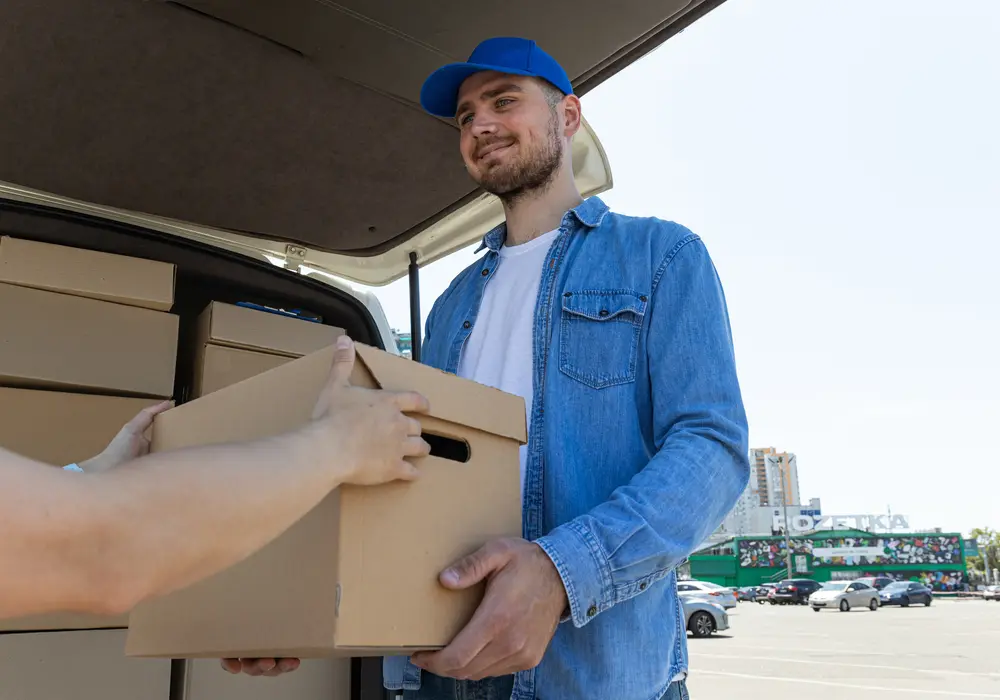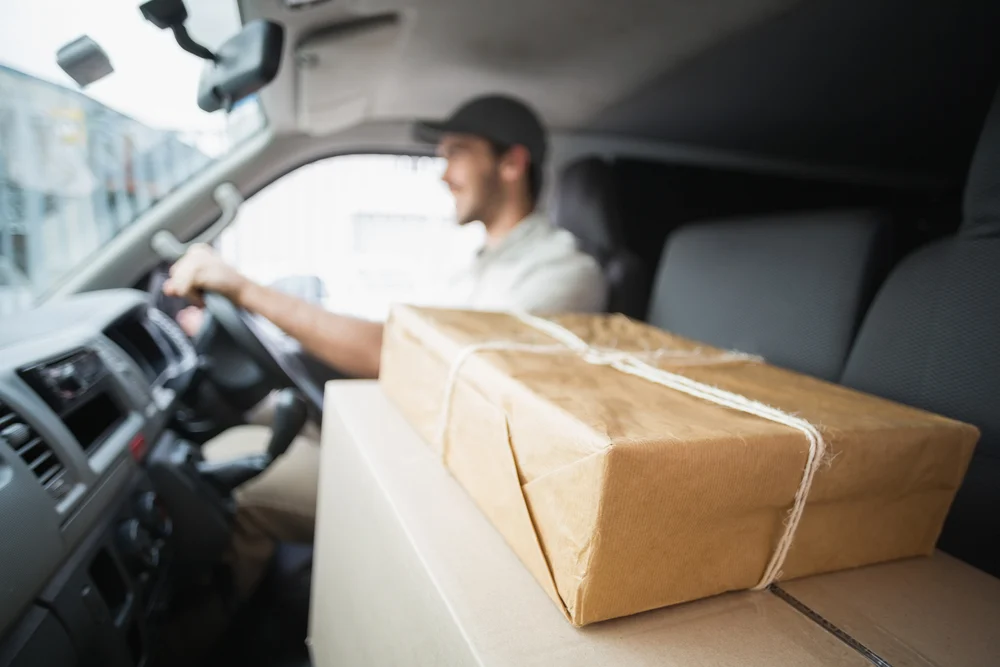
A customer orders a lamp, never types a card number, and still gets it at the door. The driver hands over the box, takes payment on the porch, and drives to the next stop. If you have ever wondered what is cash on delivery in real life, that porch exchange is the whole idea.
At Bearcat Express, we run COD stops for local businesses every week, so this guide explains the system from the courier side: who holds the money at each step, what it costs, and when it is the wrong choice for a business.
Quick Answer: What Does Cash on Delivery Mean?
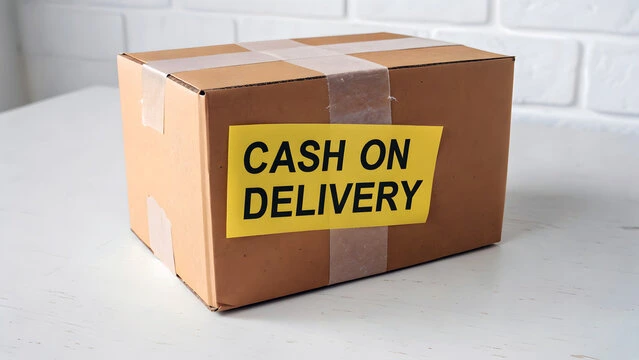
Cash on delivery (COD) is a payment method where the buyer pays for an order when it arrives instead of at checkout. The delivery driver collects the money at handoff and passes it to the seller, usually minus a small handling fee.
People who search whats cash on delivery are often really asking about its other names: collect on delivery, payment on delivery, and cash on demand. They all describe the same arrangement, and none of them require the payment to be physical cash anymore.
Key takeaways
- The buyer pays at the door, not at checkout.
- The driver, not the seller, collects and logs the payment.
- The seller carries the risk until the money is collected and paid out.
- Fees usually come out of the seller’s payout, not the item price.
- COD works best for local, lower-value, first-time orders.
How Cash on Delivery Works, Step by Step
To see what is cash on delivery in practice, follow one order from click to payout.
- Checkout. The buyer picks COD instead of paying online. No card details are entered, and the order is saved with an unpaid balance.
- Dispatch. The seller hands the parcel to a courier. The order is flagged as COD, with the exact amount owed and the payment types allowed at that stop.
- Handoff. The driver reaches the address, confirms the recipient, and hands over the parcel.
- Collection. The buyer pays at the door, and the driver records the payment on a scanner or manifest.
- Payout. The courier matches the day’s collections against the manifest and transfers the money to the seller, minus any handling fee.
Where the Money Sits at Every Step of a COD Delivery
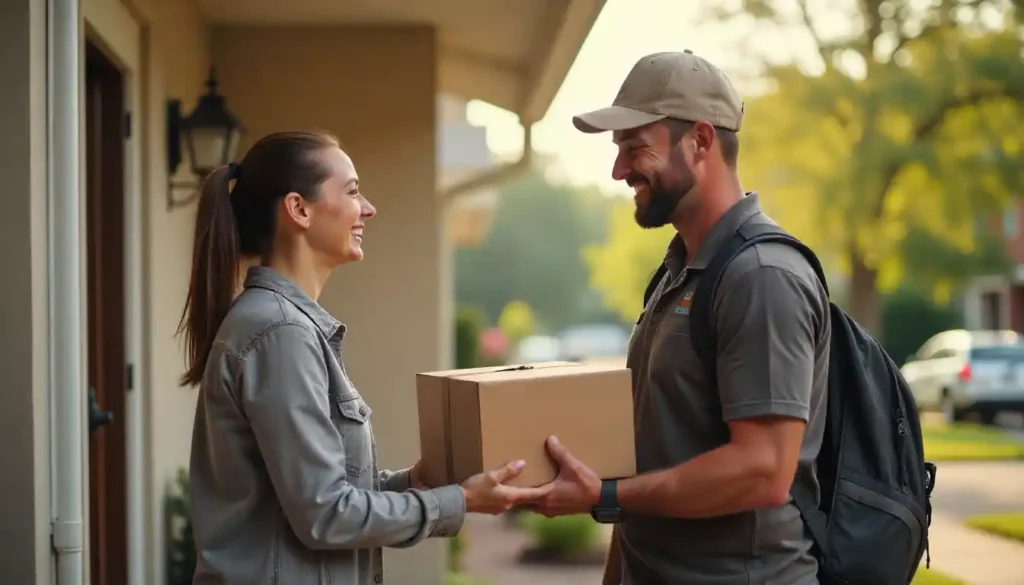
At Bearcat Express, we treat every COD parcel as a small custody chain. The goods and the money are rarely with the same party at the same time, and that gap is where most problems start. Here is how it looks from the courier side.
| Stage | Who holds the parcel | Who holds the money | Main risk | Safeguard |
| Order placed | Seller | Nobody yet | Fake or careless order | Phone or text confirmation |
| Courier pickup | Courier | Nobody yet | Wrong amount on the label | Amount checked at intake |
| On the route | Driver | Nobody yet | Failed attempt, wrong address | Dispatcher briefing before the route |
| At the door | Moves to buyer | Buyer, until payment | Refusal or no payment ready | Card reader, documented refusal |
| After collection | Buyer | Driver | Theft, counting error | Planned drop-offs, card preferred |
| End of shift | Buyer | Courier office | Mismatch with manifest | Same-day reconciliation |
| Payout | Buyer | Seller | Delayed transfer | Set payout schedule |
What a Driver Actually Does at the Door
Picture a driver at a small office with a $68 parcel. Three jobs happen at once: confirm the right person, collect the right amount, and keep the route moving. Before the route even starts, the dispatcher has already told the driver which stops are COD, what each one owes, and which payment types that stop accepts.
If the buyer hands over a large bill and the driver has no change fund, the driver will ask to use a card reader instead. That is why most courier cash on delivery routes now carry one. Tapping a card or phone takes seconds and removes the counting problem completely.
If the buyer refuses, the driver does not argue or leave the parcel on the step. They photograph the parcel, note the reason in the system, and return it to the sender. That record protects both the seller and the courier if a dispute comes up later.
What a COD Fee Really Looks Like
The cash on delivery price a buyer sees is usually just the item price. The courier’s charge for collecting, securing, and transferring the money is handled separately, and it often comes out of the seller’s payout. Rates vary by courier, so the numbers below are an illustration only, not our rates.
Assume a $68 order, a handling fee of 3 percent, and a flat $2 collection charge.
| Line | Amount |
| Item price collected at the door | $68.00 |
| Handling fee (3 percent) | $2.04 |
| Flat collection charge | $2.00 |
| Seller payout | $63.96 |
Many sellers either absorb this cost or add a small COD fee at checkout so the cash on delivery price covers it. Ask any courier for a written fee schedule before you switch COD on, because percentage fees and flat fees behave very differently on small and large orders.
Cash on Delivery vs. Cash in Advance vs. Invoice Terms
| Factor | Cash on delivery | Cash in advance | Invoice terms (Net 30) |
| Payment timing | At the door | Before shipping | About 30 days after delivery |
| Who carries the risk | Seller | Buyer | Seller |
| Trust needed from buyer | Low | High | Medium |
| Extra cost | Handling fee | None beyond shipping | Chasing late invoices |
| Seller cash flow | Fast, after payout | Fastest | Slowest |
Pros and Cons of Cash on Delivery
| Side | Pros | Cons |
| Buyer | Pays only after seeing the parcel; no card details shared online | Needs payment ready at a set time; some sellers add a COD fee |
| Seller | Reaches hesitant first-time buyers; fewer payment disputes | Refusals waste shipping costs; payout arrives after delivery |
Payment Methods Accepted Under COD
The word cash is a bit outdated. Depending on the courier and the seller, a COD stop may accept:
- Cash, mostly for smaller orders
- Cards, through a handheld reader
- Mobile wallets, by tap
- Cashier’s checks or money orders, only if agreed in advance
Sellers who want less cash handling often go card-only COD, which speeds up reconciliation and cuts counting errors.
You may also read: How Much Does Courier Service Cost?
Risks Couriers Manage and How Sellers Can Reduce Them
Four risks come up again and again on courier cash-on-delivery routes.
Theft. A driver collecting cash across a full route carries it between stops, so routes are planned to limit how much sits in a vehicle at once.
Refusals. The buyer changes their mind or has no payment ready, and the parcel goes back, costing fuel and a second trip.
Fake orders. A valid-looking order from someone who never intended to pay.
Delayed payouts. A mismatch between the driver’s count and the manifest is easy to fix the same day and painful to fix a week later.
A short prevention checklist for sellers:
- Confirm every first COD order by phone or text before dispatch.
- Set a maximum order value for COD.
- Offer card on delivery so buyers are not caught without cash.
- Get the courier’s payout schedule and fee sheet in writing.
- Track refusal rates by area and product.
When COD Makes Sense and When It Doesn’t
| Situation | Fit | Why |
| First order from a new local customer | Strong | Builds trust before moving to invoicing |
| Low to mid-value parcel, short route | Strong | Little money at risk |
| Repeat business customer | Weak | Invoice terms are easier for both sides |
| High-value goods | Poor | A large payment at the door raises risk |
| Custom or made-to-order items | Poor | A refusal leaves you with something you cannot resell |
| Long-distance or multi-day routes | Poor | Delays push payout back, and refusals cost more |
| Recipient rarely home | Poor | Repeated attempts eat the margin |
Real-World Examples of Cash on Delivery
- Food order. A caller orders from a local restaurant and pays the driver at the door. Delivery and payment happen in the same moment.
- First order from a local supplier. A small shop orders parts from a supplier it has never used. The supplier ships on COD for the first few orders, then moves the shop to invoice terms once it has paid reliably.
- E-commerce parcel. An online store lets hesitant shoppers choose COD at checkout. The courier collects, reconciles, and pays the store out on a set schedule.
Alternatives to Cash on Delivery
If full COD feels risky, there are middle options. A deposit up front with the balance due on delivery shares the risk between both sides. Invoice on delivery lets the courier hand over the parcel while the buyer pays digitally within a set window. For repeat clients, a standing account with periodic billing usually replaces COD entirely, which is how many clients of our Same Day Delivery Service Augusta GA work after a few successful runs.
Conclusion
So, what is cash on delivery? It is a payment promise settled at the door, and it works when a courier handles collection, security, and reconciliation with care. Used for the right orders, it helps new customers trust a business enough to buy. Bearcat Express runs COD routes across our service area every week, and if you want to know whether it fits your business, contact us, and we will walk you through the setup.
FAQs
Whats cash on delivery short for, and is it the same as collect on delivery?
COD stands for cash on delivery. Collect on delivery, payment on delivery, and cash on demand all describe the same arrangement.
Is cash on delivery safe?
It is generally safe when the courier has clear collection and reconciliation procedures. The bigger risk sits with the seller, who loses shipping costs if a buyer refuses or a driver’s count does not match the manifest.
Can I pay by card on a COD delivery?
Often yes, because many couriers carry handheld card readers. Confirm the accepted payment types with the seller before delivery day.
Can I refuse a COD package?
Yes. The driver will usually document the refusal and return the parcel to the sender, and the seller may still be charged for the trip.
Does the cash on delivery price include extra fees?
Sometimes. Couriers charge for collecting and transferring the money, and sellers either absorb that cost or add a COD fee at checkout, so check the final total before you confirm.