You ordered something online, and now your tracking page shows a string of confusing updates. One says “en route,” another says “departed,” and you’re left wondering what any of it actually means for when your package will show up. To understand these updates, you first need to understand what is last mile delivery and why this final stretch of the shipping journey behaves so differently from everything that came before it.
At Bearcat Express, we handle this exact stage every day, so we’ve broken it down in plain language, including what those tracking terms really mean.
What Is Last Mile Delivery?
Last-mile delivery is the final leg of the shipping process, the point where a package moves from a local distribution hub, warehouse, or sorting facility to the customer’s front door. It’s called the “last mile” because it’s typically the shortest physical distance in the entire shipping journey, yet it’s also the most complex and expensive part to execute.
Unlike the earlier legs of shipping, which move large volumes of freight between cities in bulk, last-mile delivery deals with one address at a time. A truck might carry thousands of packages across state lines efficiently, but that same efficiency disappears once the driver has to navigate individual streets, find parking, locate the right door, and hand off (or leave) each item separately.
How Does Last Mile Delivery Work?
The process generally follows this sequence:
- Arrival at the local facility. The package reaches a regional hub or sortation center closest to the delivery address.
- Sorting and route assignment. Packages are grouped by delivery zone and loaded onto vehicles assigned to that route.
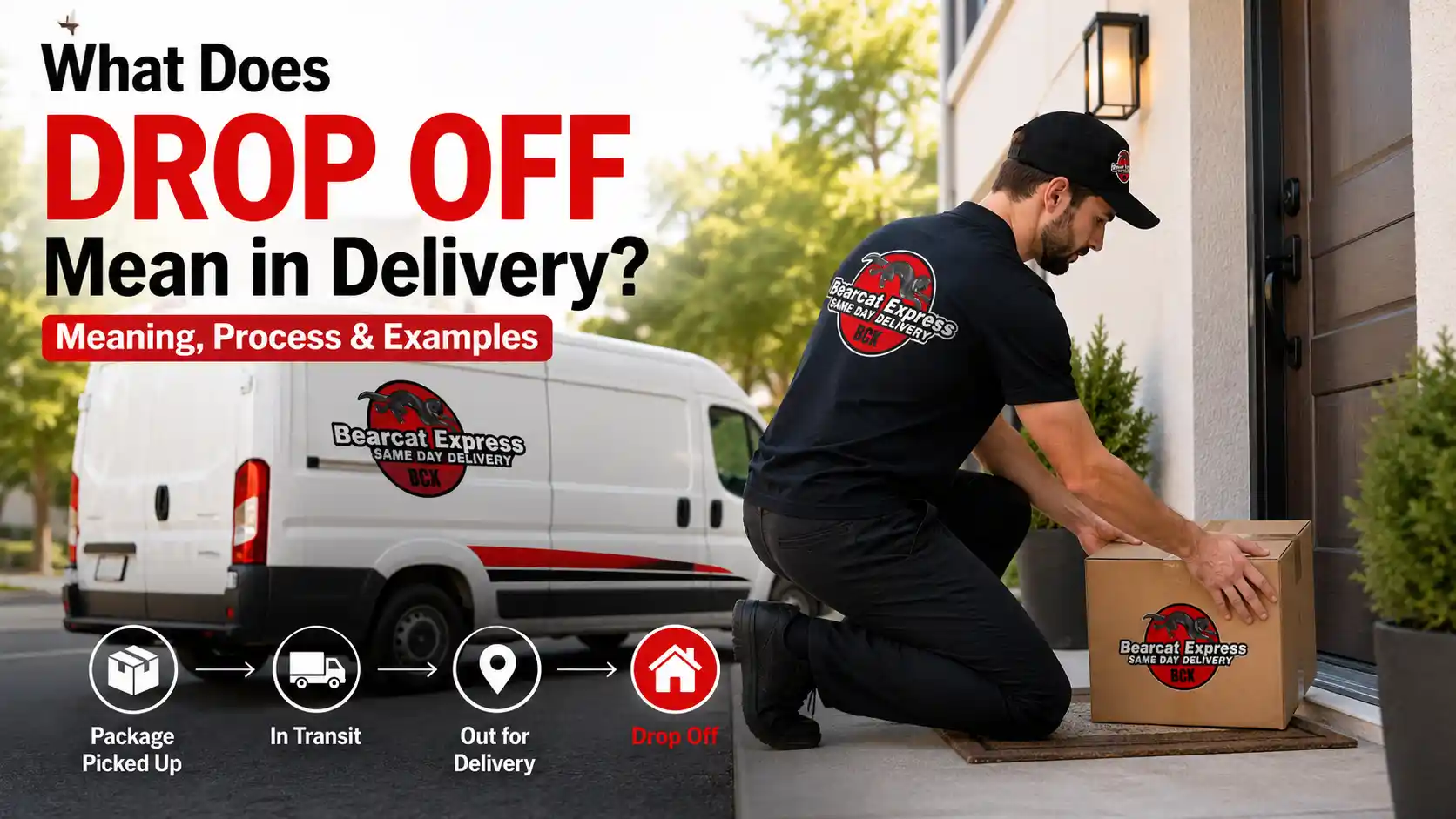
- Departure for delivery. The vehicle leaves the facility with its assigned packages. This is where a “last mile departed” tracking update typically appears.
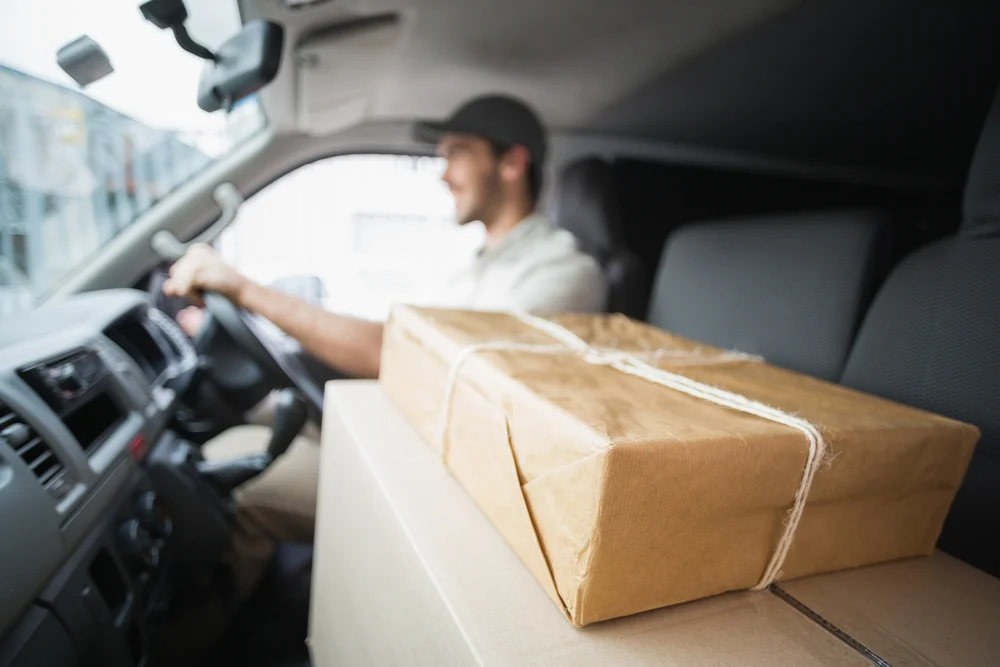
- En route to the destination. The driver is actively moving toward the recipient’s address. Tracking systems label this stage as “last mile en route.”
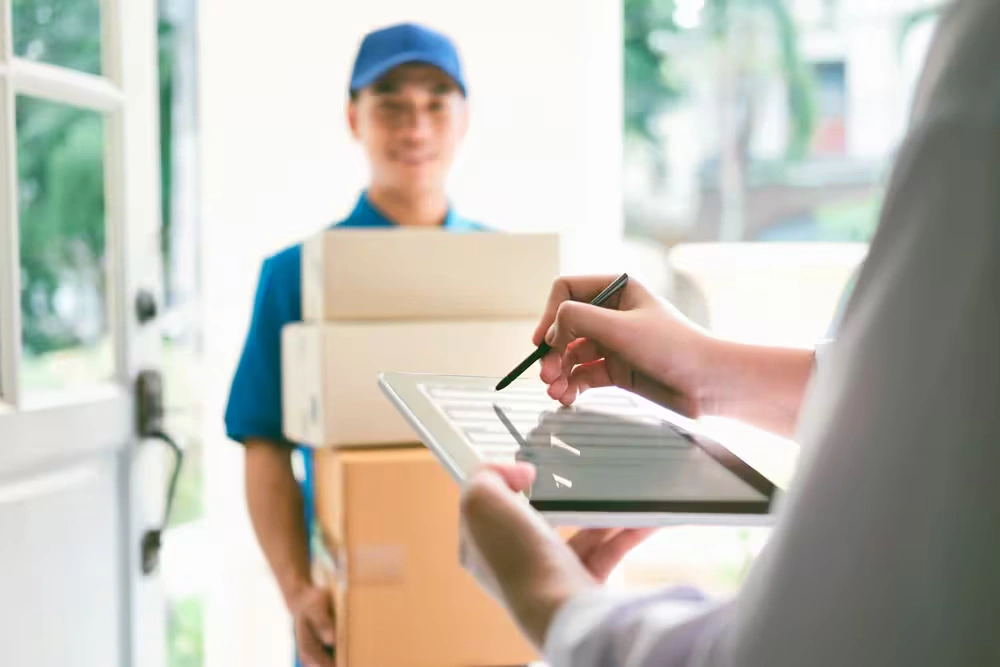
- Final handoff. The package is delivered, scanned, and marked complete, sometimes with a photo or signature as proof.
At Bearcat Express, our drivers follow this same core sequence, but because we specialize in same-day and on-demand delivery, several of these steps happen within hours rather than across a multi-day window.
Last Mile vs. First Mile vs. Middle Mile Delivery
These three terms get used interchangeably, but they describe different stages of a shipment’s journey:
- First-mile delivery is when a package leaves the manufacturer, retailer, or original pickup point and enters the shipping network.
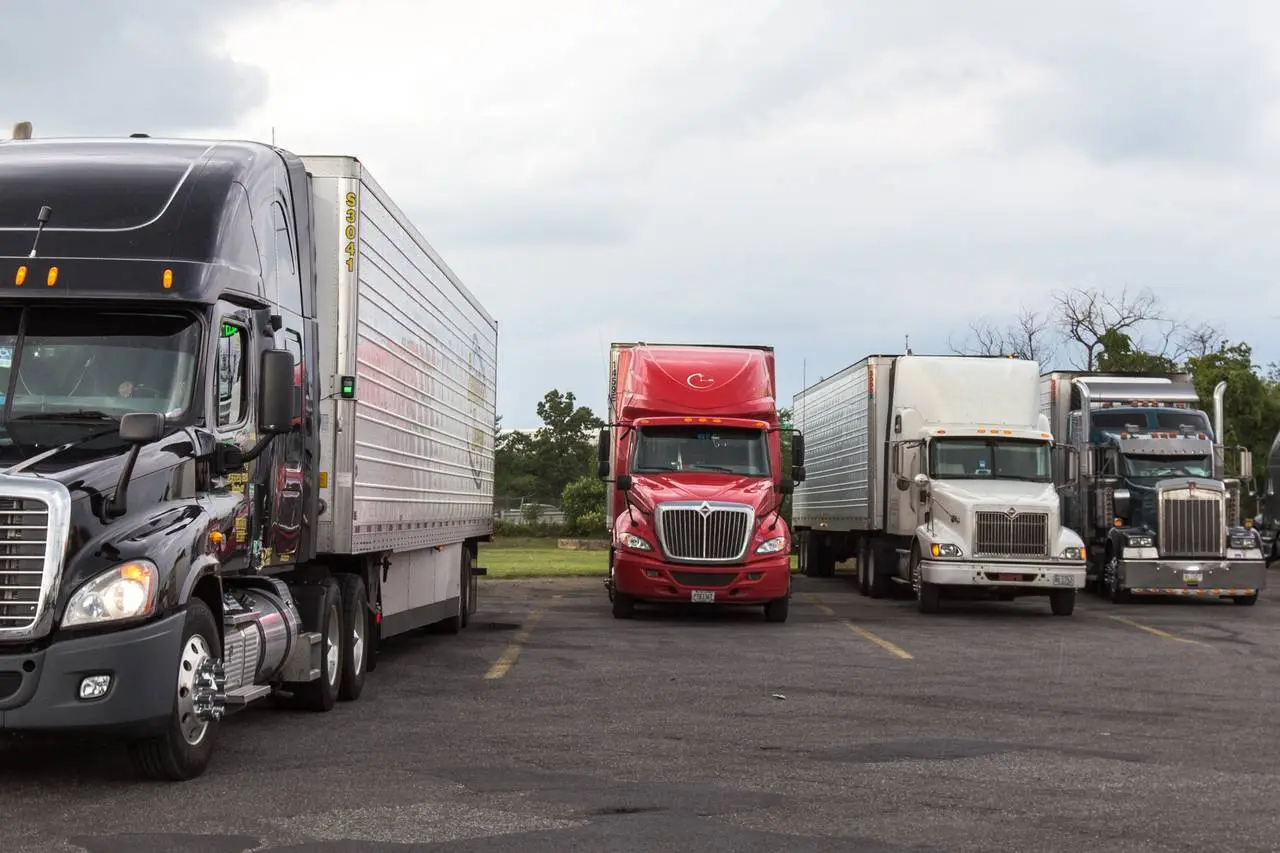
- Middle-mile delivery covers the bulk transportation between distribution centers, often by truck, rail, or air, moving large volumes across long distances.
- Last-mile delivery is the final, individualized leg from the local facility to the customer.
Understanding this distinction matters because delays can happen at any stage, but only a last-mile delay directly affects the customer’s day-to-day expectations, since it’s the stage they can actually see and track in real time.
Understanding Last Mile Tracking Statuses
If you’ve ever stared at a tracking page trying to decode what’s happening, you’re not alone. Two terms cause the most confusion.
What Does “Last Mile Enroute” Mean?
The last mile en route meaning is simple: your package has left the local facility and is currently on a delivery vehicle, moving toward your address. This status doesn’t always come with a live map, but it tells you the package is in active motion during its final leg, not sitting in a warehouse.
Some delivery providers update this status only once, when the driver’s route begins for the day. Others refresh it as the vehicle gets closer, though that depends entirely on the technology the carrier uses.
What Does “Last Mile Departed” Mean?
So what does last mile departed mean exactly? It means the package has physically left the last local hub, post office, or sorting facility and is now heading toward the delivery address. It’s an earlier checkpoint than “en route,” essentially confirming the package is out of the building and loaded onto a vehicle.
A useful way to think about it: “departed” tells you the package has left one point, while “en route” tells you it’s actively traveling toward the next one. If your tracking page hasn’t updated in a few hours after showing “departed,” that’s usually normal. Many systems only refresh at major checkpoints, not continuously.
Why Last Mile Delivery Matters for Businesses and Customers
For customers, the last mile is the only part of the shipping process they actually witness. It’s the moment that shapes their opinion of the brand, regardless of how smoothly everything ran before that point.
For businesses, this stage is also where costs concentrate. Individual stops, traffic, parking, failed delivery attempts, and time-sensitive customer expectations all make the last mile harder to manage efficiently than the long-haul legs of shipping.
Common Types of Last Mile Delivery Services
Not every last-mile delivery works the same way. Depending on the business need, it typically falls into one of these categories:
- Same-day delivery, where the package is picked up and delivered within the same business day.
- On-demand delivery, for urgent, time-sensitive shipments that need to move immediately rather than waiting for a scheduled route. Businesses in Augusta often rely on On-Call Delivery Service Augusta GA exactly for this reason, when a delivery can’t wait for the next standard run.
- Scheduled delivery is for recurring shipments that follow a set route and timeframe.
Common Challenges in Last Mile Delivery
A few practical issues show up repeatedly in this stage:
- Traffic and congestion, especially in denser city routes where multiple stops are packed into a short window.
- Address accuracy, since incomplete or incorrect addresses cause failed attempts and re-routing.
- Recipient availability, when no one is present to receive the package at the expected time.
- Rural distances, where stops are farther apart, making route planning very different from a dense urban zone.
We see both ends of this spectrum directly. A delivery route through downtown Augusta involves tight parking and frequent stop-and-go traffic, while a route into a rural Alabama town might involve long stretches between drop-offs with almost no traffic at all. Both require different planning, even though the end goal, an on-time delivery, stays the same.
How Local Couriers Handle Last Mile Delivery Differently
National carriers typically run fixed routes on fixed schedules, which works well for predictable, high-volume shipping but leaves little flexibility for urgent or same-day needs. A local courier like Bearcat Express operates differently by design. Because we serve a defined regional footprint across Georgia and Alabama, our drivers know the local roads, common delivery hurdles, and realistic timeframes for specific areas, which allows us to offer same-day and on-demand options that larger national networks usually can’t match on short notice.
Final Thought
Understanding what is last mile delivery makes those confusing tracking updates a lot less stressful, and it explains why this final stretch matters so much to how a delivery actually feels for the customer. Whether you’re a business trying to improve delivery speed or a customer just trying to figure out when your package will arrive, the last mile is where all of that gets decided. If you need reliable same-day or on-demand delivery across Georgia or Alabama, contact us at Bearcat Express, and we’ll walk you through the right option for your shipment.
FAQs
What is last mile delivery in simple terms?
It’s the final step of the shipping process, when a package moves from a local hub to the customer’s address. It’s usually the shortest distance traveled but the most complex part of the delivery to execute well.
What does last mile en route mean on a tracking page?
It means your package has left the local facility and is currently on a vehicle heading toward your delivery address. The last mile en route meaning simply confirms your package is in motion, not sitting idle.
What does last mile departed mean?
It means the package has left the last sorting facility or hub and is now on its way to the delivery address. It’s typically the checkpoint right before the “en route” or “out for delivery” status appears.
How long does last mile delivery usually take?
It depends on the service type. Same-day and on-demand delivery can be completed within hours, while standard last-mile delivery through larger networks can take a full business day or longer depending on route volume.
Is same-day delivery the same as last mile delivery?
Not exactly. Same-day delivery is one type of last-mile delivery, defined by how fast it happens. Last-mile delivery is the broader term for the final leg itself, regardless of the timeframe involved.