You have a package that needs to move, and three words show up on every shipping form: courier, carrier, and post. Most people use them interchangeably, but understanding the difference between a courier carrier and post can save you money, time, and a missed deadline.
Bearcat Express handles this question daily as a same-day courier serving businesses across Georgia and Alabama, and the answer almost always comes down to speed, weight, and how many hands touch your shipment along the way.
Quick Answer
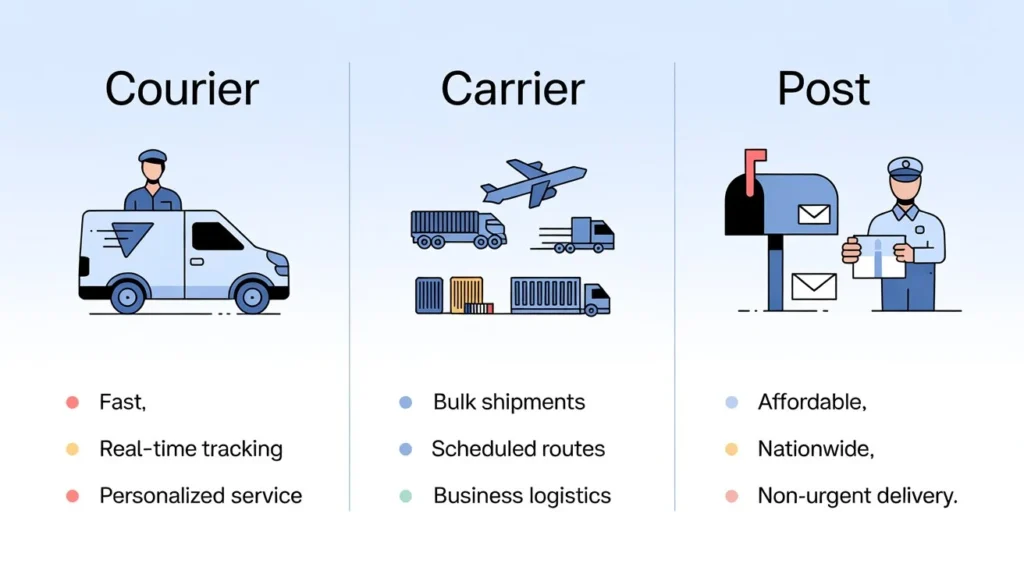
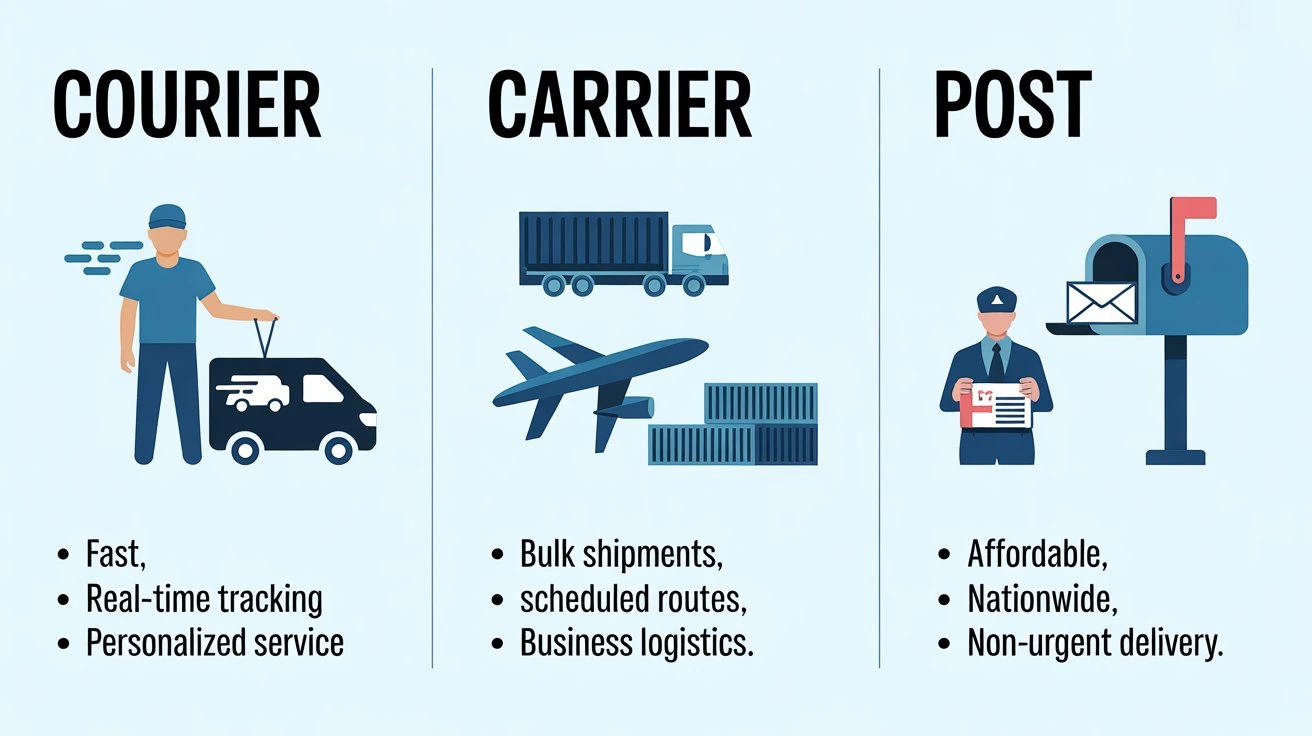
A courier picks up a shipment and delivers it directly, often within hours. A carrier moves bulk freight through hubs on a set schedule. A postal service delivers letters and small parcels nationwide at the lowest cost but with the slowest average speed. When comparing courier vs carrier for a single time-sensitive item, the courier wins on speed almost every time.
Key Takeaways at a Glance
- A courier is built for urgent, door-to-door delivery.
- A carrier is designed for bulk freight moving through terminals.
- A postal service offers the widest reach at the lowest price.
- Weight, distance, and urgency decide which option actually fits.
- Knowing what is a carrier service versus a courier service prevents overpaying for speed you don’t need.
What Is a Courier Service?
A courier service is a private company that picks up a package and takes it straight to the recipient, usually the same day, with no sorting warehouse in between.
How Courier Services Work
Courier dispatch runs live. A request comes in, a nearby driver is assigned, and the item moves in one uninterrupted trip. This is the real difference behind most carrier vs courier speed questions.
Common Types of Courier Deliveries
Same-day, express, scheduled, and local point-to-point service are the four main categories, and each is built around a different urgency level rather than a different vehicle type.
Courier Fleet and Vehicle Types
Sedans and small SUVs handle envelopes and light parcels, cargo vans cover multi-stop runs, and box trucks take on larger same-day freight. A single sedan can typically carry ten to fifteen small parcels on one route.
Key Features of Courier Services
Real-time tracking, direct handling, and single-driver accountability define what courier delivery means for a business that cannot afford a delay.
Industries That Commonly Use Couriers
Law firms filing time-stamped documents, medical offices moving lab specimens, and dental practices sending impressions between a clinic and a lab all rely on couriers because a few hours matter more than a few dollars saved.
What Is a Carrier in Shipping?
If you’re asking what is a carrier service in practical terms, think of it as the backbone of freight movement rather than single-package delivery.
Types of Carriers
A common carrier serves multiple shippers under a public license. A contract carrier works long-term for one shipper. A private carrier moves only its own company’s goods.
Transport Modes Carriers Use
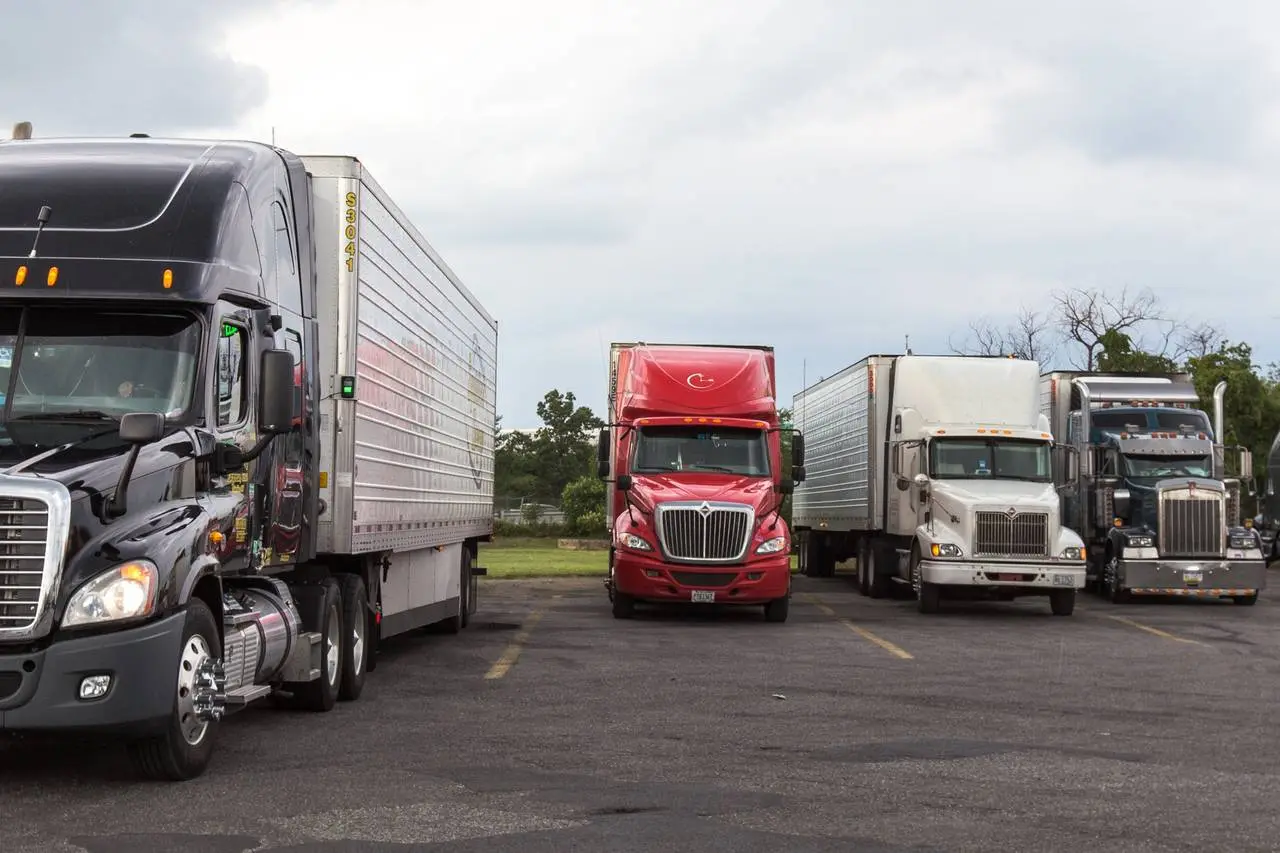
Road transport handles most short and medium hauls. Air freight is fastest for long distance but costly. Sea freight moves the largest volumes cheapest, though slowest. Rail sits in between for bulk inland freight.
What Carriers Typically Transport
Carriers generally start around 100 pounds and scale up to full truckloads of pallets and containerized freight, which is why a carrier vs courier decision often comes down to weight before it comes down to speed.
Which Option Handles Hazardous or Regulated Shipments?
Carriers are typically the ones equipped for regulated freight. Moving hazardous materials requires specific licensing, placarding, and driver certification that most local couriers and postal networks are not set up to provide, so bulk chemicals, certain industrial goods, and specialty regulated cargo almost always route through a licensed carrier rather than a courier or the post.
Key Features of Carrier Services
Set schedules, hub-based routing, and weight-based pricing are standard. Carriers scale efficiently but rarely offer same-day flexibility.
What Is a Postal Service?
A postal service is typically government-operated and delivers mail and small parcels to every address, including rural areas private companies often skip. Most cap standard parcels around 70 pounds.
How Postal Services Work
Mail is collected, sorted at regional facilities, and routed through a fixed system, which keeps prices low but adds transit time at each sorting point.
Government vs Private Postal Systems
Some postal operators now offer premium tracked tiers, but the underlying network still relies on scheduled routes rather than a direct trip, so delivery windows stay broad even on faster tiers.
Where These Terms Come From
Courier traces to a Latin root meaning to run, fitting a service built on speed. Carrier comes from the idea of carrying goods in bulk, tied historically to wagons and later trucking. Post comes from fixed staging points, where relay stations once moved mail in stages rather than one continuous trip.
Courier vs Carrier vs Postal Service: Comparison Table
| Factor | Courier | Carrier | Postal Service |
| Speed | Hours to same-day | Days to weeks | Days to a week or more |
| Shipment size | Small to mid-size | Bulk, pallets, freight | Letters, small parcels |
| Typical weight | Under 100 lbs | 100 lbs to several tons | Up to roughly 70 lbs |
| Tracking | Real-time, door-to-door | Milestone-based | Basic to moderate |
| Cost | Higher per item | Lower per unit at volume | Lowest |
What a Real Delivery Quote Looks Like: Pricing Example
Numbers make this decision concrete. For a 10-pound box moving 50 miles same-day, a local courier quote typically lands between $25 and $45 depending on pickup timing and vehicle type. The same box moved by a regional carrier on a standard 3 to 5 day freight schedule often runs $15 to $25, but only once it’s consolidated with other freight, since carriers rarely quote single small parcels economically. Through the postal service, that same box could ship for under $12, though with no guaranteed same-day arrival and a wider delivery window. The pattern holds across most shipments: courier pricing buys speed and certainty, carrier pricing buys volume efficiency, and postal pricing buys the lowest possible cost when time isn’t a factor.
Inside a Dispatch Desk: One Package’s Decision Path
A law office calls with a signed contract due across town by 2 p.m. The dispatcher’s first question isn’t about rates, it’s how many hours are left. Under six hours with one envelope means this goes straight to a courier. An hour later, a furniture store needs three showroom sets moved across the state with no deadline for ten days. That call goes to a carrier, since the volume makes courier pricing impractical and the timeline fits a hub-based schedule. A third call, a birthday card with no urgency, goes to the post. Urgency first, then weight, then cost sensitivity, in that order, is the actual logic behind every one of these calls.
Same-Day Cutoff Times: Courier vs Carrier vs Post
Timing windows matter as much as the service type itself. Most local couriers can still guarantee same-day delivery for requests placed by early-to-mid afternoon, since the driver only needs to complete one direct trip. Carriers typically need freight booked a full day or more ahead of a pickup window, since the shipment has to fit into a scheduled route through a hub. Standard postal service has no same-day option at all; even expedited tiers are built around next-day or two-day delivery at the earliest. If a shipment absolutely has to move today, the cutoff time for booking a courier is the single most important number to know before anything else.
When Should You Use Each Option? A 3-Question Decision Check
Does this need to arrive within hours, not days? If yes, a courier is the right call regardless of cost.
Is the shipment over 100 pounds or made up of multiple pallets? If yes, a carrier is built for that volume.
Does the delivery need to reach a rural address with no time pressure? If yes, a postal service is usually the most economical route.
Best Situations for Courier Services
Same-day contracts, medical samples that can’t sit overnight, and last-minute local orders all call for a courier.
Best Situations for Carrier Services
Bulk inventory moves, warehouse restocking, and multi-state freight without a same-day requirement fit a carrier’s model.
Best Situations for Postal Services
Non-urgent mail, low-value small packages, and rural addresses where cost matters more than speed fit the post.
Common Misconceptions About Courier, Carrier, and Post
- “Courier and postal services are the same.” A courier moves your item directly, while the post routes it through a shared network with multiple stops.
- “A courier is the same as a gig delivery app driver.” A licensed courier company runs trained, accountable drivers on dedicated routes with liability coverage, which is different from an on-demand app matching a shipment to whichever driver is nearby.
- “Carriers only handle international freight.” Carriers move domestic and regional bulk shipments just as often.
- “A cheaper option is always smarter.” A postal service might save a few dollars, but a missed deadline from a delayed shipment usually costs more than the shipping fee difference.
Why Local Businesses in Augusta Choose Same-Day Courier Service
Businesses across Augusta increasingly lean on courier delivery because same-day expectations have become standard rather than the exception. A law office filing court documents or a retailer fulfilling a last-minute local order needs a level of direct accountability that neither a carrier nor the post is built to offer. Bearcat Express built its entire service model around that gap, running one driver and one continuous trip per shipment instead of routing packages through hubs. For businesses that need dependable, pre-arranged delivery windows rather than one-off requests, our Scheduled Delivery Service in Augusta, GA sets a fixed pickup and drop-off time without the guesswork of freight scheduling.
Final Thoughts
Choosing between a courier, a carrier, and the post comes down to one honest question: how fast does this shipment need to arrive, and how much of it are you sending? Small volume with a tight deadline points to a courier. Bulk freight with flexible timing points to a carrier. Low-cost, non-urgent mail points to the post. Bearcat Express has spent years helping Augusta businesses make that call correctly, and we’re glad to walk through your specific shipment with you. Contact us today to talk through what your delivery actually needs.
Frequently Asked Questions
Is a courier always faster than a carrier?
Yes, in nearly every case. A courier moves your item directly from pickup to drop-off in one trip, while a carrier routes shipments through hubs and set schedules, which adds transit time.
What does courier delivery mean for a small business?
Courier delivery means a business can send a single urgent item and know it will reach its destination the same day through one direct trip, rather than waiting on a multi-stop network.
When should I choose a carrier over a courier?
Choose a carrier when you’re shipping bulk freight or pallets that don’t require same-day delivery. This carrier vs courier decision usually comes down to whether you’re moving one urgent item or a large shipment on a flexible timeline.
Can a courier handle recurring business deliveries?
Yes. Many courier services, including scheduled delivery options, are built for businesses that need consistent, pre-arranged pickup and drop-off times rather than one-time urgent requests.
Does the postal service offer any same-day options?
No. Standard and even most expedited postal tiers are built around next-day or multi-day delivery windows, which is the main reason time-sensitive shipments go to a courier instead.