
A customer places an order and only reaches for their wallet once the package is actually at the door. That single moment is the entire idea behind COD payment terms, and it still decides whether a sale closes for buyers who don’t trust a checkout page enough to pay first.
Bearcat Express handles collect-on-delivery runs across its service area every week, so we see both the wins and the failure points of this payment model up close.
Quick Answer: What Does COD Mean in Payment Terms?
COD stands for cash on delivery. The buyer pays only when the order physically arrives, instead of paying online at checkout. If someone asks what does COD mean in business, the short version is that the seller extends trust for the length of the shipping window, and the courier becomes the collection point. That’s the core of COD meaning in business terms.
What Are COD Payment Terms?

COD payment terms are the specific rules a seller sets around that collect-at-delivery arrangement: which payment methods are accepted on arrival, whether a partial prepayment is required, and what happens if a buyer refuses the package. It’s less “pay later” and more a risk-sharing agreement written into the order. Different sellers apply different cod terms depending on order value, product type, and delivery region, and those cod terms usually live in the fine print of a store’s shipping or checkout page rather than the product listing itself.
COD Payment Terms Meaning Explained in Simple Steps
Step-by-Step COD Flow
- Buyer selects COD at checkout instead of a card or wallet.
- Order is confirmed with no upfront charge.
- Courier picks up the package and loads it onto the route.
- Driver collects payment (cash, card reader, or QR code) at the door.
- Funds are reconciled back to the merchant within one to two business days.
How Cash on Delivery (COD) Works in Real-Time Operations
On a live route, COD stops aren’t handled differently in speed or routing; the difference is entirely at the last step. A driver working a same-day manifest carries a flag for which stops require collection, confirms the exact amount owed, and records proof of payment before the delivery counts as complete. Bearcat Express builds this flag directly into dispatch instructions so drivers aren’t guessing at the door.
Key Features of the COD Payment System
The core COD payment meaning shows up clearly once you look at how the system is actually built, feature by feature.
- Payment collected at delivery, not at checkout
- Cash, card-on-delivery, or mobile payment accepted at the door
- Delivery isn’t marked complete until payment is confirmed
- Often paired with an inspection window before paying, so buyers can check condition and quantity against the order
- Requires reconciliation and reporting back to the merchant, usually logged through a driver app or a paper manifest signed at the stop
Each feature exists to solve a specific trust gap between a buyer who hasn’t paid yet and a seller who hasn’t been paid yet, which is really the whole point of offering COD in the first place.
How COD Limits and Order Value Thresholds Work
When Businesses Cap or Restrict COD Orders
Most sellers cap COD orders at a set dollar amount, since carrying large cash sums on a route creates risk for drivers and reconciliation errors for merchants. High-value electronics and bulk business shipments commonly get pushed toward prepaid or a partial deposit instead. Some businesses also restrict COD by region if refused-delivery rates run high there.
Benefits of COD Payment Terms for Customers
- No upfront risk if the product never shows up
- A chance to inspect before paying, especially for first-time buyers
- Works for people without cards or wary of entering payment details online
- Builds confidence with unfamiliar or newer sellers
Benefits of COD Payment Terms for Businesses
- Opens sales to price-sensitive or card-hesitant customers
- Lowers cart abandonment tied to payment-page distrust
- Some operations describe collecting at the exact moment of handoff, rather than through a delayed invoice, using cash on demand payment terms
- Builds local trust faster than a purely prepaid storefront
Challenges and Risks of COD Payments
Refused deliveries are the biggest cost driver, since a courier still burns fuel and a route slot on a stop that earns nothing. That cost compounds fast on a dense same-day route, where one refused stop can push every delivery behind it later in the day. Cash handling adds risk of loss, short payments, or driver safety concerns on late routes, especially in areas with limited lighting or parking near the door. Reconciliation also takes longer than a digital transaction, delaying cash flow to the merchant and, on high refusal weeks, making revenue harder to forecast against fixed operating costs like fuel and driver hours.
How to Reduce COD Failures and Refused Deliveries
Practical Steps Couriers and Sellers Take
- Confirm the order and exact amount owed before dispatch
- Require a small non-refundable deposit on higher-value orders
- Verify the delivery address against a mapping tool before the route is built
- Give drivers a scripted confirmation step at the door before handoff
Inside a Same-Day COD Dispatch: How Cash Moves From Doorstep to Merchant Account
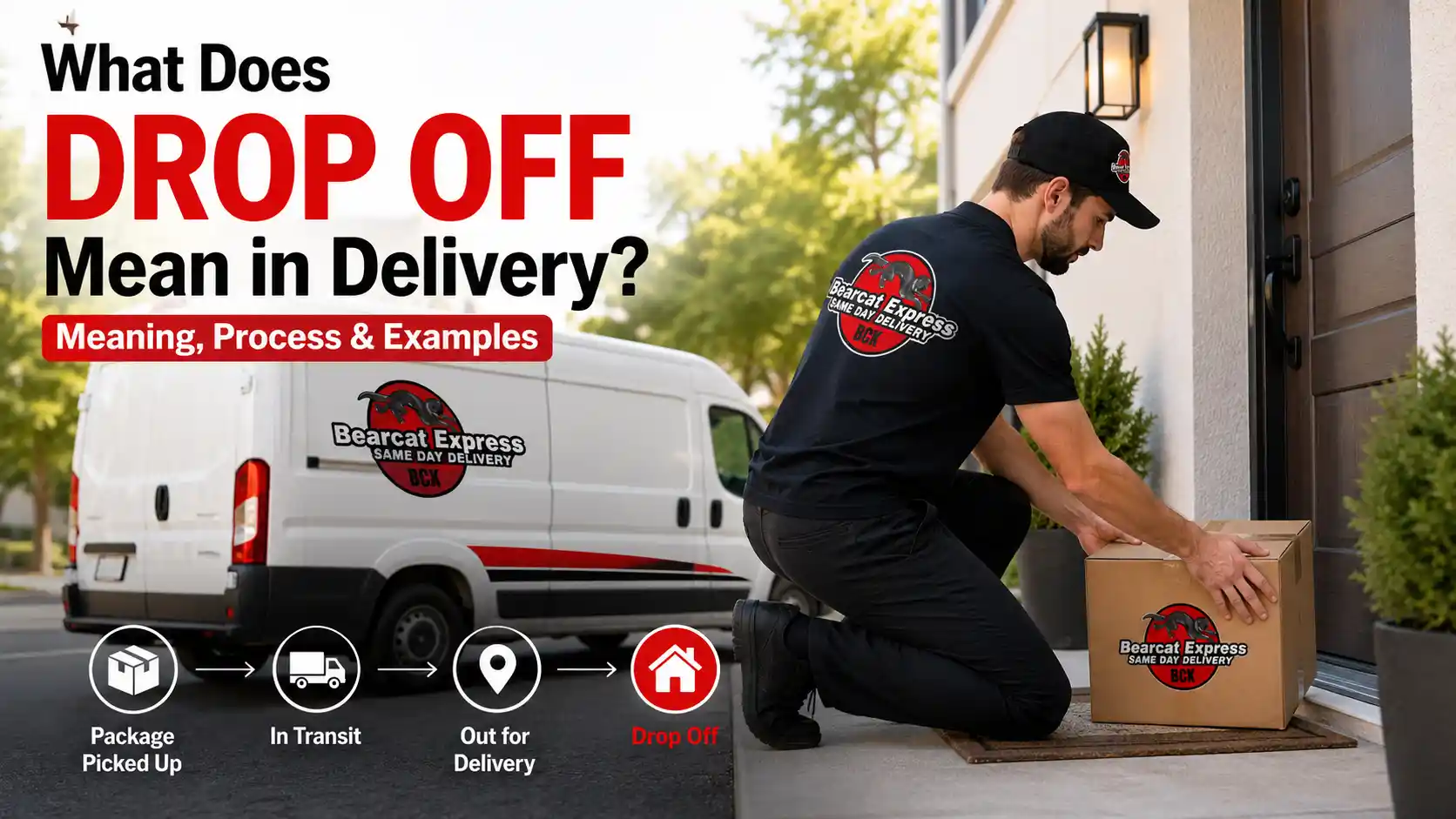
On a same-day COD run, dispatch assigns the stop with a collection flag and the exact amount due on the manifest. The driver confirms the order verbally, hands over the package, and collects payment through cash, a card reader, or a QR code, whichever the merchant has set up. That transaction is logged on the spot, and at shift’s end the driver reconciles totals against the manifest before funds are batched and transferred to the merchant’s account, typically the next business day. This is where the policy on a checkout page becomes an actual handoff between buyer, driver, and merchant.
COD in Courier & Logistics Operations
Courier partners are the ones who actually execute the terms, which is why the delivery provider matters as much as the payment policy itself. A same day delivery service Augusta, GA business relies on needs accurate manifests, trained drivers, and same-day reconciliation, or the whole promise breaks down at the last mile.
COD vs Prepaid Payment Methods
Key Differences
| Factor | COD | Prepaid |
| When payment happens | At delivery | At checkout |
| Cash flow to merchant | Delayed 1-2 days | Immediate |
| Refusal risk | Higher | None |
| Buyer trust required | Low | Higher |
COD vs Other Payment Terms (Net 15/30/60, Due on Receipt)
Net 15, Net 30, and Net 60 are business-to-business credit terms where an invoice is paid weeks after delivery, not at the doorstep. Payment terms COD meaning sits at the opposite end: instead of extending weeks of credit, the seller collects the full amount the moment the package is handed over. Due-on-receipt is closer to COD in timing but usually still runs through an invoice rather than a courier collecting cash directly.
Best Practices for Using COD Payment Terms
- Set a clear order-value cap for eligibility
- Confirm orders before dispatch to cut refusal rates
- Offer multiple payment options at the door, not cash only
- Track refused-delivery data by region and adjust policy accordingly
Should Your Business Offer COD? A Quick Decision Check
COD tends to make sense for first-time or card-hesitant buyers, a local delivery radius, and businesses that can absorb occasional refused stops. It makes less sense for high-value goods, long-distance shipping, or sellers who can’t afford the cash-flow delay. A useful test is to run COD as a limited pilot on one product line or one delivery zone first, track the refusal rate for a month, and only expand it once that number settles somewhere manageable. Grasping the full cod meaning in business decisions like this one matters more than the payment label itself, since the real question is whether your operations can support the collection step reliably.
Future of COD Payment Systems
Cash is slowly stepping back from this model even as it stays popular. More drivers now carry mobile card readers or generate a QR code at the door, so “cash on delivery” increasingly means “pay on delivery” using whatever the buyer has on hand. Real-time reconciliation through driver apps is also cutting the payout lag.
Conclusion
COD payment terms give buyers a low-risk way to shop and give sellers a way to reach customers who wouldn’t otherwise convert, but the model only works when the courier side of the handoff is handled correctly. Bearcat Express builds collection flags, verification calls, and same-day reconciliation into every COD route so those terms hold up in practice, not just on a policy page. If you’re weighing whether this collection model fits your business or need a courier partner who already runs COD routes reliably, contact us, and we’ll walk through your order volume and coverage area together.
FAQs
What does COD mean in business?
COD means cash on delivery, a payment method where the buyer pays only when the order physically arrives instead of paying at checkout. It shifts payment risk from the buyer to the seller for the length of the shipping window.
Is COD payment meaning the same as cash on demand payment terms?
Both describe payment collected at the point of handoff rather than in advance. Some businesses use the cash on demand phrasing internally, but the buyer-facing term almost everyone recognizes is cash on delivery.
Why do some businesses limit COD orders to smaller amounts?
Carrying large cash sums on a delivery route increases risk for drivers and complicates reconciliation, so many sellers cap eligibility at a set dollar value and require prepayment above that threshold.
How is payment terms cod meaning different from Net 30 terms?
Net 30 extends credit for a set number of days after delivery, while COD collects full payment the moment the package is handed over. It carries less financial risk for the seller but delays cash flow by a day or two compared with an instant prepaid transaction.
Can COD orders be paid by card instead of cash?
Yes, most modern setups accept mobile card readers or QR code payments at the door alongside cash, which reduces cash-handling risk for drivers while keeping the pay-on-arrival structure buyers prefer.