Quick Answer: In delivery, “drop off” has two everyday meanings. It can describe a sender handing a package to a carrier at a designated location, or it can describe a courier leaving a package at its final destination. On a tracking page, “dropped off” usually means the package has entered the carrier’s system, not that it has reached the recipient yet.
You glance at your tracking page, see the words “dropped off,” and immediately wonder what that actually means for your package. Is it on its way? Has someone already left it at your door? At Bearcat Express, we get asked this question almost every week, and the honest answer is that drop-off means different things depending on where you are in the shipping process. This guide breaks down exactly what drop-off means in delivery, why the term shows up twice in most shipments, and how to read it correctly no matter which stage your package is in.
What Does Drop Off Mean in Delivery?

Understanding the drop-off meaning in delivery starts with recognizing that the term describes two separate moments in a shipment’s life, not one.
The first meaning happens at the beginning of the journey. A sender packages an item and takes it to a designated location, such as a courier facility, a shipping counter, or a retail partner location, where a staff member accepts it and starts the delivery process. For example, a small business owner in Augusta might package an invoice packet and drop it off at a local courier counter before 2 p.m. so it can still go out same day.
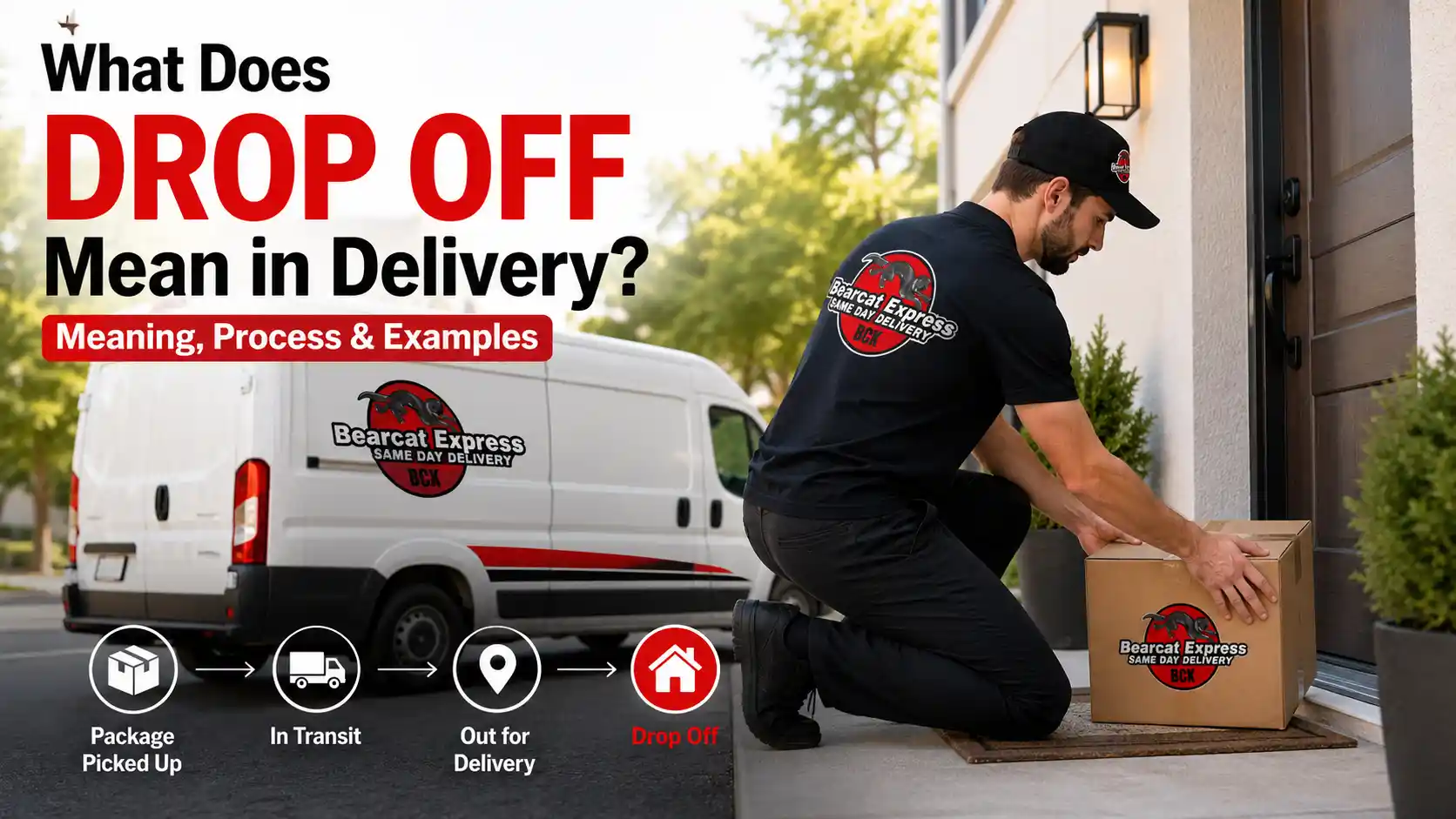
The second meaning happens at the end of the journey. A courier or driver reaches the recipient’s address and leaves the package there, whether that means handing it to a person, placing it on a porch, or leaving it with a front desk. A homeowner waiting on a same-day furniture part, for instance, might get a text that reads “your package has been dropped off at your front door” once the driver completes the delivery.
Both uses are correct. The difference is simply whether the shipment is starting its journey or finishing it, and most people run into both meanings within the same order.
What Is a Package Drop-Off?
A simple drop-off definition, in the sender context, is the act of physically bringing a prepared shipment to a location where a carrier accepts responsibility for moving it forward. This drop-off definition is the one most people mean when they ask how to send a package without scheduling a pickup.
Before dropping off a package, a sender typically needs a few things ready:
- A shipping label or clear address information attached to the package.
- Secure packaging appropriate for the item’s size and weight
- Any required documentation, such as a signed release form for business shipments or a value declaration for high-value items
- Payment, if the drop-off location handles billing at the counter rather than online
Common drop-off point types include courier branch counters, retail shipping partners, parcel lockers, and dedicated regional facilities. Each type has its own hours and acceptance rules, so it is worth confirming a location’s cutoff time before assuming a same-day drop-off will actually leave the same day. This is one of the most common mix-ups senders run into, expecting a 4 p.m. drop-off to move as fast as one made at 10 a.m.
“Dropped Off” on Your Tracking Page: What It Actually Means
This is where most of the confusion actually happens, and it is worth slowing down here.
When a tracking page shows “dropped off,” it typically means the package has been physically handed to the carrier and logged into their system. It does not mean the package has arrived at its destination. Think of it as the starting gun for the shipment rather than the finish line.
Here is roughly how tracking language usually progresses:
- Label created: the shipment exists in the system but has not been handed to anyone yet
- Dropped off: the sender has handed the package to the carrier, or the carrier has picked it up
- Accepted: the carrier’s facility has scanned and logged the package into its network
- In transit: the package is actively moving toward its destination
- Out for delivery: a driver has the package on their route for final drop-off
- Delivered: the package has reached the recipient
A “dropped off” scan can appear before the package has physically started moving, especially if it was handed off at the end of a business day and won’t be scanned into the next stage until the following morning. That gap is normal and does not necessarily mean anything has gone wrong. If a package sits at “dropped off” for more than a full business day without updating, that is usually the point where it is worth checking in with the carrier directly.
Drop-Off vs Pickup: Which One Are You Actually Using?
Drop-off and pickup solve the same basic problem, getting a package from a sender to a carrier, but they place the effort on different sides of the transaction.
| Drop-Off | Pickup | |
| Who transports the package to the carrier | The sender | The carrier |
| Best for | Single or occasional shipments near a drop-off point | Multiple shipments, bulky items, or a tight schedule |
| Time commitment | Sender travels to a location | Sender waits for a scheduled arrival window |
| Typical cost | Often lower, no collection service involved | May include a collection or scheduling fee |
Neither option is universally better. A sender shipping one envelope near a courier counter usually finds drop-off faster and simpler. A business shipping a dozen packages a day generally saves more time scheduling a pickup than making repeated trips. The right choice depends on shipment volume, location, and how much flexibility the sender has in their day.
Drop-Off vs Delivery: Are They the Same Thing?
Not quite, and mixing these two up is one of the most common sources of tracking confusion.
Drop-off usually refers to a handoff, either the sender giving a package to a carrier, or a courier leaving a package at its destination. Delivery refers specifically to the shipment reaching the intended recipient or address, completing the process from start to finish.
For example, a courier dropping off a package at a sorting facility is not the same as delivery. The package still has to move through the network and reach the customer before the shipment is considered delivered. Drop-off can be one step within delivery, but it is not automatically the same as the process being complete.
Inside a Same-Day Drop-Off: From Handover to Delivery
At Bearcat Express, same-day drop-offs move through a fairly consistent sequence, and understanding it helps explain why timing matters so much for local shipments.
When a package is dropped off at one of our counters or handed to a driver, it is first logged with an intake scan that records the time, weight, and destination details. From there, a dispatcher reviews active routes in the area and assigns the package to a driver whose route already passes near the delivery address, rather than waiting for a new route to be built from scratch. This is what allows a package dropped off in the morning to reach its destination the same afternoon, realistically.
Once assigned, the driver picks up the route with the new package included, and the shipment moves along with other stops already planned for that vehicle. When the driver reaches the destination, they complete the final drop-off, which is confirmed through a scan, a signature, or a photo depending on what the shipment requires. That confirmation is what updates the tracking status to delivered.
The entire sequence, from intake scan to final confirmation, usually takes a few hours for local same-day routes, which is very different from national shipments that may sit at a regional hub for a day or more between scans. Same-day courier services depend on tight, local dispatch decisions rather than large-scale sorting centers, which is part of why the process looks noticeably different from a typical national carrier drop-off.
You may also read: What Are Courier Contracts?
What Can Cause Problems During a Drop-Off
Most drop-offs go smoothly, but a few recurring issues cause delays or missed deliveries. Knowing them ahead of time makes it easier to avoid them.
- Incorrect or incomplete address. A missing suite number or a typo in the street name can send a driver to the wrong location entirely. Double-checking the address before drop-off saves a repeat trip.
- No access to the delivery location. Locked buildings, gated communities, or construction closures can block a driver from completing a drop-off. Leaving a gate code or access note with the shipment prevents this.
- Missing delivery instructions. Packages that need to go to a specific door, unit, or contact person often get delayed when that detail isn’t provided upfront.
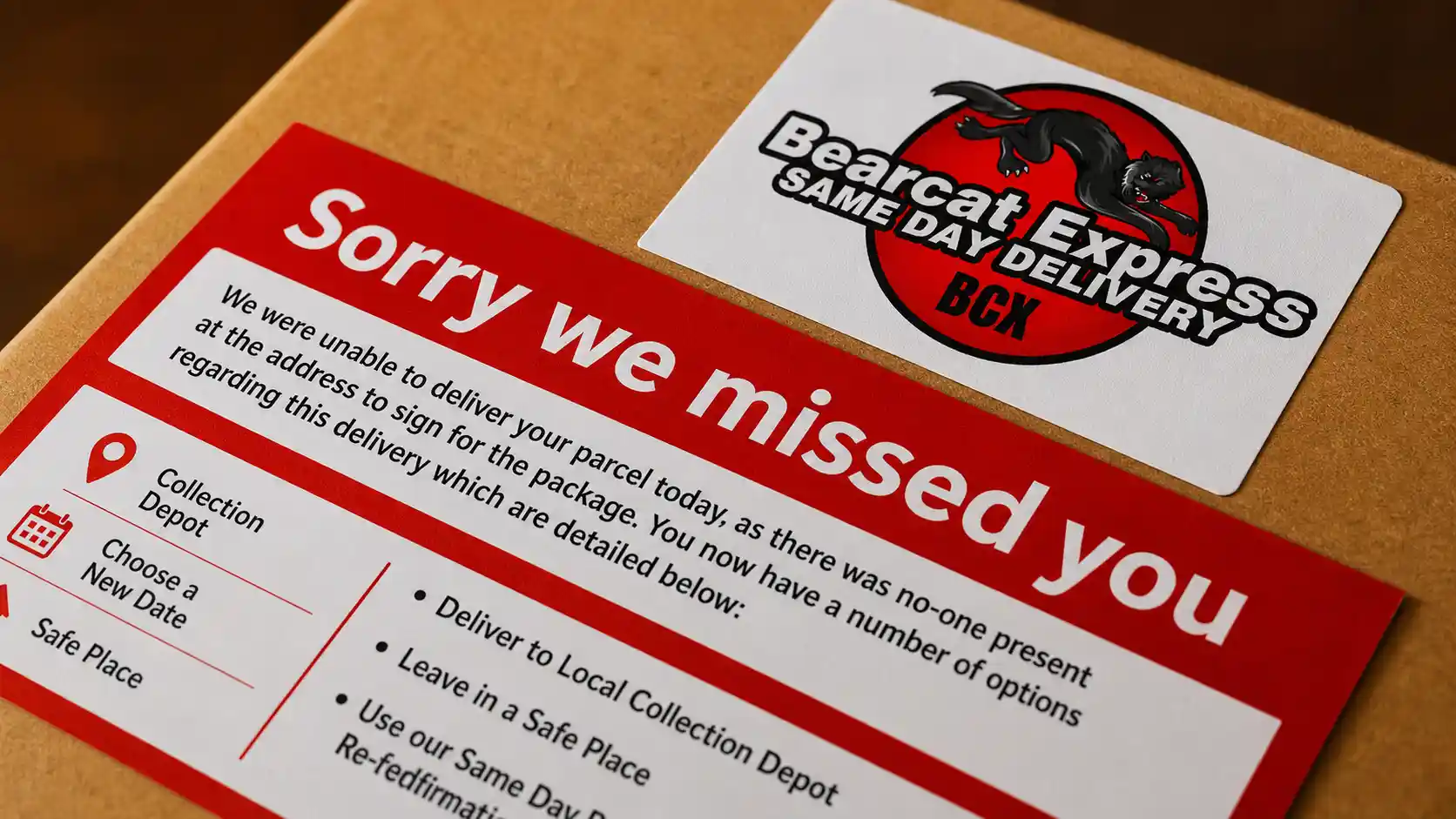
- Recipient unavailable for a required signature. Some shipments require someone present to accept the package. If no one is available, the package typically gets rescheduled or held for pickup.
- Unsafe or unclear drop-off location. A porch visible from the street or an area exposed to weather isn’t always a safe place to leave a package, and drivers may hold it instead of risking damage or theft.
- Oversized items for the intended location. A package too large for a mailroom or locker can’t be dropped off there, even if the address is otherwise correct.
Each of these is avoidable with a bit of upfront preparation, which is often the difference between a smooth same-day drop-off and one that needs a second attempt.
You may also read: Courier Delivery Attempt Failed?
Key Takeaways
- Drop-off can mean handing a package to a carrier, or a courier leaving it at its destination
- “Dropped off” on a tracking page means the package entered the system, not that it arrived
- Drop-off and pickup both work; the right choice depends on volume and convenience
- Drop-off is one step within delivery, not automatically the same as the process being finished
- Same-day drop-offs rely on fast, local dispatch decisions rather than large sorting hubs
Once you have the meaning of drop-off in delivery clear, the rest of the tracking process usually makes a lot more sense.
Final Thought
At the end of the day, what drop-off means in delivery comes down to context: it is either the start of a shipment’s journey or the final handoff that completes it. Bearcat Express handles both ends of that process every day for businesses and individuals across our service area, and our dispatch team is built specifically around getting local drop-offs moving quickly rather than waiting on large sorting hubs. If you need a package picked up, dropped off, or delivered the same day, our Same Day Delivery Service Augusta GA team can walk you through the fastest option for your shipment. Contact us today to get your next drop-off moving.
FAQs
Does drop-off mean delivered?
No. Drop-off usually means a package has been handed to a carrier or left at a location, while delivered means it has reached the intended recipient. A package can show as dropped off for hours before its status changes to delivered.
What’s the difference between drop-off and pickup?
Drop-off means the sender brings the package to the carrier, while pickup means the carrier comes to collect it. The better option depends on how many packages are shipping and how much time the sender has available.
Can I drop off a package instead of scheduling a pickup?
In most cases, yes, as long as there is a drop-off location accepting shipments nearby. Just be sure to check that location’s cutoff time if the shipment needs to move the same day.
What does dropped off with carrier mean on tracking?
It means the carrier has physically received the package and logged it into their system. The package still needs to move through sorting, transit, and final delivery before it reaches the recipient.
How long after drop-off does tracking usually update?
This varies by carrier and time of day, but most updates appear within a few hours for same-day services and up to a full business day for standard shipping. If a status doesn’t change for longer than that, it’s worth checking in directly with the carrier.