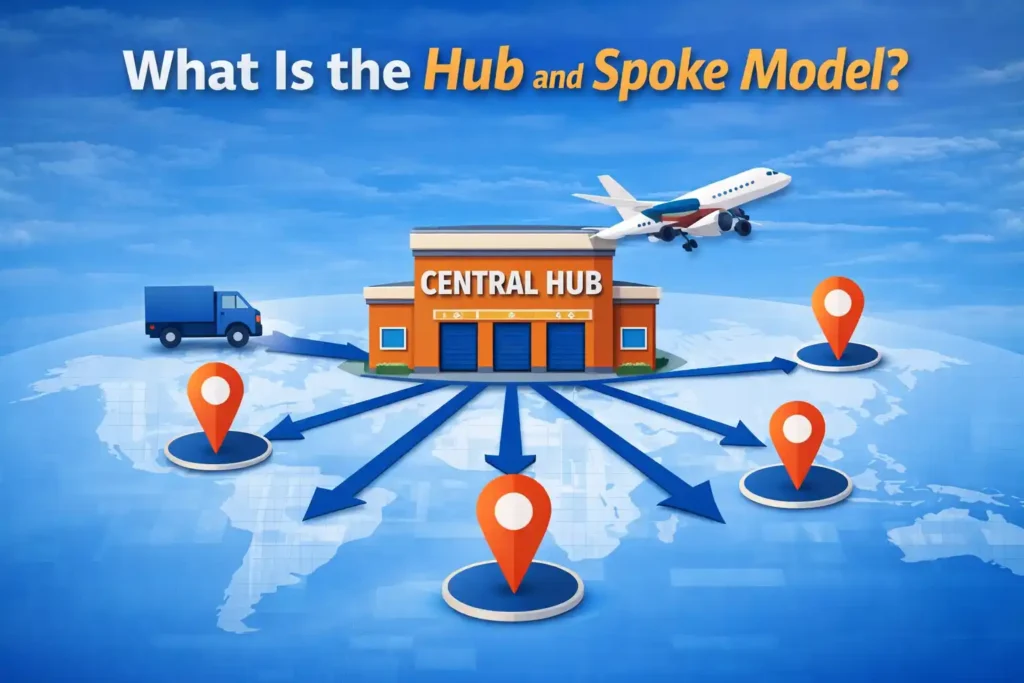
As a delivery network grows, managing direct routes between every location can become expensive and difficult. More connections require additional vehicles, schedules, coordination, and operational planning. What Is the Hub and Spoke Model? It is a network structure that connects multiple locations through a central facility called a hub. Shipments move from local locations, known as spokes, to the hub before being sorted and sent toward their destinations.
This approach simplifies network management and supports consolidation, making it useful in transportation, logistics, retail, and distribution. For Bearcat Express, understanding the model helps explain how larger delivery networks organize efficient transportation and regional distribution.
Key Takeaways
- The hub and spoke model routes shipments through one central facility before sending them to their final destination, instead of moving them directly from origin to recipient.
- It reduces cost and simplifies scaling for high-volume, long-distance shipping, but it adds handling time that can work against time-sensitive local deliveries.
- Local same-day couriers often bypass the hub entirely and route packages straight from pickup to drop-off.
- The right distribution strategy depends on three factors: urgency, distance, and shipment volume.
What Is the Hub and Spoke Model?
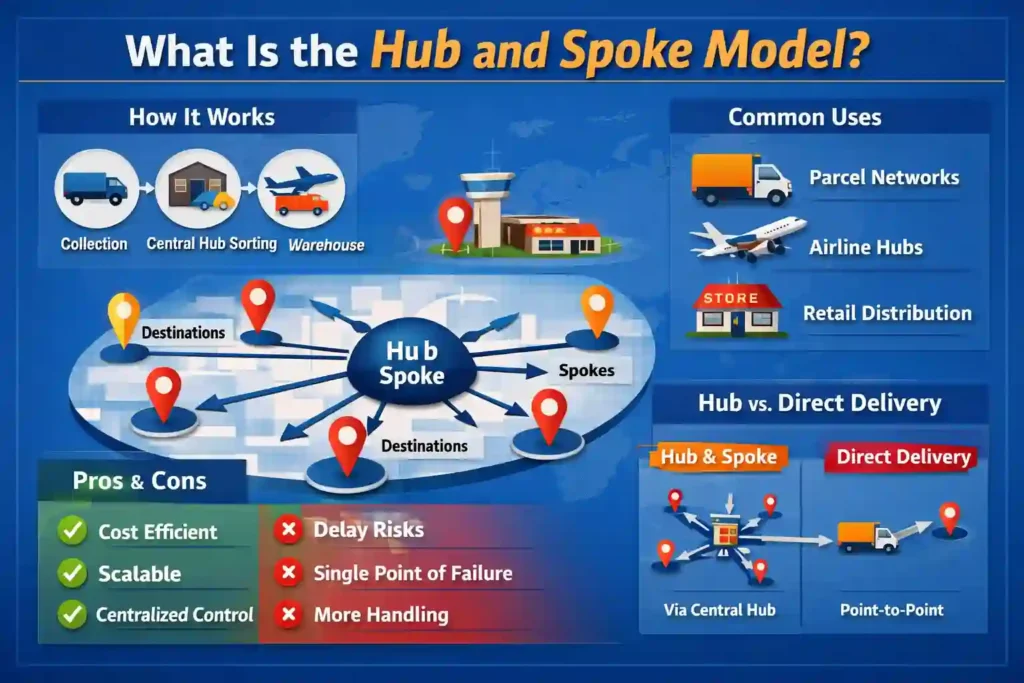
The hub and spoke model is a logistics network design where a central facility, the hub, receives shipments from multiple origin points, sorts them, and then sends them outward to their final destinations, the spokes. Instead of every location shipping directly to every other location, everything funnels through one central point first. This is the standard answer to what is hub and spoke model in a transportation or supply chain context, and the structure applies well beyond parcel delivery.
The hub and spoke model meaning is easiest to picture as a bicycle wheel. The hub sits at the center, and each spoke extends outward to a separate location. Shipments never move directly between two spokes. They pass through the hub first, get sorted, and are then dispatched onward. Because the visual layout is nearly identical, the term spoke-and-wheel model is often used as a direct substitute for hub and spoke.
A Simple Real-World Example
Picture a regional distributor serving five cities without a hub. Every city would need its own direct route to every other city, which multiplies quickly as the network grows. Add a hub, and all five cities instead send their shipments to one central sorting point, where loads get consolidated by destination before trucks are dispatched. Fewer trips, fuller loads, and a network that stays manageable even as new cities are added.
Where the Term Comes From
The spoke-and-wheel model is not a new idea borrowed from ecommerce. Airlines built the modern version of it in the mid-1950s, when carriers realized that routing passengers through a handful of major airports was far more efficient than flying every city pair directly. The freight and telecom industries later adopted the same structure under different names, including “star network” topology, which is why you will sometimes see the hub and spoke business model referenced across fields that have nothing to do with trucks or airplanes.
How the Hub and Spoke System Works
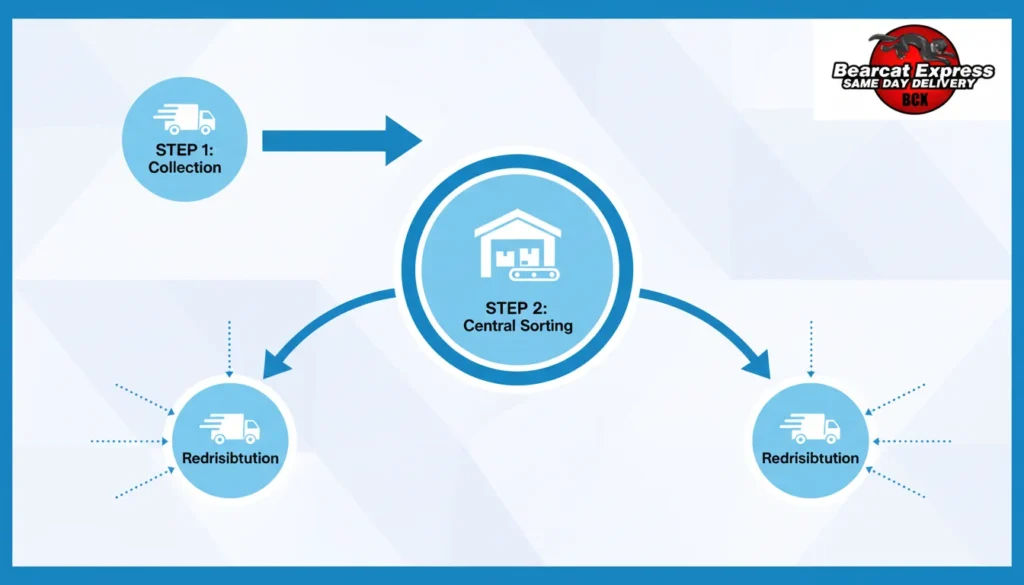
The hub and spoke system breaks down into three operational phases, each with a distinct job.
Collection Phase
Packages are picked up from multiple origin points, whether that is a warehouse, retail counter, or an individual sender, and transported to the nearest hub rather than straight to their destination. Carriers typically batch several pickups into one trip to make the run to the hub worthwhile.
Central Sorting
Once shipments reach the hub, they are sorted by final destination using conveyor systems, barcode scanning, and automated routing technology capable of processing thousands of packages an hour. This is the operational core of the hub and spoke system, since a sorting error here ripples outward and delays shipments that had nothing to do with the original mistake.
Redistribution to Final Destination
Sorted packages headed to the same region are grouped and loaded onto outbound trucks, planes, or trains, which then travel to secondary hubs or straight into the delivery area for the final leg. That last stretch, commonly called the last mile, tends to be the slowest and most expensive part of the entire trip.
Types of Hub and Spoke Networks
Not every hub and spoke system looks the same, and the version a business uses affects both cost and speed.
Single-Hub Networks
A single-hub network routes every shipment through one central facility regardless of where it starts or ends. This keeps the operation simple to manage, but it means a shipment traveling between two nearby cities might still pass through a hub located hundreds of miles away, adding unnecessary distance and time.
Multi-Hub (Hierarchical) Networks
Larger carriers often run a multi-hub, or hierarchical, structure instead, with regional hubs feeding into a smaller number of major national hubs. A shipment moves through its nearest regional hub first, and only escalates to a national hub if it is traveling a long distance. This cuts down on unnecessary mileage compared to a single-hub design, though it adds another layer of coordination to manage.
Where the Hub and Spoke Model Is Commonly Used
National Parcel Carriers
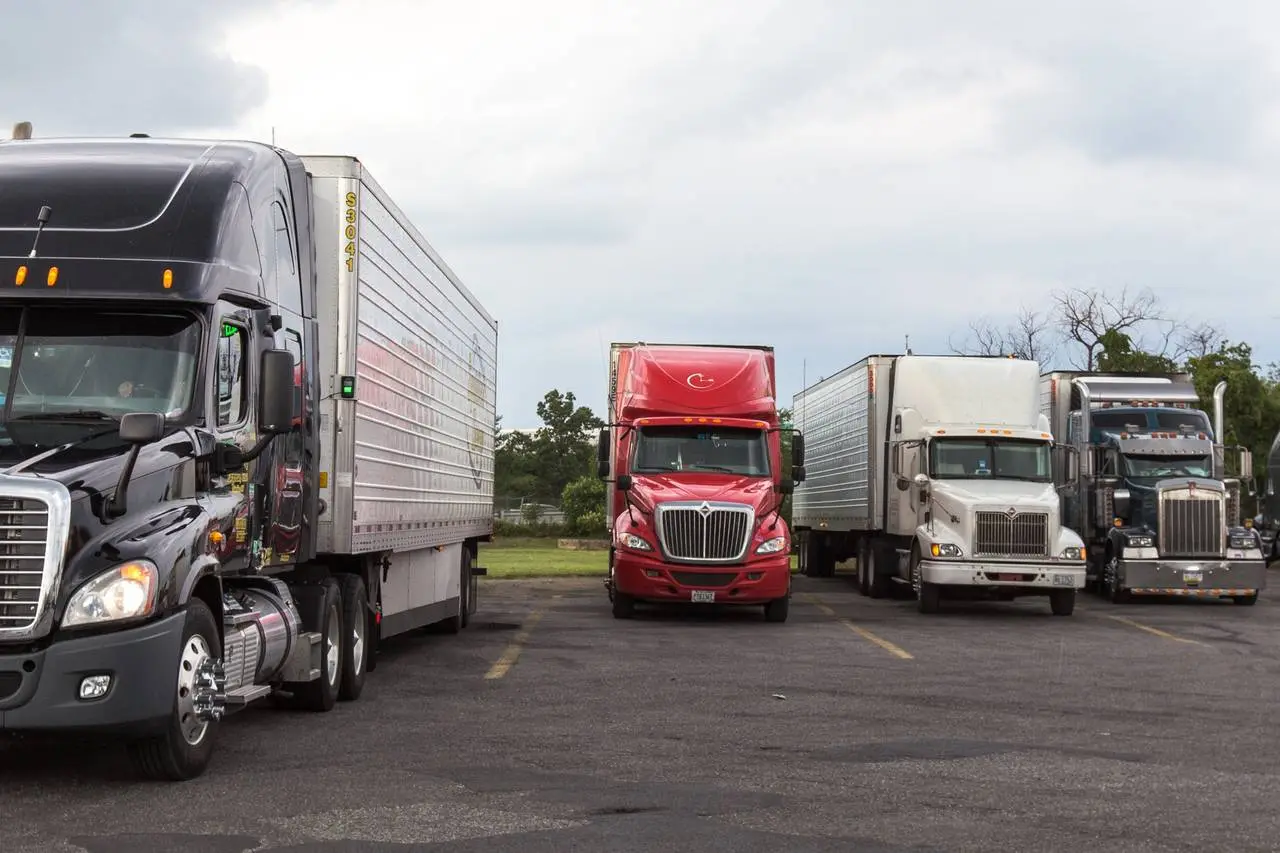
Large parcel networks depend on regional and national hubs to move high volumes efficiently. A shipment crossing several states will often pass through two or three hubs before arriving, even when the direct distance is relatively short.
Airline Networks
Airlines route passengers and cargo through major hub airports instead of flying every city pair directly, which is why a flight from a smaller airport often connects through a larger one before reaching its final stop.
Retail Distribution
Retailers use a central distribution center to receive bulk shipments from suppliers, then redistribute smaller quantities to individual stores based on demand, so no single store has to manage relationships with every supplier.
E-Commerce Fulfillment and 3PL Warehousing
Ecommerce brands and third-party fulfillment providers increasingly build their own hub and spoke business model by placing inventory in regional fulfillment centers that feed off a central receiving hub. This shortens the final delivery leg to customers without requiring the brand to manage direct shipping relationships from every supplier to every warehouse.
Hub and Spoke vs Direct Delivery Model
The core difference is how many stops a shipment makes. A hub and spoke system routes packages through a central facility for sorting first. A direct delivery model sends the package straight from sender to recipient with no stop in between.
A Numbers-Based Comparison
Say a business in Augusta needs to move packages to three nearby locations across the metro area. Direct routing means three separate trips, each one taking a driver straight to its destination. Routed through a distant regional hub instead, those same three packages might travel to a sorting facility outside the metro area first, get processed alongside thousands of unrelated shipments, and then get dispatched back into Augusta for delivery, turning what should be a same-afternoon job into a next-day one. For long-distance, high-volume freight, the extra hub stop pays for itself in lower per-package cost. For short-distance, time-sensitive shipments, it usually adds cost in the form of missed deadlines instead.
Advantages of the Hub and Spoke Model
Cost Reduction
Consolidating shipments at a hub cuts the number of individual trips needed, which lowers fuel costs and vehicle wear while making labor scheduling more predictable.
Centralized Control and Scalability
Managing one central facility is simpler than coordinating direct routes between dozens of locations. Adding a new destination only requires connecting it to the existing hub rather than building a new route from scratch.
Predictable Routing
Because shipments follow established paths through the hub, carriers can plan staffing and vehicle allocation with a fair amount of accuracy, reducing the guesswork of managing a sprawling, decentralized network.
Disadvantages and Operational Risks
Single Point of Failure
A weather event, equipment breakdown, or staffing shortage at the hub can delay shipments across the entire network, even in regions that had nothing to do with the original problem.
Processing Delays
Sorting and consolidating at the hub adds hours to the delivery window, and that extra time can be the difference between meeting a deadline and missing it for shipments that need to arrive within a few hours.
Increased Handling Time
Every additional stop a package makes raises the risk of mishandling or misrouting, since more people and more equipment are involved than in a direct, sender to recipient trip.
Inside a Same-Day Dispatch: What Happens When a Hub Network Slows a Package Down
To see this in practice, picture the same legal document needing to move across Augusta by 2 p.m., sent two different ways.
| Step | Hub-Routed Package | Direct-Routed Package |
| Pickup | 9:00 AM from sender | 9:00 AM from sender |
| Transport | Driven to regional hub outside the metro area | Driven straight toward recipient |
| Processing | Sorted alongside unrelated shipments, often 2 to 4 hour window | No sorting stop |
| Return trip | Routed back into Augusta for final delivery | N/A, already en route |
| Delivery | Often next business day for standard service tiers | Same day, typically within 1 to 3 hours |
A dispatcher working same-day jobs sees this pattern constantly. The hub isn’t doing anything wrong, it’s built for volume and cost efficiency, not for a single urgent envelope. The moment a package needs a firm same-day deadline, every extra stop it makes becomes a risk the sender is taking on unnecessarily.
Why Local Same-Day Couriers Often Choose Direct Routing
Local courier operations work under different pressures than national carriers. Speed matters more than volume, and a single delayed hub transfer can turn a two-hour delivery window into a two-day wait, so many local couriers skip the hub entirely and send a driver straight from pickup to drop-off.
Direct routing also improves accountability. When a package never passes through a sorting facility, it is far easier to know exactly where it is and who is responsible for it at any given moment. Bearcat Express structures its Local Courier Service Augusta GA around this same principle, prioritizing direct routes over centralized sorting whenever a shipment calls for speed and precision. For businesses moving medical samples, legal documents, or urgent business shipments, that kind of direct accountability often outweighs whatever cost savings a hub-based network might offer.
How to Decide: A Quick Checklist for Hub-and-Spoke vs Direct Delivery
- Deadline under a few hours? Choose direct routing. A hub stop adds processing time you likely can’t recover.
- Shipping across multiple states or regions? A hub and spoke system usually wins on cost for high-volume, long-distance freight.
- Sending a single urgent item rather than a bulk shipment? Direct delivery avoids paying hub-network overhead for one package.
- Need to track exact custody at every step? Direct routing keeps the chain of custody simpler and easier to verify.
- Shipping within one metro area regularly? Local direct courier service is typically faster and more cost-effective than routing locally through a distant hub.
Conclusion
The hub and spoke model helps businesses manage multiple locations through centralized coordination and consolidation. While it can improve scalability and efficiency, direct delivery may be better when speed, distance, or shipment volume matters.
For reliable local delivery in Augusta, Bearcat Express provides flexible courier solutions tailored to your shipment and service needs. Contact us to discuss your delivery requirements.
FAQs
What is the hub and spoke model in simple terms?
It’s a shipping network where packages travel through one central hub for sorting before heading to their final destination, rather than moving directly from sender to recipient. The hub and spoke model meaning is easiest to remember by picturing a wheel, with the hub at the center and spokes radiating outward.
What’s the difference between the hub and spoke system and direct shipping?
The hub and spoke system routes shipments through a central sorting facility, while direct shipping sends packages straight from pickup to drop-off with no stop in between. Direct shipping is typically faster for local, same-day deliveries, while hub-based routing is more cost-effective for long-distance volume.
Is the hub and spoke business model still relevant for local same-day delivery?
It can be part of a regional network, but many local couriers prefer direct routing for urgent shipments since it removes the extra handling time a hub adds. For a delivery that needs to arrive within a few hours, skipping the hub is usually the better call.
What industries rely on the spoke and wheel model most?
National parcel carriers, airlines, and large retailers are the heaviest users, since centralizing sorting and inventory reduces their overall operating costs. It’s far less common among local, time-sensitive courier services built around speed rather than volume.
What are the biggest risks of using a hub and spoke system?
The main risks are delays caused by disruptions at the central hub, longer transit times from added sorting steps, and a higher chance of mishandling since more people and equipment touch each shipment. These tradeoffs are exactly why urgent, time-sensitive deliveries often bypass hub networks altogether.