In today’s fast-paced delivery world, customers expect packages to arrive quickly, safely, and on time. Yet, most people never see the structured logistics behind it. One key, often overlooked step is what is linehaul transportation, which moves goods efficiently between cities and distribution hubs. Understanding line haul transportation helps businesses and customers see why some deliveries are smooth while others face delays.
Companies like Bearcat Express specialize in the final delivery stage, but that success depends on how effectively linehaul is handled. Delivery is a chain, and linehaul is the critical link connecting long-distance shipping to doorstep delivery.
Linehaul Transportation Definition (Quick Answer)
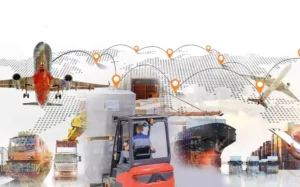
Linehaul transportation refers to the movement of goods between major hubs, cities, or distribution centers over long distances. It is a core part of logistics where shipments travel in bulk via trucks, air, or rail before reaching local facilities for final delivery.
The Role of Linehaul Services in Logistics
To fully understand line haul in logistics, it helps to look at the bigger picture. Logistics is not just about picking up and dropping off packages; it’s about managing a complete flow of goods from origin to destination.
Linehaul plays a central role in this system by:
- Connecting regional warehouses and distribution centers
- Moving high volumes of shipments efficiently
- Reducing delivery costs through consolidated transport
- Supporting large-scale supply chain operations
When people ask about the line haul meaning in logistics, they are essentially asking how goods travel long distances before reaching their final destination. Without this step, large-scale delivery networks would not function.
Linehaul Process Step-by-Step
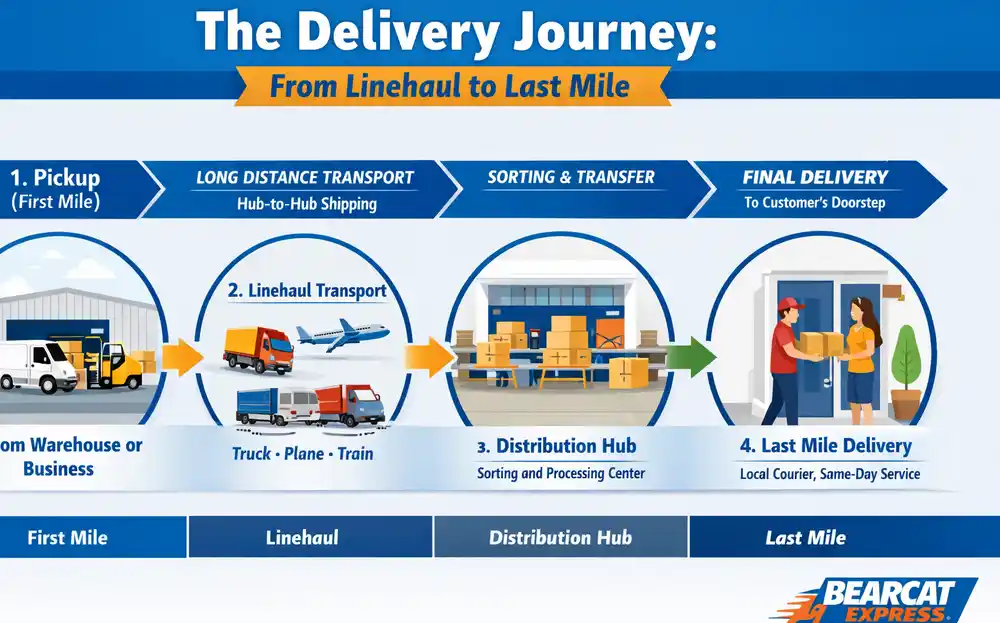
Understanding what linehaul means in real-world operations becomes easier when broken into steps:
1. Pickup
Goods are collected from businesses, warehouses, or fulfillment centers. This is often called the first-mile stage.
2. Transport
Shipments are loaded onto trucks, planes, or trains and transported over long distances. This is the core of line haul transportation, where efficiency and route planning matter most.
3. Hub Transfer
Packages arrive at a destination hub or sorting center, where they are organized for final delivery.
This structured flow ensures that even thousands of packages can move across cities or states in a coordinated way.
Types of Linehaul Transportation
Ground Linehaul Transportation
This is the most common type of line haul transportation, using trucks to move goods between cities. It’s cost-effective and flexible, making it ideal for regional and national shipping.
Air Linehaul Transportation
Air transport is used when speed is critical. While more expensive, it allows businesses to meet tight deadlines and urgent delivery demands.
Sea Linehaul Delivery
Used mainly for international shipping, sea freight handles large volumes at lower costs. However, it requires longer transit times.
Each type plays a role depending on distance, urgency, and budget.
Linehaul vs First Mile vs Last Mile
| Stage | Description | Key Focus |
| First Mile | Pick up from the sender | Collection |
| Linehaul | Long-distance transport | Efficiency |
| Last Mile | Delivery to the customer | Speed & accuracy |
The difference between these stages highlights why what does line haul mean is so important; it’s the bridge between origin and destination.
While linehaul focuses on moving goods in bulk, the last mile focuses on delivering them individually to customers. This is where service quality becomes most visible.
Why Linehaul Transportation Is Important
Line haul in logistics is critical for several reasons:
- Cost Efficiency: Bulk transportation reduces per-unit shipping costs
- Speed: Optimized routes allow faster movement between hubs
- Scalability: Supports large shipping volumes for growing businesses
- Reliability: Ensures consistent flow within supply chains
Without linehaul, delivery systems would become fragmented and inefficient.
Challenges and Solutions in Linehaul Transportation
Even though linehaul means efficiency, it comes with challenges:
Common Challenges
- Delays due to traffic or weather
- Poor coordination between hubs
- Rising fuel and operational costs
Practical Solutions
- Route optimization using real-time data
- Better scheduling and load planning
- Use of technology for tracking and visibility
Understanding these challenges helps explain why not every delivery is seamless and why coordination across all stages matters.
Why Linehaul Alone Is Not Enough
While line haul transportation is essential, it does not complete the delivery process.
Think of it this way:
- Linehaul gets the package close
- But it doesn’t deliver it to the customer
Without the final step, even the most efficient long-distance transport system falls short. Customers don’t judge delivery by how well goods move between cities; they judge it by whether it arrived on time at their door.
The Role of Fast Last-Mile Delivery
This is where last-mile delivery becomes critical.
After linehaul is complete, packages move to local delivery networks that handle final distribution. Services like:
- Same-day delivery
- Local courier service
- On-demand delivery
ensure that shipments reach customers quickly and reliably.
For example, businesses looking for a Same Day Delivery Service in Augusta, GA, rely on efficient last-mile operations to meet customer expectations. Even if linehaul is executed perfectly, delays in this final step can affect the overall experience.
How Bearcat Express Supports Final Delivery
At this stage, execution matters more than ever. Companies like Bearcat Express specialize in handling the final delivery phase with precision and speed.
Their focus includes:
- Time-sensitive deliveries
- Reliable local courier services
- Real-time tracking and communication
By ensuring that packages move smoothly from hub to doorstep, they complete the logistics chain that linehaul begins.
Visual Flow of Delivery Chain
A simple way to understand the full process:
Pickup → Linehaul Transport → Distribution Hub → Last-Mile Delivery → Customer
This flow shows how line haul in logistics connects directly to the final delivery experience.
You may also read: Your Quick Guide to Last Mile Carriers
Conclusion
Understanding what is linehaul transportation gives you a clearer picture of how modern delivery systems work. It’s the backbone of long-distance shipping, ensuring goods move efficiently between cities and hubs.
However, delivery doesn’t end there. The final step, last-mile delivery, is what customers actually experience. That’s why businesses must focus on both stages to deliver consistent results. If you’re looking to improve your delivery operations or need fast, reliable final delivery solutions, contact Bearcat Express and discover how efficient last-mile services can elevate your entire logistics process.
Frequently Asked Questions
What is linehaul transportation in simple terms?
What is linehaul transportation refers to the movement of goods over long distances between hubs or cities. It is a key stage in logistics that connects pickup with final delivery.
Is linehaul transportation always long-distance?
Yes, line haul transportation typically involves long-distance travel between distribution centers. It is different from local delivery, which happens at the final stage.
What does line haul mean in logistics?
The line haul meaning in logistics, is the bulk transport of goods between major points in a supply chain. It focuses on efficiency and large-scale movement.
How is linehaul different from freight?
Freight refers to the goods being transported, while line haul in logistics refers to the process of moving those goods over long distances.
How does linehaul connect to last-mile delivery?
Linehaul moves goods to local hubs, and from there, last-mile services complete the delivery. Both stages must work together for a smooth customer experience.