You check your tracking page and see one word: “Dispatched.” No estimated arrival, no truck icon moving on a map, nothing else. If you are asking what does dispatch mean in shipping, you are not alone, and the real answer is more specific than most explanations let on.
At Bearcat Express, this single status update triggers more customer questions than almost any other point in the delivery process, mostly because the word sounds bigger than what it actually confirms.
Quick Answer
Dispatch means your package has been checked, labeled, and formally assigned to a driver’s active delivery queue. It has not necessarily left the building yet. The dispatched status confirms your order moved from a line item in a system to a physical parcel tied to a real route and a real person responsible for it.
Key Takeaways
- The dispatch definition marks the moment a package is confirmed and assigned to a route, not the moment it physically leaves.
- A “Dispatched” status can sit unchanged for one to three hours without anything being wrong.
- Dispatch, shipped, in transit, and out for delivery each describe a distinct stage, not interchangeable terms.
- What does dispatched from sorting center mean depends on which facility triggered the update, but the underlying process is identical.
- Same-day couriers dispatch continuously through the day, while standard carriers often batch dispatch on a fixed schedule.
What Does Dispatched Actually Mean
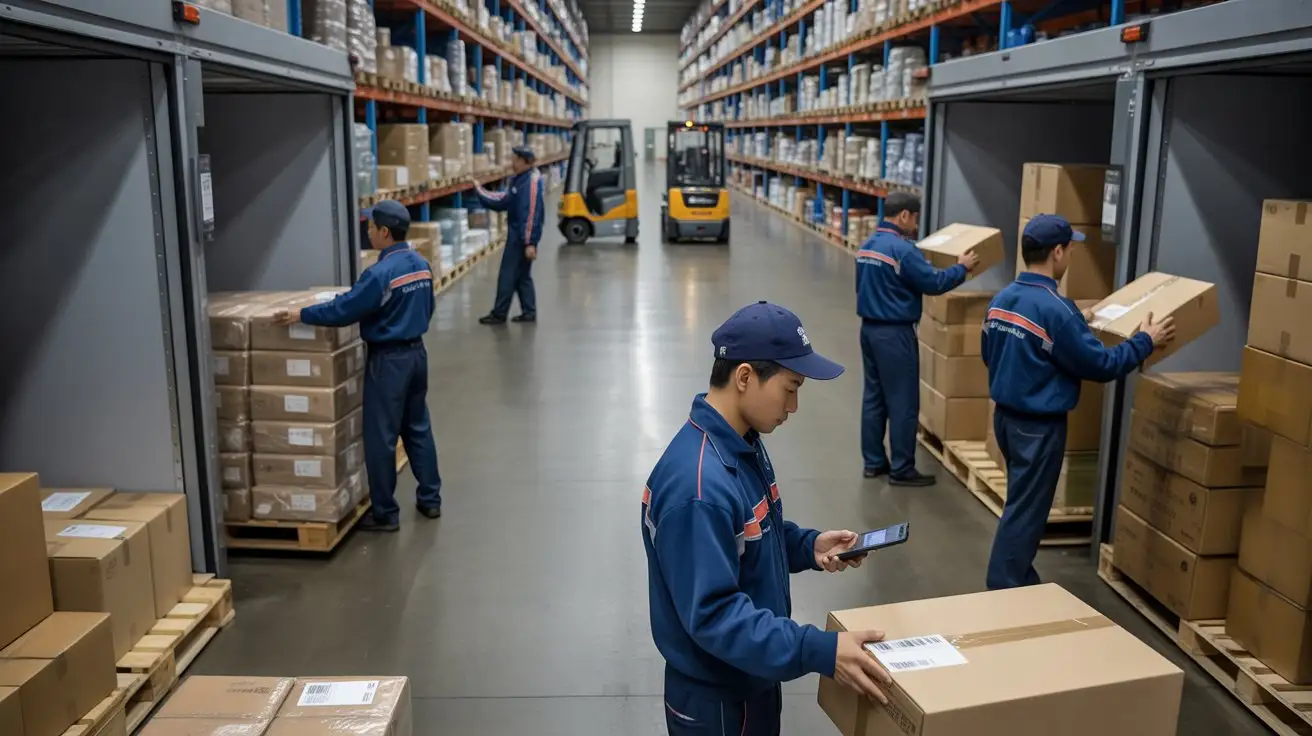
The definition of dispatched behind that single word covers three confirmed steps: the item was checked against its label, cleared for handoff, and assigned to a driver’s route. In most cases, it has not been loaded onto a vehicle yet. Think of dispatch as a checkpoint, not a movement.
This is where the dispatch definition gets tested against real operations. Dispatch staff are not just printing a label and walking away. They check a live route board, confirm which driver has capacity, and decide whether adding this parcel keeps every other promised delivery window intact. That decision is the real work behind the word “Dispatched,” and it is also why understanding what does dispatch mean in shipping requires looking past the tracking page and into how a route actually gets built.
A related question that comes up constantly is what does dispatched from sorting center mean on multi-stop shipments. It works the same way, just applied at a specific facility along the route. The dispatched meaning does not change based on which facility triggers it. What changes is how many checkpoints a package passes through before reaching your door.
What Dispatch Means If You’re the One Shipping
Most explanations of dispatch are written for the person waiting on a package, not the person sending one. If you run a business that regularly hands off documents, samples, or products to a courier, dispatch starts well before any tracking status ever changes.
Bearcat Express works with law offices, medical facilities, and retail businesses that need their outbound items to move through this stage without friction. On the sending side, dispatch depends on a few things being ready before a driver ever gets involved: an accurate pickup address with any access notes, a package that is already labeled and weighed, and clear instructions on anything unusual, such as a signature requirement or a strict delivery deadline. A business that calls in a pickup with incomplete information is often the reason a package sits longer at this stage than it needs to, not anything happening on the courier’s end.
There is also a documentation piece senders often overlook. When you hand a package to a courier, the timestamp and driver assignment created at dispatch become your record that the handoff happened. For a business shipping anything time-sensitive, keeping a copy of that dispatch confirmation is a simple habit that saves a lot of back-and-forth later if a delivery window ever gets questioned.
The Full Journey: Order Confirmed to Delivered
Understanding what does dispatch mean in shipping is easier once you see where it sits inside the entire shipment lifecycle. Most explanations jump straight from packed to delivered and skip the steps that actually explain why your tracking page behaves the way it does.
| Stage | What’s Happening | What You Should Do |
| Order Confirmed | Pickup request logged, details verified | Confirm your address and access notes are correct |
| Prepared | Item weighed, labeled, checked against pickup and delivery info | No action needed; this usually takes minutes |
| Dispatched | Package assigned to a driver and route | Expect a pause before movement; this is normal |
| In Transit | Package physically moving between points | Track only if the promised window has passed |
| Out for Delivery | Driver has the package loaded and is en route | Be available at the delivery address |
| Delivered | Package has reached its destination | Confirm receipt or report an issue right away |
This sequence explains why a status can look stuck without anything being wrong. A package sitting at Dispatched for two hours has usually just moved past the fastest part of the journey, the assignment, and is waiting on the slower part, the driver’s actual route timing.
Who’s Responsible at Each Stage: Sender, Carrier, or Driver
One thing almost never explained clearly is who actually owns each stage of this process. That matters because if something goes wrong, knowing who was responsible at that moment tells you who to contact first.
| Stage | Who’s Responsible | What They’re Accountable For |
|---|---|---|
| Order Confirmed | Sender / Business | Accurate address, pickup window, item details |
| Prepared | Courier’s warehouse or pickup staff | Correct labeling, weight check, handling notes |
| Dispatched | Dispatcher | Route assignment, driver capacity, sequencing decisions |
| In Transit | Driver | Safe, timely movement between checkpoints |
| Out for Delivery | Driver | Final leg execution and delivery confirmation |
| Delivered | Recipient | Confirming receipt or flagging any issue |
This breakdown matters most at the dispatch stage specifically, because it is the one point where responsibility shifts from a shared process to a single named decision-maker. Once a dispatcher assigns your package to a driver, that assignment is logged, and it becomes the reference point if a delivery window is missed later. A business shipping something time-critical benefits from knowing this, because it means a question about a delay almost always gets answered fastest by asking about the dispatch record first.
This ownership structure is treated as a working accountability system, not just an internal formality, because a same-day promise only holds up when every stage has one clear owner.
Dispatch Timeline: What Happens in the Hours Before Your Status Changes
For a same-day shipment, the clock starts the moment a pickup request comes in. A staff member confirms the item, checks the addresses on file, and flags anything unusual, such as fragile handling or a signature requirement. The package is then weighed, labeled, and entered into the day’s route plan. Here is where most of the actual time goes. A driver on a busy weekday might already be carrying twelve to eighteen stops.
Adding one more package means checking where that driver currently is and whether the new pickup fits without pushing back the promised window for every other customer on that route. Picture a Tuesday afternoon where a law office calls in a document that needs to reach a courthouse by 4 PM, and a driver two miles away just finished a drop-off with a thirty-minute gap before the next stop. That proximity and timing, not the order requests came in, usually determines how fast a dispatch decision gets made.
Why Your Tracking Page Doesn’t Move for Hours After Dispatch
This is the part that causes the most unnecessary worry, and it rarely gets explained clearly anywhere. A package can sit at Dispatched for two or three hours with zero visible change, and that is often completely normal rather than a sign something went wrong.
Dispatch confirms the package has been assigned to a driver’s route. It does not mean that driver is walking out the door in that same minute. A driver might have several more stops to finish on their current run before physically loading your package and heading out. Depending on when in the day your order was dispatched relative to that driver’s existing workload, the gap between the status update and the truck actually leaving can stretch longer than customers expect.
There is also a practical reason dispatch systems do not send an update every few minutes. Constant status changes for internal steps would clutter tracking pages without giving customers anything useful to act on. Systems update at meaningful checkpoints instead, dispatched, out for delivery, delivered, and stay quiet in between. A quiet tracking page usually means the package is exactly where it should be in that sequence, not that it has been forgotten.
How You’re Notified When Dispatch Happens
Most tracking confusion comes down to a mismatch between when a status actually changes and when you find out about it. A dispatch event is logged the moment a dispatcher confirms the route assignment, but the notification that reaches you- an SMS, an email, or an update on a tracking portal- can lag behind that internal timestamp by a few minutes depending on the system.
For businesses managing multiple outbound shipments a day, relying on manual tracking checks is not practical. Automated dispatch alerts solve this by pushing a notification the moment the internal status changes, rather than requiring anyone to refresh a page. If you are shipping something time-sensitive and you are not currently receiving an automatic alert at the dispatch stage, it is worth asking your courier whether that notification can be turned on, since it removes most of the guesswork around when a driver actually has your package.
Dispatch vs Shipped vs In Transit vs Out for Delivery
Tracking terminology gets confusing fast because several terms sound similar but describe different moments in the journey.
| Term | What It Actually Means | When It Happens |
| Dispatched | Package assigned to a driver or route | Right after sorting and route assignment |
| Shipped | General term covering the outbound journey | Can include multiple dispatch events |
| In Transit | Package is physically moving between points | After dispatch, before the next checkpoint |
| Out for Delivery | Driver has left with the package loaded | The final leg before arrival |
Shipped is the broadest of these terms and can technically include several dispatch events if a package moves through more than one facility. In transit describes ongoing movement rather than a single moment, which is why a package can show that status for hours without a new update. Out for delivery always comes after dispatch, never before it, since a driver has to have the package physically loaded before heading out.
Common Dispatch Delays and What Causes Each One
Not every delay at the dispatch stage means something has gone wrong, but a few patterns show up often enough to be worth knowing.
- High-volume periods. Around holidays or major local events, pickup volume can spike well beyond a normal day. When more packages arrive than a route was originally planned for, some dispatch decisions get pushed back while staff decides whether to add a driver or adjust existing routes.
- Weather and road conditions. A sudden storm or an unexpected road closure can hold a package at dispatch longer than usual, since sending a driver out on a route that is about to become unsafe rarely helps anyone.
- Address or access issues. If a delivery address has gate codes, building access restrictions, or incomplete unit information, dispatch staff sometimes hold the package briefly to confirm details rather than sending a driver who might not be able to complete the drop-off.
- Vehicle or driver availability. If a driver calls out sick or a vehicle needs unexpected maintenance, packages already assigned to that route have to be reassigned, which adds a short delay before the new dispatch is confirmed.
- Multiple urgent requests landing together. When several time-sensitive pickups arrive within the same short window, dispatch staff have to sequence them by actual urgency rather than the order they arrived in, which can shift when any single package gets its status update.
What a Dispatcher Actually Decides When Multiple Urgent Orders Land at Once
This is the part of dispatch that rarely makes it into any online explanation, and it is where the real skill of the job shows up.
Picture a mid-morning stretch where three different requests arrive within ten minutes of each other. One is a legal filing that has to reach a courthouse before a deadline. One is a medical specimen that needs to stay within a strict time window. One is a standard business package with a same-day promise but no hard cutoff attached.
A dispatcher cannot simply assign these in the order they arrived. They are weighing which deadline is truly fixed versus which one has some flexibility, which driver is closest without being so overloaded that one more stop wrecks their existing commitments, and whether pulling a driver off a lower-priority stop to handle the urgent one creates a bigger problem somewhere else on the board. Getting this sequencing right, dozens of times a day, is what keeps a same-day promise intact when volume gets unpredictable. None of this shows up as a status update, but it is the real work behind that one word on your tracking page.
Why Dispatch Is Also a Proof and Accountability Checkpoint
Most explanations treat dispatch purely as a tracking milestone. For time-critical shipments, it is also the moment a chain of custody record begins, and that distinction matters more than most customers realize. When a package is dispatched, the system typically logs who scanned it, the exact timestamp, and which driver it was assigned to. For a standard parcel, that record rarely gets a second look. For a legal document, a medical specimen, or a high-value business shipment, that same record can become the proof that a handoff actually happened on time and through the correct hands.
Consider a courier carrying a signed contract that has to be filed before a court deadline. If a question ever comes up about when the document left the office, the dispatch timestamp and driver assignment are what settle it, not a general shipped status. The same logic applies to medical couriers moving specimens that must stay within a strict time window for compliance reasons. This is why the dispatch definition matters beyond simple curiosity. It is not just a word on a screen; it is a recorded, timestamped decision point that can matter later.
Why Same-Day Couriers Handle Dispatch Differently Than E-Commerce Carriers
Large e-commerce carriers typically dispatch in batches, grouped by region and released on a fixed schedule regardless of how urgent any individual package is. That model works fine when delivery windows are measured in days.
Same-day couriers cannot operate on batch cycles, because the entire service promise depends on dispatch happening the moment a package is actually ready, not on a predetermined time slot. This is also why same-day dispatch often has to account for pickup coordination that larger carriers rarely deal with directly, such as working with a retail location or a business office to time a pickup precisely. For businesses that regularly need this kind of tight turnaround, a Same Day Delivery Service Augusta GA option is built specifically around keeping the gap between pickup and dispatch as short as possible.
What To Do If Your Status Is Stuck
If your package has shown Dispatched for far longer than seems normal for your service type, a few practical steps usually clear things up faster than waiting it out.
Check what delivery window your specific service level actually promises, since same-day and multi-day shipments have very different normal timeframes at this stage. Confirm the delivery address on file is complete, since access issues can hold a package at dispatch longer than expected. Contact the courier directly rather than only the retailer, since the courier’s team has the live driver and route information. Ask specifically whether the package was reassigned to a different driver, since a stuck status sometimes means exactly that rather than anything being lost.
Final Thought
Dispatch is easy to dismiss as just another word on a tracking page, but it represents a real decision involving a driver, a route, and a facility working against a clock. Understanding what does dispatch mean in shipping, what does dispatched from sorting center mean in practice, and who is actually responsible at each stage helps set realistic expectations instead of unnecessary worry every time that status appears.
Bearcat Express treats this stage as an active coordination process rather than a formality, because a same-day promise only holds up if dispatch decisions are made carefully, not automatically. If your business regularly ships anything time-sensitive and you want a courier that treats dispatch as seriously as delivery itself, contact us to talk through your routes and deadlines.
Frequently Asked Questions
Does a dispatched status mean my package already left the building?
Not necessarily. Dispatched confirms the package has been assigned to a driver and route, but it may still be loading or waiting briefly before the vehicle actually departs.
What does dispatched from sorting center mean on a multi-stop shipment?
It means the package cleared that specific facility’s checks and was released to continue toward its next stop or final delivery. Larger shipments can show this status more than once as they pass through different facilities.
If I’m the one shipping, what do I need ready before dispatch happens?
A dispatcher needs an accurate pickup address, a labeled and weighed package, and any special handling notes before a route assignment can happen. Missing or unclear details at pickup are one of the most common reasons a business shipment sits longer at this stage than expected.
How will I know the exact moment my package is dispatched?
Most tracking systems send an automatic notification, usually SMS or email, within a few minutes of the internal dispatch update. If you regularly ship time-sensitive items and are not receiving that alert, it is worth asking your courier to enable it.
Is the definition of dispatched different for medical or legal shipments?
The core dispatched meaning stays the same, but the record created at that moment carries more weight. For time-critical or compliance-sensitive shipments, the dispatch timestamp often becomes part of the proof that a handoff happened on schedule.