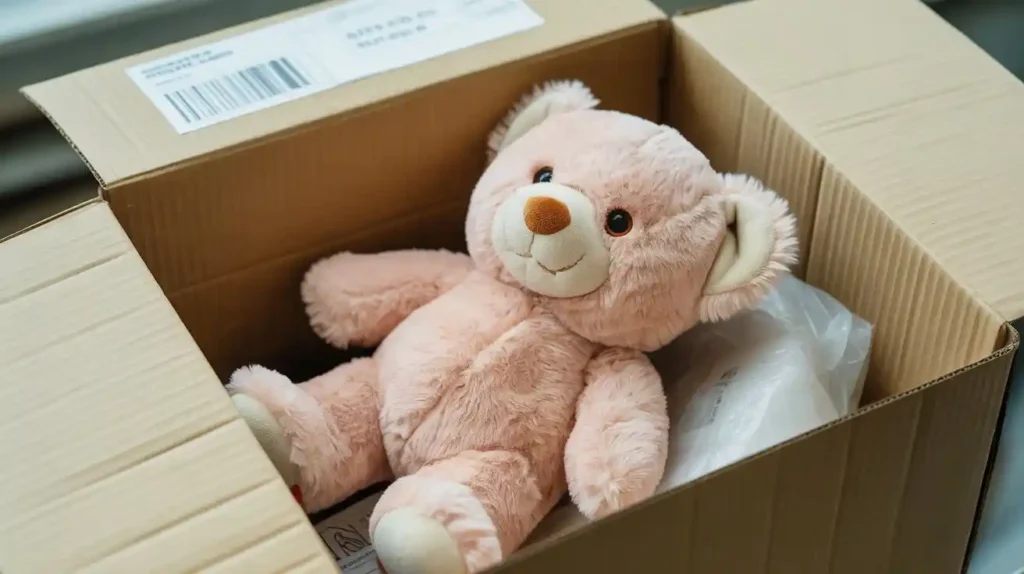
Somebody hands you a stuffed animal that needs to reach a kid two states away by Saturday, and suddenly you are standing over a box wondering what this is actually going to cost. So how much does it cost to ship a stuffed animal? Most standard sizes range from $5 to $60, and what catches people off guard is that the toy’s actual weight barely factors into the price.
Bearcat Express handles enough of these shipments to know that box size, not the bathroom scale, is what really drives the bill.
Quick Answer: What You’ll Pay
A small plush under a pound, sent in a poly mailer through standard ground service, typically runs $4 to $9. A medium teddy bear in the 2 to 5 pound range costs $12 to $25 once it is boxed correctly. Large or jumbo plush, including oversized Squishmallows, usually falls between $25 and $50 because of box dimensions rather than actual weight. Giant or collectible bears can climb past $60 on cross-country routes. If you need same-day delivery of a stuffed animal and the recipient is local, a courier can often beat a rushed national shipment on both price and speed, since local pricing is based on distance rather than box volume.
What Determines Shipping Cost?
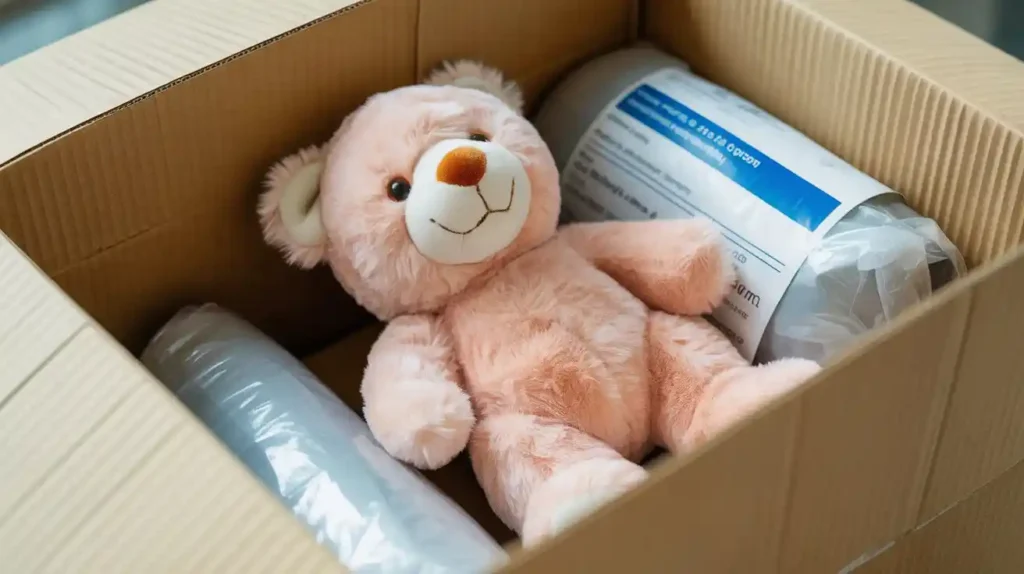
Three factors drive the price, and none of them is how heavy the toy feels in your hands.
Dimensional Weight vs Actual Weight
Carriers calculate dimensional weight by multiplying a box’s length, width, and height, then dividing by a set factor. Whichever number is higher, actual weight or dimensional weight, is what gets billed. A two-pound teddy bear stuffed into an oversized box can get charged as if it weighs six or seven pounds. This is the single biggest reason someone researching how to ship a stuffed animal ends up with a quote that feels too high for something so light.
Box Size and Packaging Volume
Plush toys compress. Two extra inches of space on each side still counts toward dimensional weight, even though it is just air. Vacuum sealing a plush toy before boxing, then letting it expand back into shape after arrival, is a trick used by anyone who ships these regularly because it directly shrinks the billable volume.
Distance and Delivery Zone
National carriers split the country into pricing zones based on distance from the sender. A package moving a few hundred miles costs less than one crossing six or seven zones, and the gap between a nearby zone and a cross-country one can run 40 to 60 percent. A local courier skips the zone system entirely, since a delivery that stays inside one metro area never enters zone-based pricing at all.
Delivery Speed
Ground service is always the cheapest tier. Expedited or overnight options can run two to three times higher for the identical box. If someone needs to send a stuffed animal same-day delivery for an event happening in a few hours, national expedited tiers were not built for that window in the first place, since even overnight service usually means the next calendar day rather than the next few hours.
Do the Math Yourself: A 3-Step Dimensional Weight Check.
Most guides tell you dimensional weight matters and stop there. Here is how to actually check it on your own box before you drop it off, so you are not surprised at the counter.
Step 1: Measure the Sealed Box
Tape the box shut first, then measure length, width, and height in inches, rounding up to the nearest whole number. A box that measures 15.2 inches rounds to 16. Measure after sealing, not before, because packing material can push the sides out slightly and carriers bill on the final shape.
Step 2: Apply the Formula
Multiply length by width by height, then divide by 139, which is the divisor most carriers use for standard domestic parcels. A box measuring 16 by 12 by 10 inches gives you 1,920 cubic inches. Divide that by 139, and you get roughly 13.8, which rounds up to a 14-pound dimensional weight, even if the actual stuffed animal and packaging together weigh only 3 pounds.
Step 3: Compare Against Actual Weight
Weigh the sealed box on a household scale. Whichever number is higher, the 14-pound dimensional figure or the 3-pound actual figure, is what you get charged for. If the gap between the two numbers is large, that is your signal to size down the box or compress the plush further before you pay for a shipment you did not need to send at that size.
Cost Breakdown by Size
Real numbers help more than vague ranges, and this is the section Bearcat Express gets asked about most by customers who assumed a lightweight toy would automatically ship cheap. A small plush under a pound, the kind of six-inch beanie-style animal people mail in a poly bag, ships for $4 to $9 through standard ground service. A medium 12 to 15-inch teddy bear weighing 2 to 5 pounds typically costs $12 to $25 once boxed correctly, which is right where dimensional weight starts outweighing actual weight.
A large teddy bear or an oversized plush in the 18 to 24 inch range usually runs $25 to $45. Anyone figuring out how to ship 24-inch Squishmallow toys without overpaying will find the answer comes down to two things: vacuum compression and choosing the tightest box available instead of whatever oversized box happens to be lying around. A giant or collectible bear, often 3 feet or taller, can push past $60 for long-distance moves, since dimensional weight becomes unavoidable at that scale no matter how carefully it is packed.
Shipping Cost by Service Level
| Service Level | Typical Transit Time | Price Range (Small to Medium Plush) |
| Standard Ground | 3 to 5 business days | $4 to $15 |
| Priority / 2-Day | 1 to 2 business days | $10 to $25 |
| Overnight / Next Day | Next business day | $25 to $60+ |
| Same-Day Local Courier | Hours, same calendar day | Distance-based, often $15 to $40 within a metro area |
A national overnight shipment prices off zone and dimensional weight together, while a local courier prices mainly off distance, which is why a same-day local move can sometimes cost less than a rushed national shipment covering a similar distance.
Cheapest Way to Ship a Stuffed Animal
Poly Mailers Instead of Boxes
For small and medium plush that are not fragile or collectible, a padded poly mailer beats a box almost every time. It has no fixed shape, so it hugs the item instead of leaving wasted air space that gets billed as volume.
Packaging Material Costs
Materials add up more than people expect. A poly mailer usually costs 15 to 30 cents. A basic corrugated box in a size that fits most medium plush runs 50 cents to $1.20. Tissue paper runs about 10 to 25 cents per sheet, void fill adds 20 to 50 cents, and tape adds another 10 to 15 cents per package. Choosing a mailer over an oversized box on a bulky item can save more on the shipping bill than it costs in materials.
Keep Weight Under One Pound When Possible
Many carriers have a pricing break right around the one-pound mark. If a toy sits at 1.1 pounds because of extra padding, trimming that padding can drop the whole shipment into a cheaper tier.
Ground Shipping Is Usually Cheapest
Unless the delivery date is genuinely urgent, ground service is the default choice. It takes longer, but for something that is not perishable or time-sensitive, the savings compared to expedited tiers are significant.
Mistakes That Increase Cost
The most common mistake is oversized boxing, followed by skipping compression on bulky items and defaulting to expedited shipping out of habit instead of actual need. Another one shows up constantly with people who want to send a stuffed animal gift: piling on tissue paper and gift wrap before boxing, which adds weight and volume without adding real protection. Save the presentation wrapping for after the box has already been weighed and priced.
Fastest Way to Ship a Stuffed Animal
Same Day Local Delivery
For anyone local to the Augusta, Georgia area, this is usually both the fastest and most practical route, especially for hospital visits, last-minute birthdays, or an event happening within hours. A courier picks up and delivers the same day without the package ever touching a regional sorting hub.
Overnight Shipping
National overnight service guarantees next-day delivery, but it sits at the highest price point of any method, often two to three times the cost of ground shipping for the same box.
Express Shipping
A middle option that typically lands in two to three business days at a moderate markup over standard ground, useful when next-day is not required but a full week is too slow.
Best Shipping Methods Compared
| Method | Best For | Typical Cost | Trade-off |
| Postal Ground Service | Small, non-urgent plush | Lowest | Slowest transit |
| Private Carrier Ground | Bulkier items needing tracking | Moderate | Still multi-day |
| National Expedited/Overnight | Urgent, long-distance | Highest | Price jumps sharply |
| Local Courier, Same-Day | Local, time-sensitive | Distance-based | Limited to local service area |
Inside a Same-Day Plush Pickup
Most guides that explain how to ship a stuffed animal describe the national carrier process: box it, print a label, drop it at a counter, wait for it to move through a sorting hub. A same-day local pickup works differently enough that it is worth walking through.
A driver arrives at the sender’s door, weighs the package on the spot, and loads it directly for a single-destination route. There is no regional hub, no overnight holding facility, and no dimensional weight formula applied, since pricing is built around the mileage between pickup and drop-off. On a typical Augusta area run, a driver might carry three or four local plush deliveries in a single loop rather than sending each one through a separate multi-stop national network. That is the practical reason a same-day courier can often beat a rushed national shipment on price for local distances; the box skips every step that normally adds cost, not just the transit time.
This matters most for the exact situations where people search for how to send a stuffed animal to a friend on short notice, like a hospital delivery for a child who needs a comfort item that afternoon, not two days later.
How to Package a Stuffed Animal Properly
Protection for Delicate or Collectible Plush
Vintage or collectible plush need more than a poly mailer. Wrap them in acid-free tissue paper first to prevent discoloration, then place them in a snugly fitted box with light padding on all sides. Avoid anything that presses directly on the fur or fabric for an extended transit window.
Shipping Multiple Stuffed Animals Together
When sending several plush toys at once, pack the largest one first at the bottom of the box, then layer smaller ones on top so they fill gaps naturally instead of leaving open pockets that let items shift. Combining several toys into one box almost always costs less than shipping them separately, since dimensional weight is calculated once for the whole box rather than per item.
Optional Insurance
For anything with real sentimental or financial value, declared value coverage is inexpensive relative to the protection it provides, typically adding just a few dollars for coverage that would otherwise mean a total loss if the package were damaged or never arrived. Signature confirmation is a small add-on worth considering for anything irreplaceable.
Weight and Size Limits to Know
Most postal and ground services cap standard packages around 70 pounds, while private ground carriers typically allow up to 150 pounds before a shipment needs to move to freight service instead. For stuffed animals, this ceiling rarely matters unless you are dealing with a life-size collectible or a bulk shipment of several dozen toys, in which case freight or palletized shipping becomes the more practical option per item.
Peak Season Shipping: Dates and Surcharges to Watch
Shipping costs for stuffed animals do not stay flat all year. Gift-heavy weeks push both price and transit time in the wrong direction, and almost nobody plans around this before they are already at the counter.
| Peak Window | What Drives Demand | Typical Impact |
| Late November through December | Holiday gifting | Carrier surcharges added, ground transit can slip a day or two |
| Early to mid February | Valentine’s plush gifts | Same-week delivery windows fill up fast |
| Late spring | Graduations and Mother’s Day | Regional volume spikes on soft goods |
If a stuffed animal needs to arrive during one of these windows, book earlier than you think you need to, or lean on a local same-day option that is not competing with national peak-season backlogs at all.
International Shipping Overview
International shipping for stuffed animals generally runs $15 to $70 or more, depending on destination, customs duties, and dimensional weight. Most countries classify plush toys under a standard toy customs code, which usually avoids steep import duties, but accurate paperwork still matters. A commercial invoice with a clear product description and country of origin will move through customs faster than a vague label, and destinations with stricter toy safety requirements may ask for additional certification. Because of the added paperwork and longer transit windows, international shipping is rarely the right call for anything time-sensitive.
When Local Courier Beats National Shipping
There is a specific window where a local courier consistently wins, and it comes up more than people expect. Someone trying to send a stuffed animal to a friend across town for a same-day birthday surprise cannot wait on a national carrier’s next pickup window and multi-day transit. The same is true for hospital deliveries, where a child needs a comfort item within the hour, not within two days. A dedicated Same Day Delivery Service Augusta GA is built specifically around this kind of urgent, local need, picking up directly from the sender and delivering without the package ever touching a regional sorting facility. Bearcat Express handles exactly this kind of run on a daily basis, which is why local timing rarely becomes a problem for customers who call ahead.
You may also read: How much does it cost to ship shoes?
Smart Tips to Save Money
Compress bulky, non-fragile plush before boxing. Choose the smallest box that still protects the item rather than reaching for whatever oversized box is on hand. Compare ground shipping against local courier pricing before defaulting to overnight service, since a same-day local delivery is sometimes the cheaper option once expedited fees are factored in. Save gift wrapping for after the box arrives if presentation matters, since it only adds weight and volume before that point.
Final Thoughts
Shipping a stuffed animal does not have to be complicated once you understand that box size, not the toy’s actual weight, drives most of the cost. Whether the goal is to send a stuffed animal gift across the state or get something delivered locally within hours, matching the method to the actual urgency and distance is what saves real money. For anyone in the Augusta area who needs a plush toy or gift delivered the same day, Contact Us today to get your same-day delivery scheduled.
FAQs
How much does it cost to ship a stuffed animal domestically?
Most domestic shipments range from $5 to $60 depending on size, box dimensions, and delivery speed. Small plush items under a pound are the cheapest to send, while oversized or collectible pieces cost more because of dimensional weight pricing rather than actual weight.
What is the cheapest way to send a stuffed animal gift?
Using a padded poly mailer instead of a box, keeping the item under one pound where possible, and choosing standard ground shipping are the three biggest savers. Compression also helps reduce dimensional weight on bulkier plush.
How do I ship a 24-inch Squishmallow without overpaying?
Vacuum compression before boxing is the most effective method, since it directly reduces the volume carriers use to calculate dimensional weight. Picking the tightest-fitting box available instead of a generic large box also keeps the price down significantly.
Can I send a stuffed animal same-day delivery locally?
Yes, a local courier can often deliver within hours instead of days, which matters for birthdays, hospital visits, or last-minute gifts. This option frequently costs less than a rushed national overnight shipment for local distances.
Does shipping multiple stuffed animals together save money?
Usually, yes. Combining several plush toys into one properly sized box means the dimensional weight is calculated once for the entire shipment rather than separately for each item, which typically costs less than mailing them one at a time.